
You enter the store, but there are no mirrors, no changing rooms, and no clothes to try on. Instead, a screen comes on in front of you. You hold up your phone, and the screen comes on, allowing you to see how the jacket fits, the shoes look, or whether the dress matches your style without ever laying hands on the clothes.
It sounds like something out of science fiction, but this is the world of AR virtual try-on technology. Augmented reality, as it pertains to the world of fashion and apparel e-commerce, is changing the way that customers shop, making the experience both interactive, personalized, and instantaneous. No longer do customers have to guess at sizing, have to wait for the merchandise to arrive, or deal with the hassle of returns.
In this article, we will discuss the best AR virtual try-on technology for the world of fashion and apparel e-commerce.
What Is AR Virtual Try-On Technology?
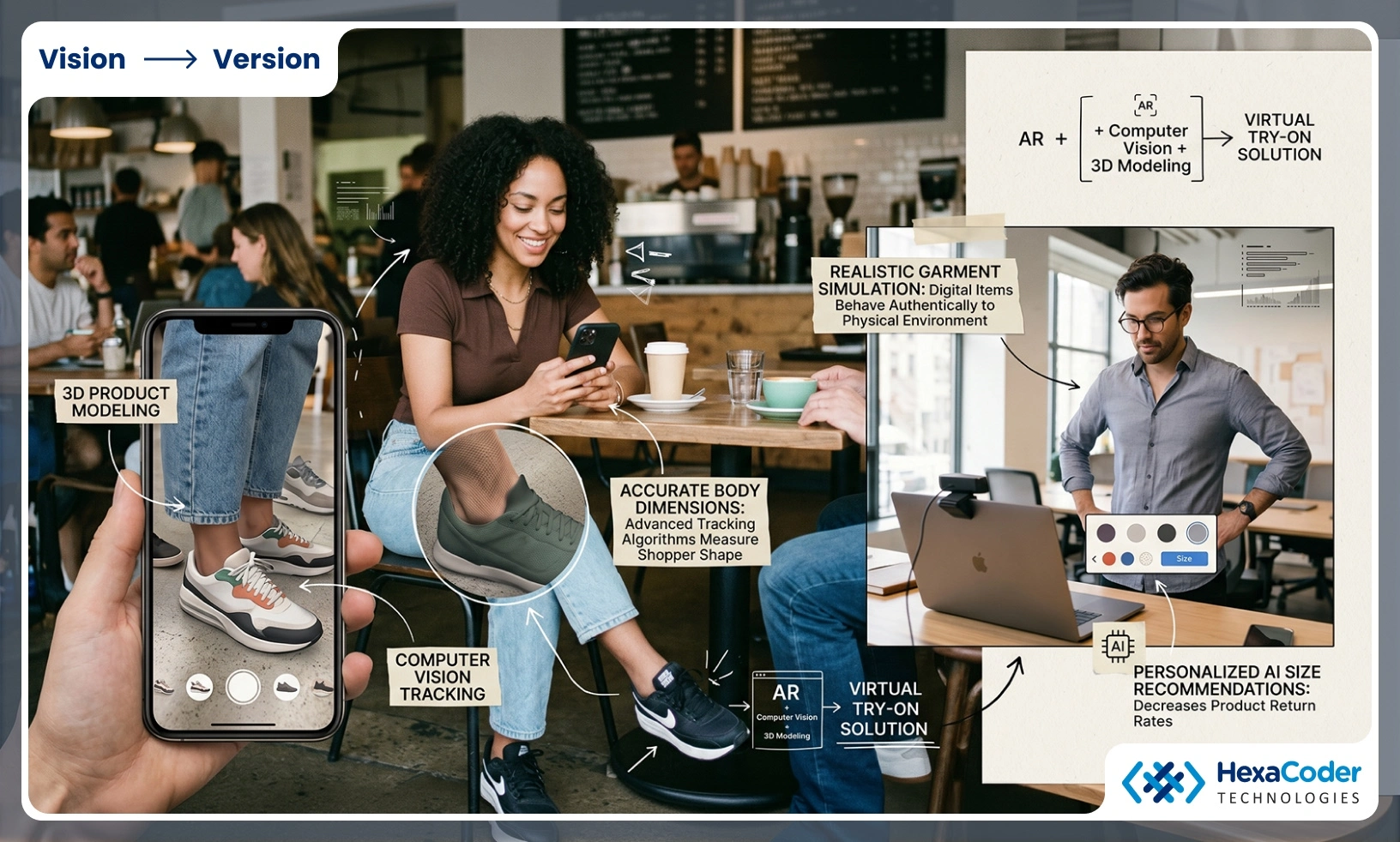
The AR virtual try-on solution operates as a modern advanced system which combines three separate technologies: augmented reality (AR) and computer vision and 3D modeling. The system enables customers to try on different products which include clothing shoes accessories and jewelry through the use of this system. AR try-ons provide users with an authentic dressing room experience through their ability to project digital items onto real-time videos from smartphones tablets and webcams.
The unique feature of AR try-ons offers users an authentic experience which enables them to interact with the virtual environment. Users can view products from different perspectives while observing how fabrics expand and contract through their body movements and they can test different color options and pattern choices and design combinations instantly. Customers who use AR try-ons can experience an actual presence which gives them confidence about their purchasing decisions unlike traditional online shopping methods which require them to guess their fit and appearance.
The main components of AR virtual try-on technology include the following elements.
The shopper's movements through the store cause products to change their position and their appearance. The digital item creates a realistic simulation because it behaves like it would in the physical environment. The system enables customers to assess their physical attributes because they can test to see how different clothing items fit them inside the store environment.
The advanced body-tracking algorithms enable accurate measurement of shopper dimensions to display how clothing items will fit their body shape. The system uses advanced technology to create realistic garment overlays which show how clothes will fit while displaying foot contours for shoes and showing how body accessories will rest on the user. The system uses AI technology to recommend ideal sizing options which help users make better decisions while decreasing product return rates.
The AR try-on system offers interactive capabilities which allow users to experience different dimensions in real time. Shoppers can quickly change between different color options and pattern designs and fashion choices while they use the zoom function to view specific details and the body rotation feature to view the product from every direction. The system provides users with complete control over product interaction through its interactive design which enables them to experience online shopping in a more personalized manner while exploring various features of the product.
The integration of all these components creates an Augmented Reality virtual try-on system which enables customers to shop through physical stores and online stores. Shoppers no longer have to imagine how a product might look—they can see it, interact with it, and make decisions based on a highly realistic virtual experience. The user-friendly dressing room technology allows customers to use any device as their personal dressing room while maintaining their shopping confidence through virtual shopping experience.
The growth of fashion e-commerce requires fashion e-commerce businesses to adopt AR try-on technology as their mandatory solution. The system improves customer satisfaction while delivering essential product testing data to brands, which includes information about customer product selection, color preferences, and product interaction methods. The system provides essential data for brands to determine their inventory needs, develop their marketing plans, and create their products.
The introduction of AR virtual try-on technology enables online shoppers to experience shopping through an interactive and immersive platform that delivers superior accuracy compared to traditional static images and videos.
How AR Virtual Try-On Solutions Work
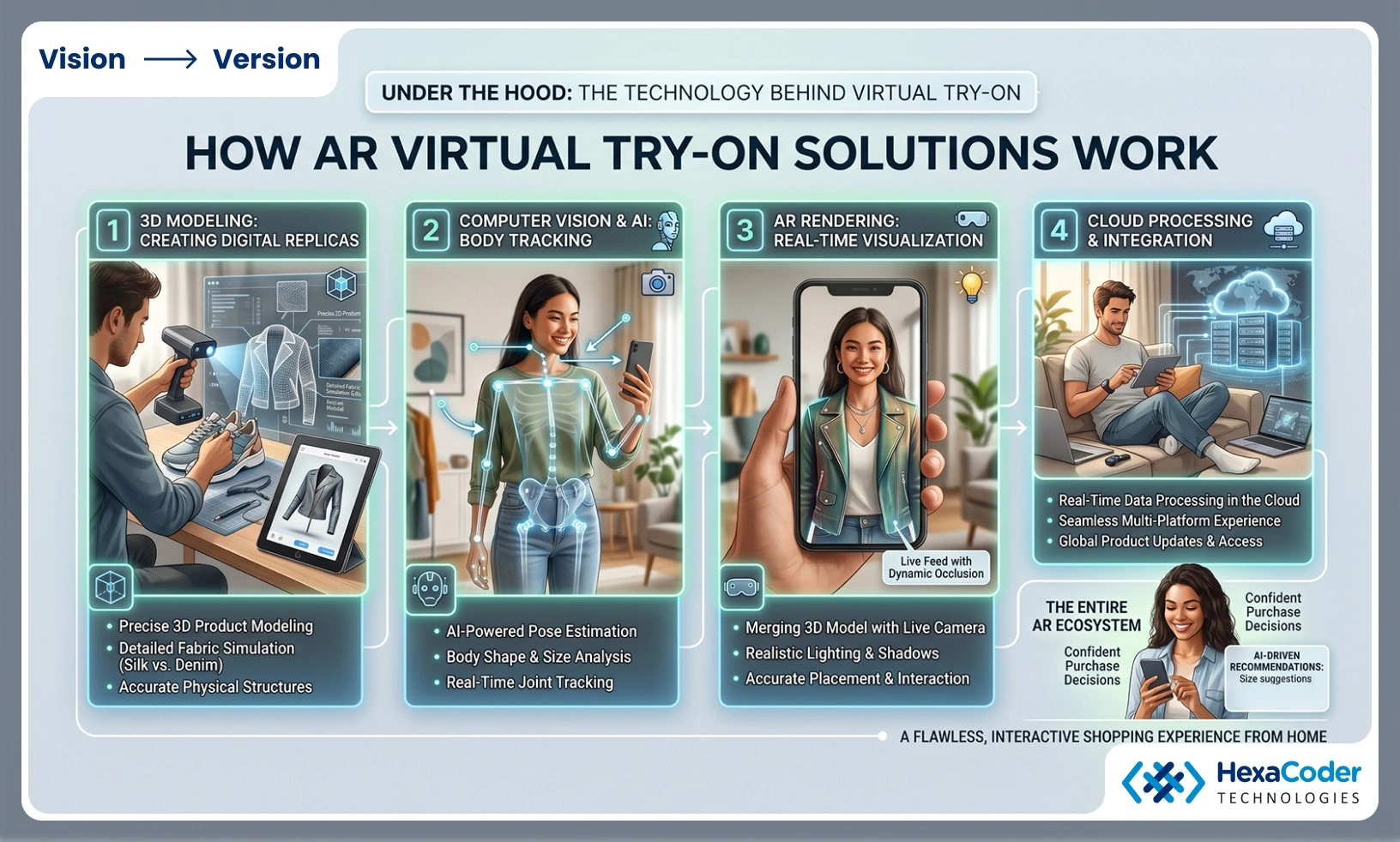
The augmented reality virtual try-on system provides customers with a flawless shopping experience which appears to be magical. The operation depends on an intricate system that combines modern technologies to function asynchronously. The customers use their smartphones or tablets to see products that appear before them because technological advancements create the system that controls each aspect of their body movements. The framework helps to explain how AR try-ons create a new way for people to shop in fashion e-commerce stores.
1. 3D Modeling
The process starts with building precise 3D digital models which show every detail of products. The team scans or models every product which includes jackets and sneakers and handbags to create accurate textile representations of all fabric elements including their physical structure and movement characteristics. The 3D models function as actual physical objects which allow users to interact with them. The AR technology shows how different fabrics will behave because a silk blouse will fall differently from a denim jacket. The 3D modeling process creates highly accurate 3D representations which enable customers to view their future appearance while wearing products which include clothing items and accessories.
2. Computer Vision and Artificial Intelligence
The system uses computer vision together with AI algorithms to identify the shopping customer's body shape and body movements. The system uses cameras to identify specific body points while it accurately records body dimensions and body movements. The advanced AI system develops body shape and height and body proportion estimates which help simulate how clothes and accessories will fit on users. The AR system digitally projects items to the user base which enables virtual sneakers to fit users' feet and virtual sleeves to match actual arm movement and virtual necklaces to hang naturally on virtual users' necks. The system uses this intelligent layer to create a natural and realistic interaction experience which responds to user input.
3. Augmented Reality Rendering
The AR engine merges 3D models with the live camera feed while it adjusts to different lighting conditions and viewing angles and moving objects and the observers position. The digital object moves seamlessly with the customer because shadows cast authentically and colors present according to surrounding illumination. The rendering process establishes actual virtual try-on experiences. The AR system uses digital garments to match their real-world movements when a customer turns to view their jacket from the side and crouches down to examine shoes.
4. Cloud Processing and Integration
The entire system operates through cloud infrastructure which functions as its fundamental power source. The system processes all camera data together with 3D models and AI algorithms through cloud servers which generate real-time results for all connected devices. Cloud processing enables multiple users to simultaneously test products without experiencing delays while organizations can globally distribute product updates without requiring customers to download anything. The integration process creates a seamless AR experience that delivers quick performance and enables users to access the system from their smartphones and tablets and web platforms.
Some AR solutions also include AI-driven recommendations which analyze user interactions to determine the best size recommendations and product combinations and currently popular fashion designs. The experience provides both immersive elements and personalized features which direct shoppers toward their most appealing options.
The AR virtual try-on solution for shopping experience builds its interactive design with three-dimensional modeling and artificial intelligence body tracking and immediate visual display and cloud computing technology. Customers can explore products freely, experiment with styles instantly, and make informed purchase decisions—all from the comfort of home.
The shopping process at online fashion retail stores becomes completely automatic because advanced technology systems control every movement people make through their swipes and turns and gestures.
Benefits of AR Virtual Try-On in Fashion E-Commerce
AR try-ons deliver business value through their ability to measure results which exceed their status as a novel technology. The process of visualizing products before customers make their purchases leads to better decision-making which results in decreased return rates because customers choose products they actually want to keep. The process of virtual product testing increases purchase completion rates because it improves shopper behavior. Interactive experiences create platforms that attract customers while establishing their loyalty to the brand. The usage of AR try-ons leads users to share their virtual appearances on social media which results in natural advertising for the brand. The technology enables customers from every corner of the globe to experience authentic product trials which results in expanded business opportunities.
Top AR Virtual Try-On Solutions for Fashion and Apparel E-Commerce
Shoppers who want to experience fashion through online platforms will find new ways to do so because the AR try-on market keeps growing and companies develop better online shopping experiences. The platforms which provide technological solutions to e-commerce systems create future online shopping experiences which allow customers to engage with products using interactive technology that provides them with immersive shopping experiences.
1. Hexacoder Technologies
The AR platform from Hexacoder enables fashion companies to implement virtual try-on technology on their e-commerce websites and mobile applications. You can view a jacket through your phone, which allows you to see how it will look when worn because the jacket displays realistic fabric movements and body draping effects. The company provides customers with more than visualization tools because they utilize artificial intelligence to determine the ideal product size for each user, which helps customers make better choices and decreases product returns. You can experience virtual dressing rooms at home, which provide complete body outfits together with footwear and accessories.
2. Zakeke AR Studio
Zakeke provides customers with augmented reality experiences that enable them to test products while creating their own personal designs. Shoppers can try on clothes and experiment with colors, patterns, and personalized designs in real time. The experience creates a distinct identity for you which establishes a strong connection with the brand. Customers benefit from the custom design interface because it lets them view their custom designs, which helps them make better decisions while shopping.
3. Wannaby (Wanna Kicks)
Wanna Kicks, the specialized footwear solution developed by Wannaby, enables shoppers to view how shoes will look with their actual feet. The shoes display realistic movements because they rotate and bend according to actual human foot movement patterns. The authentic product experience which this system provides to customers solves one of e-commerce's main challenges because it helps customers find their correct shoe size. The AR experience transforms the simple act of trying on shoes into an interactive, engaging process.
4. Ditto
Ditto applies augmented reality technology to both eyewear and other accessories. Their platform performs exact facial and body mapping which enables them to create virtual overlays of eyewear and headwear and various other products. The virtual try-on system enables customers to test multiple fashion options within a few seconds while they can also display their digital outfits through social networking platforms. Ditto helps brands to increase purchase confidence while it decreases uncertainty about products which need customers to try them on before buying.
5. Vue.ai
Vue.ai uses augmented reality technology together with artificial intelligence modeling to develop complete virtual shopping experiences. Their system uses automatic processes to transform 2D product images into 3D models which enable customers to virtually try on clothes and check their body fit. The system provides a complete personalized experience through its automatic connection to inventory systems and recommendation systems which helps customers feel understood and empowered.
The five presented solutions prove that AR virtual try-ons function as more than a technological trend. Fashion e-commerce brands use these solutions to boost customer engagement while decreasing product returns and increasing sales and they create online shopping experiences which customers find engaging and secure and interactive.
The ROI Benefits of Implementing AR Virtual Try-On in Fashion E-Commerce
The AR virtual try-on technology presents fashion brands with financial benefits which extend beyond its visual appeal. The system creates a complete e-commerce experience which operates across all stages of the customer journey starting from initial contact through to final purchase and customer satisfaction after buying.
1. The system decreases the number of products customers return to the store
The system of AR try-ons provides customers with an exact depiction of how clothes and shoes and accessories will appear and fit them. The platforms Hexacoder Technologies and Wannaby demonstrate that virtual product testing leads to a 20-40 percent decrease in return rates which varies by product category.
2. The system increases the probability that customers will complete their purchasing process
Customers who experience interactive personalized solutions develop trust in their selected option. The customer loses all uncertainty when they use augmented reality to view themselves in a jacket which they can change to different sizes and colors and styles. The implementation of augmented reality by brands has led to higher revenue because customer engagement directly influences their intention to make purchases.
3. The system increases the average value of customer purchases
AR try-ons frequently lead customers to discover new items which they later purchase. When customers virtually test a dress they will use the virtual fitting room to discover matching shoes and accessories and jackets. The process of cross-selling enables customers to discover new items which leads to an increase in average order value because they buy more than they initially planned.
4. The system creates better customer engagement and brand loyalty for businesses
The AR technologies enable customers to create their own shopping experiences which combine entertainment elements with unique virtual shopping experiences. E-commerce platforms will experience more customer return visits when they enable users to test products through live interactions. The Zakeke AR Studio lets users design their own products and see their designs in augmented reality.
5. Social Sharing and Organic Marketing
The AR try-on feature helps customers to share their experiences with others. Customers frequently share their virtual item displays through social media by posting photos and videos of themselves which creates free organic marketing for brands. The current trend helps businesses to establish their brand presence while they attract new customers who wish to experiment with interactive shopping experiences.
6. Optimized Product Development
AR try-on data allows brands to observe consumer behavior which includes their preferred colors and clothing styles and body measurements. The design team utilizes this information to develop products which will sell better while they create collections which will appeal to customers.
7. Competitive Differentiation
The implementation of AR try-ons demonstrates that businesses pursue innovative solutions. In the online fashion industry which has many competitors, brands that provide immersive shopping experiences will succeed because their approach differs from competitors who use standard product photographs. The combination of shopping convenience and interactive features, along with accurate product details, helps customers to identify and recall brands.
The AR virtual try-on solutions generate actual returns on investment because they decrease operational expenses while they boost revenue and enhance customer experience and expand brand recognition. Fashion brands adopting these technologies are not just keeping up with trends—they're creating a smarter, more profitable e-commerce ecosystem.
How AR Virtual Try-On Technology Works
The interactive virtual clothing fitting system provides its users with an almost magical experience because its operation depends on advanced technological systems that work behind the scenes. The system enables shoppers to use their phones or cameras to project products which happens through its ability to process complex calculations during live operations. Understanding how it works helps illustrate why AR is such a game-changer for fashion e-commerce.
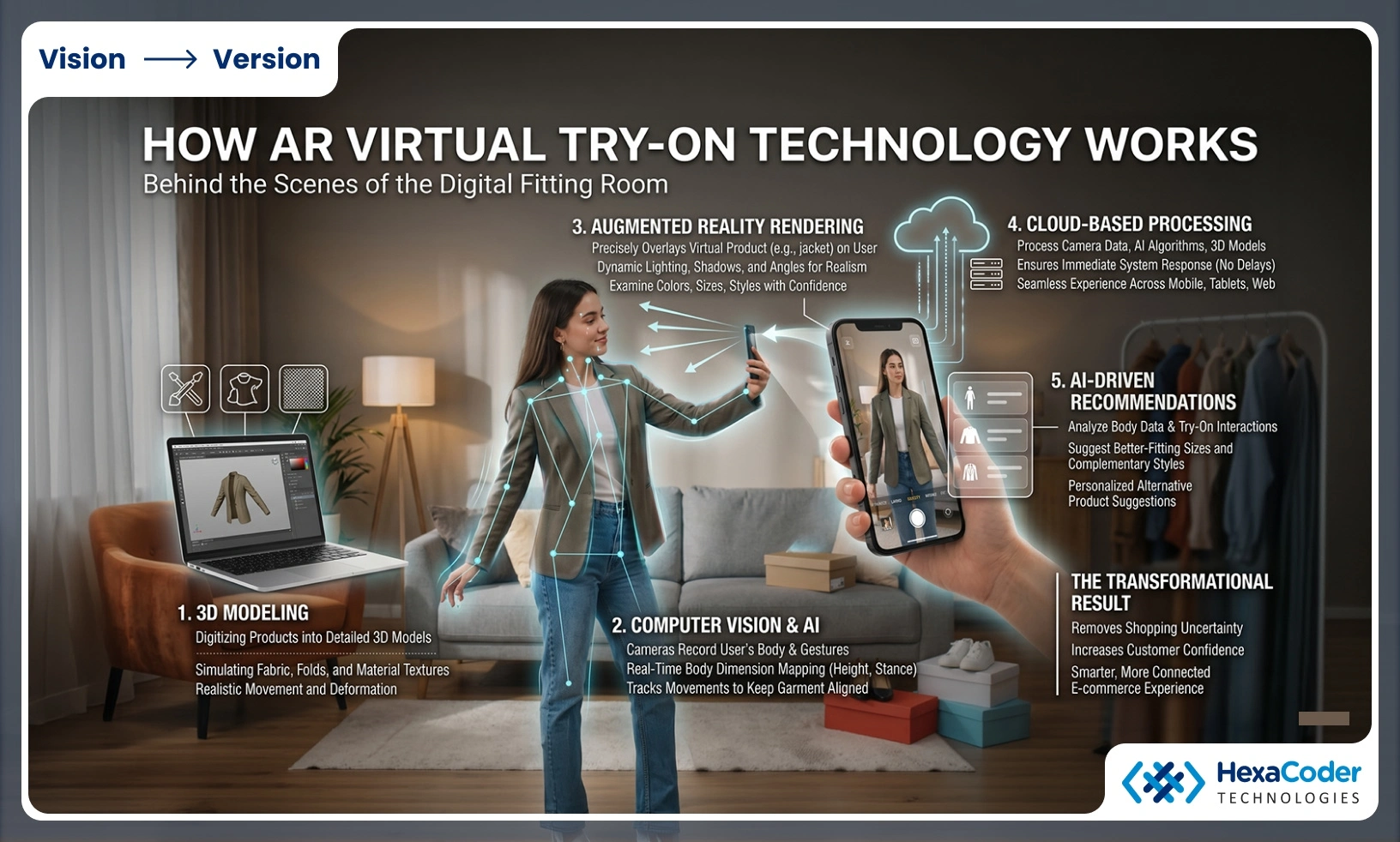
The process starts with 3D modeling. Every product—whether it's a jacket, pair of sneakers, or a handbag—is digitized into a highly detailed 3D model. The model demonstrates how materials create different surface textures through their folds and size dimensions and their movement abilities. The shopper experiences realistic fitting through models which show different body movements by displaying various body positions and deformation patterns.
The process now advances to computer vision and AI. The system uses cameras to record the shopper's body and body movements and body gestures. The system uses advanced algorithms to develop real-time body dimension maps which include height and body stance and body movements. The digital garment maintains its precise alignment with the user from standing to walking to slight side view turning.
The augmented reality rendering system creates a special effect that links virtual products with the actual appearance of the customer. The system employs dynamic adjustments to lighting and shadows and angles which enable the product to display itself as a real object instead of a floating 3D model. The AR engine creates more realistic try-on options because it enables customers to examine product colors and sizes and styles with high assurance.
The system achieves its operational capacity through cloud-based processing which enables system expansion. All data from the camera systems and artificial intelligence algorithms and three-dimensional models undergo cloud processing to deliver immediate system response. The try-on system enables users to test their outfits through various devices which include mobile phones and tablets and web browsers without experiencing any delays or technical problems.
Some platforms also add AI-driven recommendations. The system analyzes body measurements and try-on interactions to recommend better-fitting sizes and complementary styles and alternative products. Customers receive benefits from this feature which directs them toward purchasing more expensive items.
The result creates a shopping experience which enables users to explore virtual stores while receiving personalized service. Users can control their devices through simple gestures which trigger a complete system process that includes modeling and tracking and rendering and real-time data processing.
The e-commerce experience transforms through AR virtual try-on technology because it removes shopping uncertainty while increasing customer confidence and creating a store experience which operates more intelligently and connects better than physical stores.
Real-World Fashion Brands Successfully Using AR Try-On
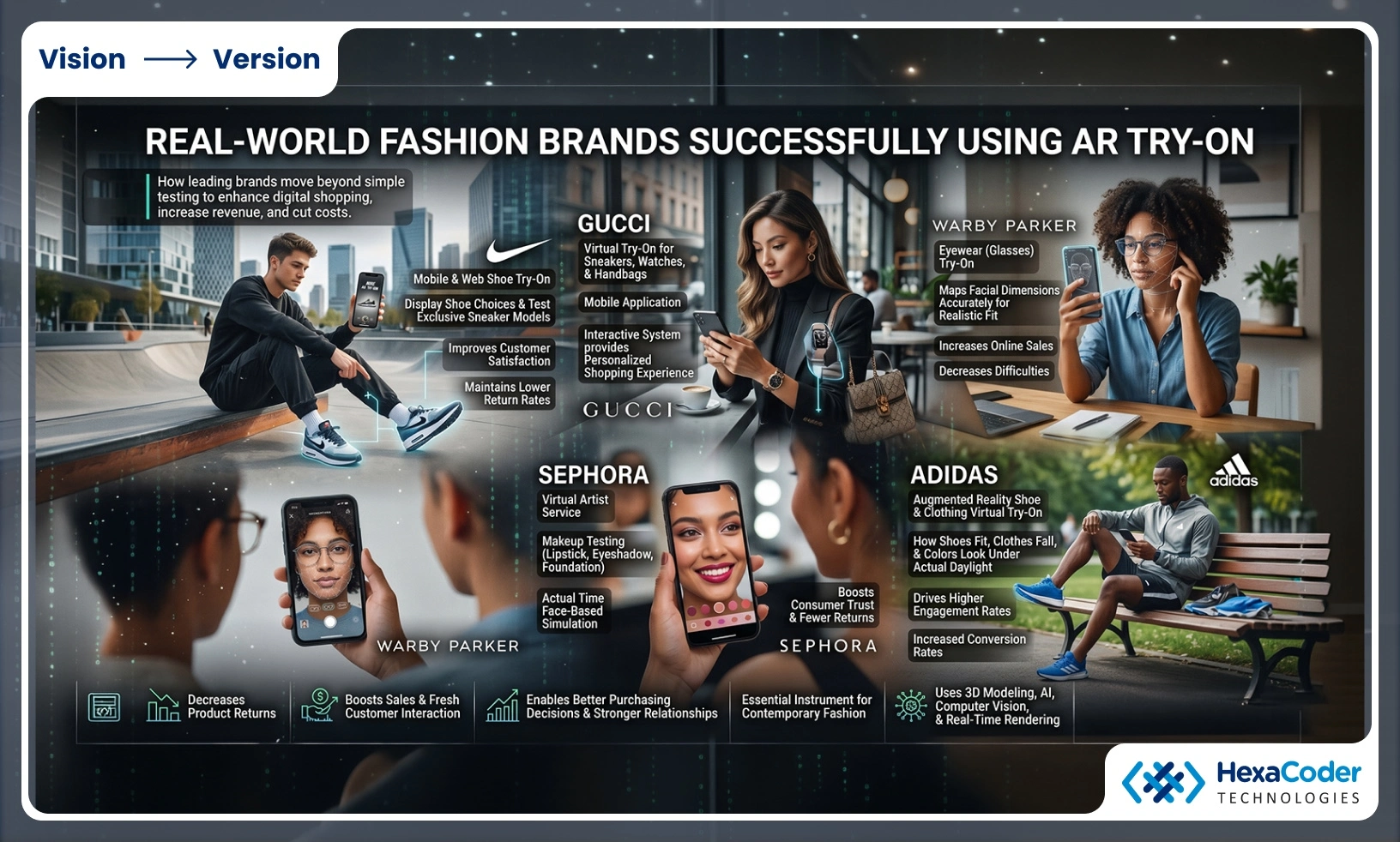
The real-world applications of AR virtual try-on technology demonstrate its effectiveness when actual brands use it to enhance their digital shopping systems. The companies involved here have moved beyond simple testing to create new methods for interacting with customers while they cut costs and increase their business revenue.
1. Nike
Nike has developed AR try-on capabilities for its mobile applications and main online shopping sites which lets customers test shoe designs. The platform enables users to display their footwear choices and view different sneaker designs while testing exclusive sneaker models through virtual means. The technology improves customer satisfaction and helps Nike maintain lower return rates of shoes which customers typically send back to them.
2. Gucci
The luxury fashion brand Gucci uses AR technology to enable customers to virtually try on their shoe and accessory collections. The mobile application permits users to experience virtual try-ons for sneakers and watches and handbags. The augmented reality experience from Gucci lets customers view fashion items through an interactive system which provides them with a personalized shopping experience.
3. Warby Parker
Warby Parker, an online eyewear retailer, uses AR try-on technology to let customers test how different glasses frames will look on their faces. Their platform maps facial dimensions accurately, ensuring realistic fit and style previews. The company states that AR technology increases their online sales while it decreases the difficulties customers face when buying glasses through their website.
4. Sephora
Sephora has implemented AR technology for customers to experience makeup testing through their Virtual Artist service. The platform provides shoppers with a face-based makeup simulation system which shows them lipstick and eye shadow and foundation tones in actual time. Sephora boosts consumer trust in products through makeup testing which leads to fewer returns for expensive items.
5. Adidas
Adidas has conducted studies about augmented reality shoe and clothing virtual try-ons which allow customers to see how items will look when worn. Their augmented reality systems show customers how shoes will fit their feet and how clothes will fall and how various colors will look under actual daylight conditions. Adidas reports that AR try-ons have driven higher engagement rates through longer sessions on their app and increased conversion rates.
The use of AR virtual try-on technology shows that it has become an essential instrument for contemporary fashion brands. The implementation of augmented reality technology provides customers with interactive and customized experiences, which helps them to make better purchasing decisions while building stronger relationships with the brand. AR virtual try-on technology is reshaping fashion and apparel e-commerce because it transforms shopping into an interactive experience that builds customer trust.
Brands that range from Nike and Gucci and Adidas to emerging companies use augmented reality technology to decrease product returns while they boost sales and create fresh customer interaction methods. The platforms use 3D modeling and artificial intelligence and computer vision technology and real-time rendering to let customers preview how clothes and shoes and accessories will look and fit without visiting a physical store. The outcome provides customers with a better shopping experience which enables them to make better purchasing decisions that benefit both customers and retailers.
AR virtual try-ons have become essential business tools for e-commerce companies because they provide merchants with a competitive advantage in an environment that is becoming more difficult. Brands that adopt this technology create immersive shopping experiences which help customers build loyalty while their companies maintain a leading position in digital retail progress. The development of AR try-on solutions has created new possibilities to establish boundaries between virtual and actual spaces.
For broader product visualization research, compare AR try-on with our car configurator guide and our 3D product configurator roundup.