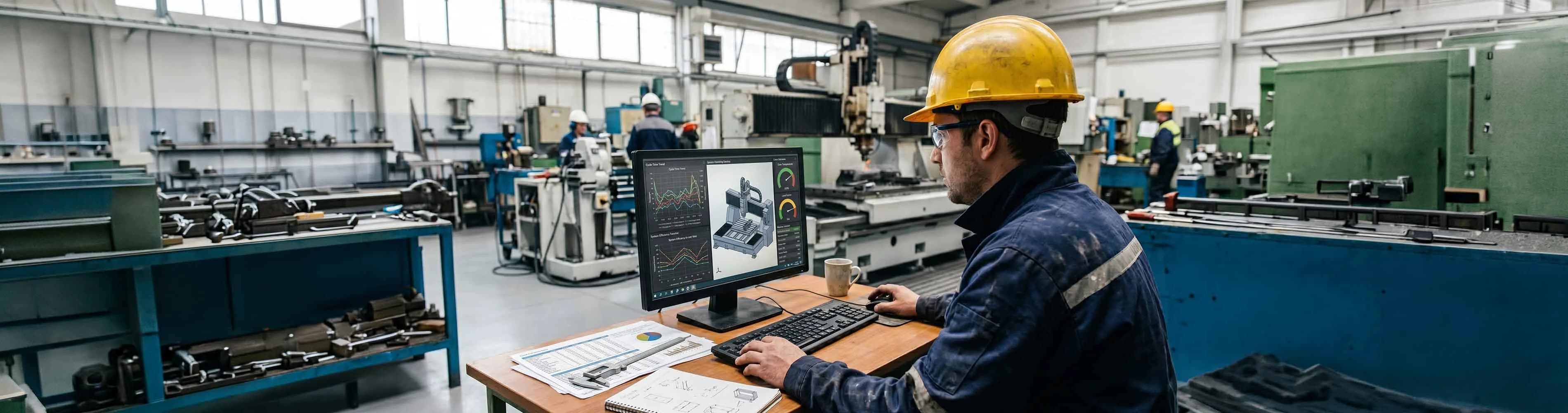
What Makes Digital Twinning Essential for Manufacturing Quality Control

What Makes Digital Twinning Essential for Manufacturing Quality Control
The present-day manufacturing industry demands that quality control functions as a core business element which creates competitive advantage rather than operating as a mere regulatory requirement. A single product recall can cost a company millions of dollars, shatter consumer trust built over decades, and invite punishing regulatory scrutiny. The complete solution of traditional quality assurance approaches from past methods to advanced systems remains unfulfilled because these approaches work as backward-looking systems. They find failures only after the failures have already taken place.
Digital twinning fundamentally changes this equation. Digital twins enable manufacturers to create virtual replicas of all their physical production assets which include machines and production lines and facilities and complete supply chains to achieve quality control through simulation and monitoring and forecasting and production process optimization. Digital twins serve as essential tools for Hexacoder Technologies because they operate at the cutting edge of industrial digitalization. Digital twins have become essential requirements for their business activities.
This report examines the essential factors that establish digital twinning as an essential element of manufacturing quality control while showing its complete set of capabilities and the obstacles it solves and the reasons why manufacturers who think ahead are increasing their funding for this revolutionary technology.
What Is a Digital Twin?
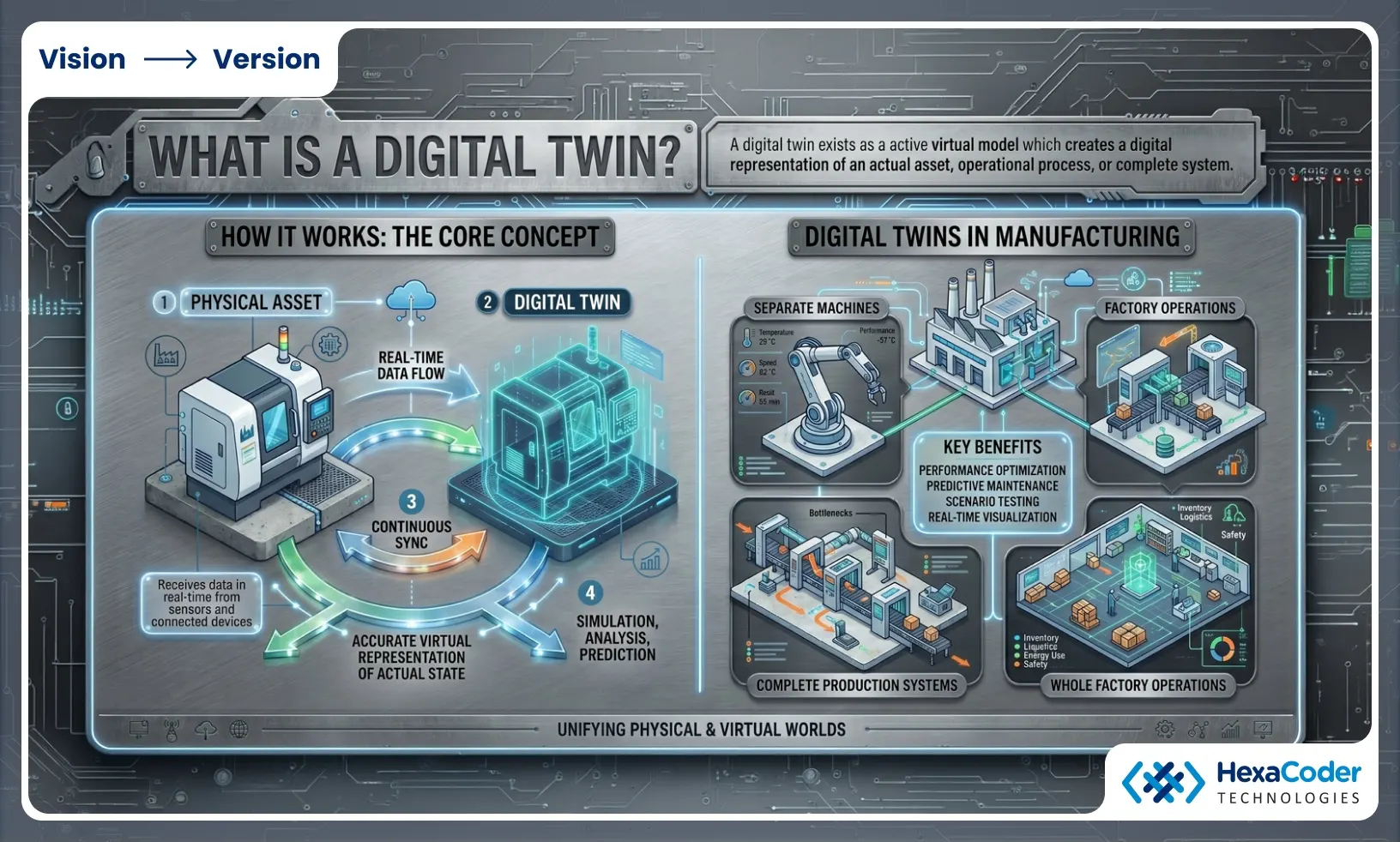
A digital twin exists as an active virtual model which creates a digital representation of an actual asset or operational process or complete system. The system receives data in real-time from all sensors and connected devices which exist in the physical space to create an accurate virtual representation of its actual state. Digital twins in manufacturing create virtual models which can demonstrate separate machines and complete production systems and whole factory operations.
From Reactive to Predictive: A Paradigm Shift
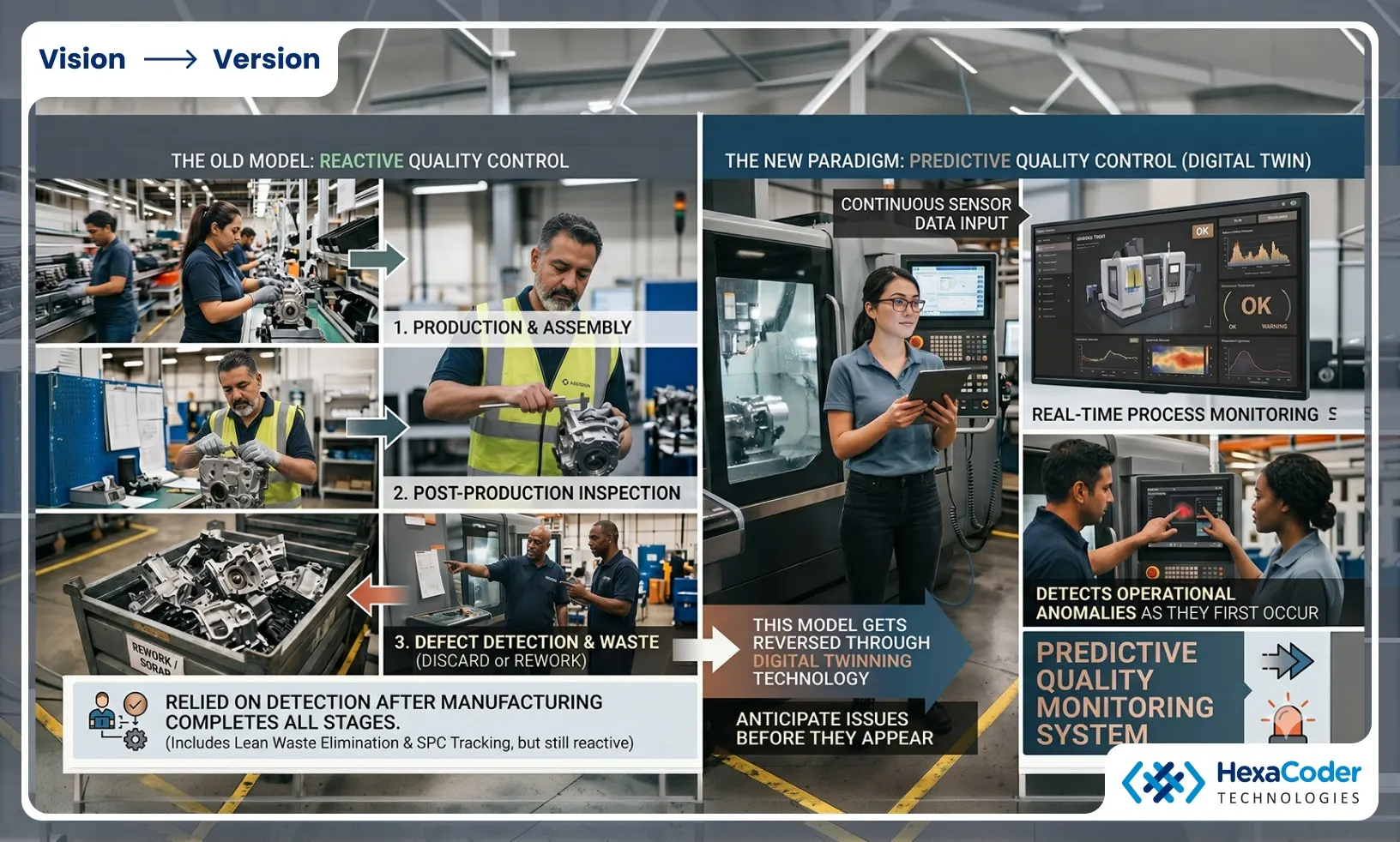
Manufacturing quality control systems used a basic method that limited their operations for many years through three phases which required production to undergo inspection before defective items were either discarded or reworked. Lean manufacturing techniques eliminated waste from production processes while statistical process control (SPC) introduced data-based process tracking systems although both methods relied on the detection of issues which emerged after manufacturing completed all stages.
This model gets reversed through digital twinning technology. The digital twin system uses real-time process monitoring and continuous sensor data input to detect operational anomalies as they first occur. Digital twin technology enables organizations to anticipate issues before they appear through its predictive quality monitoring system.
Predictive Quality Monitoring in Practice
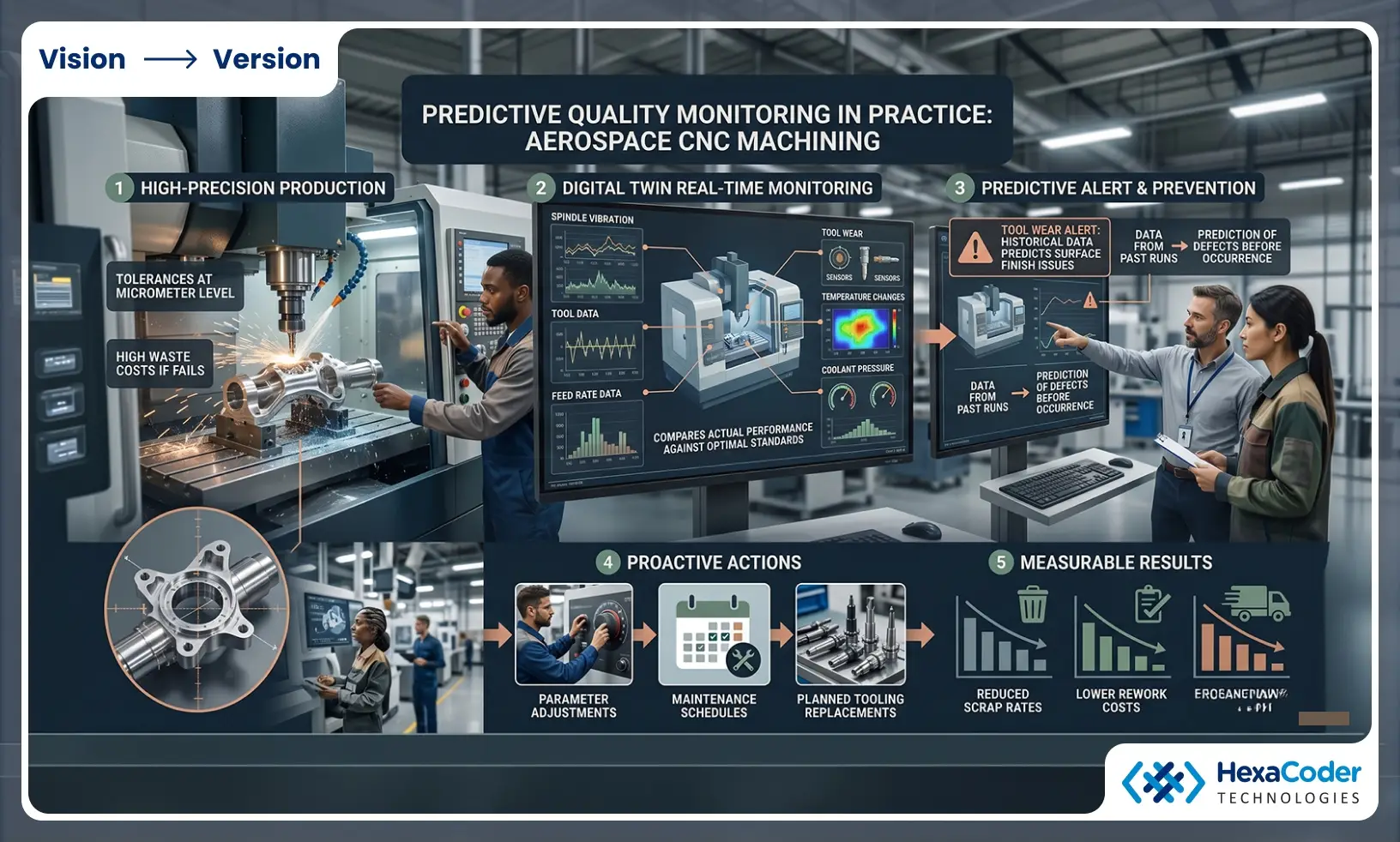
Aerospace component production uses high-precision CNC machining to create parts that require precise measurement tolerances which exist at the micrometer level and generate high costs when materials get wasted. The digital twin system for the machining center tracks spindle vibration and tool wear and temperature changes and coolant pressure and feed rate data through real-time monitoring which compares actual performance against optimal standards. The system creates an alert when tool wear reaches a point which historical data shows will lead to surface finish problems.
This system represents the most advanced form of predictive quality control. Manufacturers will prevent defects before they reach inspection stage because they will monitor their processes through parameter adjustments and maintenance schedules and planned tooling replacements. The system leads to measurable reductions in scrap rates and rework costs and all subsequent defective material costs that move through the supply chain.
Real-Time Visibility Across the Entire Production Ecosystem
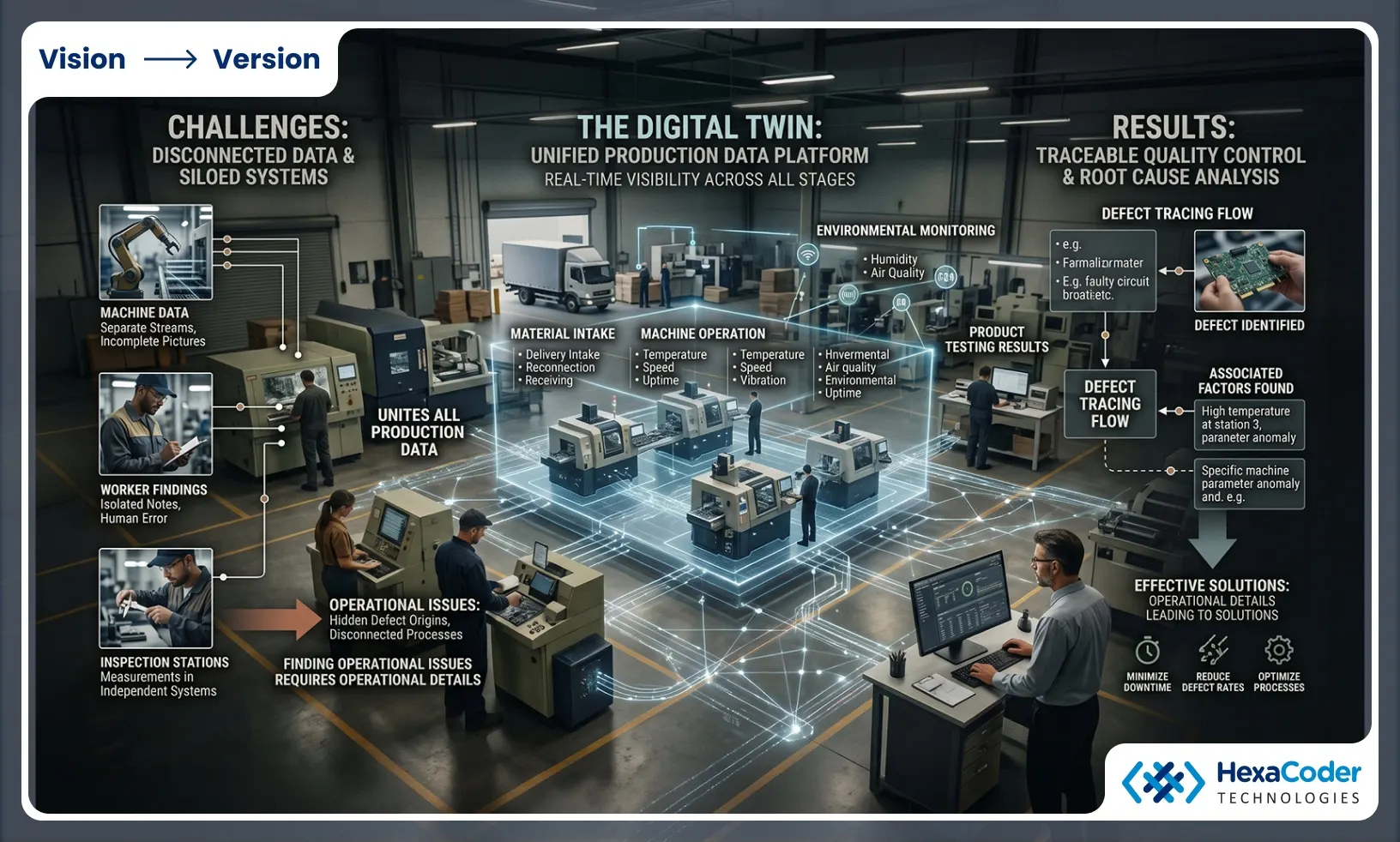
Manufacturing quality management experiences continuous difficulties because production data remains stored in separate systems. Data comes from machines. Workers record their findings. Inspection stations capture measurements. The system experiences problems because it needs continuous assessment while its data streams operate within separate systems. The system needs to find operational issues through its overview assessment because effective solutions require operational details.
The digital twin functions as a system that unites all production data from material intake to machine operation and environmental monitoring and product testing results. The complete picture of production processes enables quality control managers to track defect origins and their associated factors throughout the process.
Complete Process Tracking from Start to Finish
Digital twins provide manufacturers with the ability to create a complete digital thread that includes timestamps for all produced units and batches. The system records every equipment adjustment and all environmental factors and operator activities and testing outcomes which it associates with the distinct manufacturing process. The system provides valuable traceability because it enables multiple essential functions which organizations need to operate their business.
- Root Cause Analysis: Rapid root cause analysis when quality issues emerge
- Compliance: Regulatory compliance documentation in industries such as aerospace, automotive, and pharmaceutical
- Warranty Support: Warranty claims investigation with granular forensic data
- Continuous Improvement: Continuous improvement programs driven by longitudinal process analytics
Hexacoder's clients who work in highly regulated industries find that traceability which digital twin technology provides makes it possible to recover their investment in digital twin infrastructure.
Simulation: Testing Without Risk
Quality control encompasses two main tasks because it needs to control current manufacturing activities while developing and testing complete new products and manufacturing methods. In the past when companies needed to test new products or change their production methods they used physical tests which were commonly known as pilot runs or test batches. The testing process incurs both high costs and extended time requirements because it needs to determine which production settings will generate acceptable results.
Digital twins enable manufacturers to conduct these trials virtually. A new product design can be put through simulated production cycles to identify potential quality vulnerabilities which include areas where tolerances exceed the current equipment limits and assembly problems will arise from process differences and material properties will interact poorly with production methods.
Process Qualification and Change Management
The simulation capability allows manufacturing quality systems to manage changes through its testing process. Manufacturers need to re-qualify their processes when suppliers change raw material formulas or equipment upgrades occur or new regulations mandate process changes. The traditional method requires organizations to conduct extensive physical testing and validation procedures which take a long time to complete.
The digital twin enables organizations to conduct qualification activities through simulation to identify potential failure points and optimize process parameters while decreasing the need for physical testing. The process enables companies to launch new products faster while maintaining lower quality risks during operational changes.
AI and Machine Learning: The Intelligent Core of Modern Digital Twins
The digital twin system provides value through its real-time tracking of physical systems but its full transformative power emerges when organizations implement artificial intelligence and machine learning technologies. Machine learning models that use historical production data can detect hidden quality failure indicators which neither human analysts nor rule-based monitoring systems can discover.
Anomaly Detection and Pattern Recognition
Digital twin platforms use machine learning algorithms to examine continuous multivariate data streams which come from operational systems. The algorithms create baseline models which describe normal operational patterns while considering natural process variations that occur in manufacturing. The system issues alerts when data patterns start to depart from established baseline patterns which lead to quality problems in later stages of production.
The models require more than basic threshold alerts to work effectively. Modern digital twin frameworks use their anomaly detection systems to detect complex multivariable interactions which include multiple environmental factors that create specific risk situations under particular temperature and machine load and material toughness conditions.
Closed-Loop Quality Optimization
The most advanced digital twin implementations go beyond detection and alerting to achieve closed-loop quality optimization. The AI-driven insights from digital twins are used to create process control systems that automatically adjust machine parameters to achieve optimal quality conditions. This advance moves quality management from human control to complete autonomous quality assurance systems.
Many industries need to validate full autonomy while considering regulatory requirements for their operations but systems that operate with minimal human intervention can improve quality control and cut defect rates through their ability to recommend adjustments which operators can approve with a single action.
The Financial Case: Quality Costs and Return on Investment
The professionals who ensure manufacturing quality have complete knowledge about cost of quality. The total financial burden which organizations face originates from their expenses to achieve quality through prevention and appraisal and their costs which arise when they fail to maintain quality through internal and external failure costs. The research which various industries conducted demonstrates that external failure costs which include product recalls and warranty claims together with reputation loss represent the primary expense which causes the most destructive impact on this calculation.
The digital twinning process manages quality-related expenses through three different levels of operational execution.
- Prevention: The solution achieves scrap and rework reduction through its capability to detect defects at early stages and execute predictive maintenance actions.
- Appraisal Efficiency: The solution decreases the need for inspections through its real-time monitoring system which can either supplement inspection needs or completely take over those processes.
- Failure Cost Reduction: The process-based quality assurance system successfully prevents almost all defective products from reaching customers.
- Asset Performance: The solution uses maintenance optimization to extend equipment operational life while preserving its ability to function properly.
The implementation of digital twin quality solutions enables manufacturers to maintain their equipment assets through two-year periods which result in documentary evidence. The first two years of operation provide the most reliable data for manufacturers who want to assess their return on investment in digital twin technology. High-volume manufacturers who operate in markets with intense competition can achieve significant financial benefits from even slight yield enhancements.
Challenges and Considerations in Digital Twin Implementation
The implementation of digital twin systems brings various difficulties which organizations must encounter for their successful deployment. The organizations which create digital twin systems for their operations need to handle multiple essential factors for their complete quality management system to reach the highest performance level.
Data Quality and Integration
Your training data extends until the end of October in the year 2023. The effectiveness of a digital twin technology depends entirely on the precision and thoroughness of the data that it receives. The existing manufacturing machines do not possess the sensor systems required to transmit real-time information to a digital twin system. The system requires the combination and standardization of data from different systems which include MES, ERP, SCADA, and quality management systems. The twin needs accurate physical data for its operation which requires organizations to implement data governance together with their technology systems.
Organizational Readiness and Change Management
Digital twin quality systems create new operational procedures which require new skills and establish new methods for making choices. Quality engineers must develop comfort with data-driven insights and predictive alerts in addition to traditional inspection methodologies. The leadership team needs to drive the organizational transformation which shifts from traditional quality management to predictive quality management. Organizations that underinvest in change management frequently fail to realize the potential of their digital twin investments.
Cybersecurity and Data Governance
Digital twins create and send out substantial amounts of confidential operational information. Strong cybersecurity systems are necessary to defend against industrial spying and sabotage attacks which use advanced methods to target linked manufacturing systems. Organizations operating in defense and aerospace and other sensitive industries face additional challenges when creating implementation strategies because they need to address data governance and sovereignty requirements.
The Future Horizon: Where Digital Twin Quality Control Is Headed
Digital twin technology for manufacturing quality control has reached a stage of rapid technological advancement. Several emerging trends will further extend the value these systems deliver over the next five years.
Digital twins combined with generative AI create a highly effective new technological field. Current systems use learned patterns to detect anomalies and predict failures but generative AI-enhanced twins will create new process optimizations and redesign inspection protocols based on new failure modes and adjust quality control methods according to production changes.
Digital twin networks will extend their reach throughout supply chains by connecting digital twins from suppliers, manufacturers and logistics providers which will enable quality assurance to start before materials arrive at the facility. The process of digital twins enables manufacturers to assess incoming material quality which helps them adjust production parameters according to upstream material changes.
Digital twin technology now reaches mid-market and smaller manufacturers through cloud-based platforms and modular implementation frameworks which were once restricted to major global manufacturers. The extended access to digital twin technology will lead to faster adoption rates while forcing organizations that postpone their digital twin implementation to deal with increased competition.
Quality Without Compromise
The manufacturing industry now recognizes that digital twinning will transform quality control processes because all sectors have demonstrated its effects through their operational outcomes. The question is how quickly organizations can build the capabilities, infrastructure, and organizational culture to compete in a world where quality is managed in real time, defects are predicted and prevented rather than detected and contained, and continuous improvement is driven by an always-on digital intelligence layer.
Hexacoder Technologies is committed to helping manufacturers navigate this transformation with solutions that are technically rigorous, operationally practical, and aligned with the specific quality imperatives of each industry we serve. Our digital twin frameworks exist to create digital copies of current quality processes, but they function as a complete, essential solution that transforms quality assurance into a workflow system that enables zero-defect manufacturing.
Digital twinning will not become the future of manufacturing quality control processes. The organizations currently establishing competitive standards use digital twinning as their present-day solution, which will shape the upcoming manufacturing excellence standard.
For related internal examples of interactive product systems, review our car configurator companies guide and our 3D configurator software comparison.
Use the buttons above to share this article on various social platforms or copy the direct link.

Book a demo to learn how you can enhance your buying experience with AI
Start growing your business with us
Related posts



© Copyright 2026 Hexacoder Technologies. All rights reserved.