
Why Furniture Brands Are Embracing 3D Configurators
The furniture industry is in a rapid evolution. Today's consumers are beyond static images, brochures, or even in-store displays. They want control, personalization, and clarity before they make their purchases. They need to see, touch, and interact with products-but not necessarily be there. In a marketplace where attention spans are short and competition is fierce, this shift has forced brands to rethink how they sell.
This is where 3D configurators changed the game. These platforms let your customer interact with furniture in real time, rotate and inspect products, change finishes, adjust dimensions, and visualize layouts before a single piece is made. They turn imagination into experience and hesitation into confidence.
To any furniture brand wanting to stay ahead, 3D configurators are no longer optional; they have become an important cornerstone in digital strategy, bridging the gap between design, sales, and customer engagement.
From Passive Browsing to Active Experience
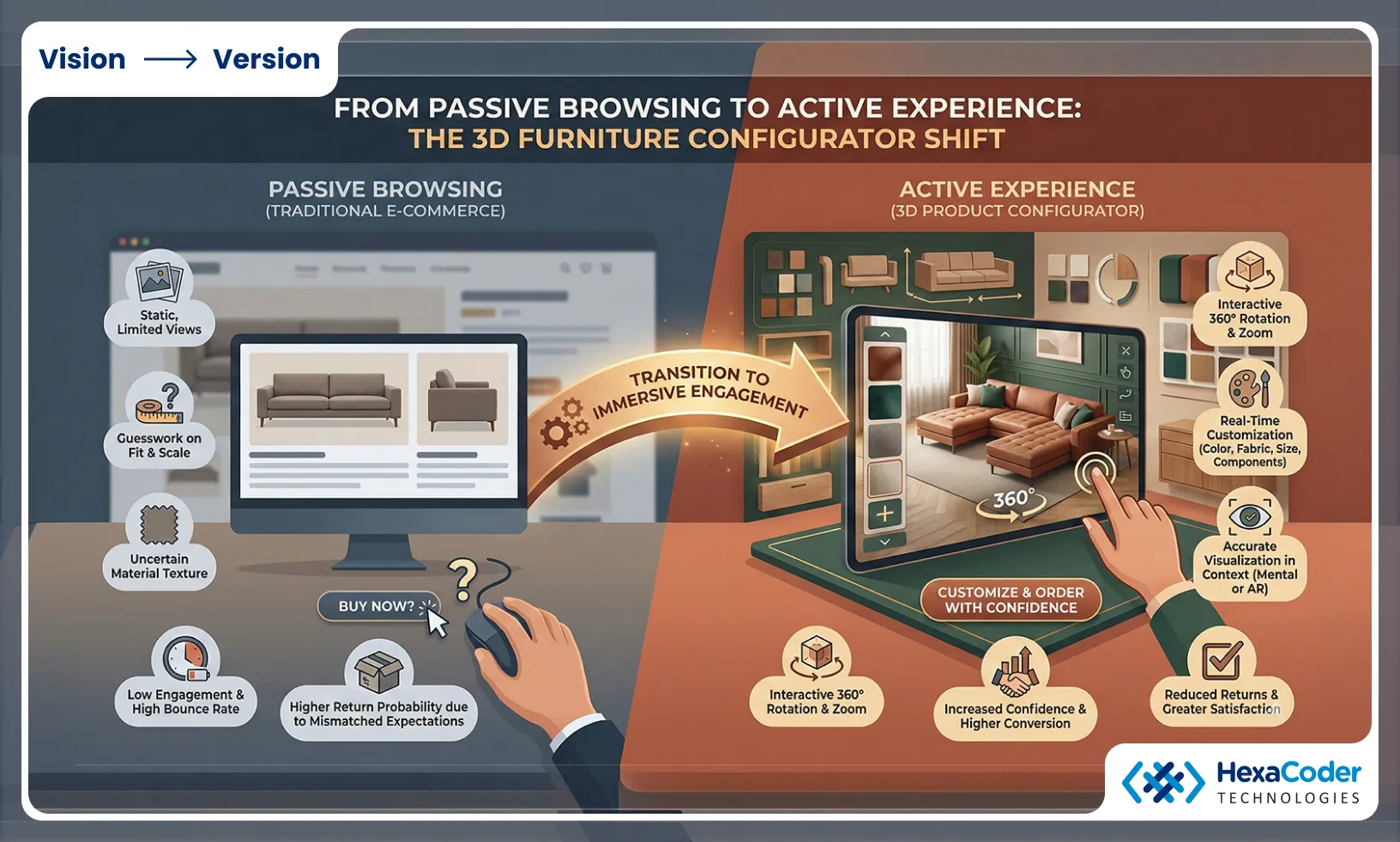
The traditional method of furniture shopping primarily involves the use of imagination. You look at a piece of furniture, say a couch, in an image, and you imagine how it would look in your actual home. The use of the imagination, however, also leads to hesitations during the actual purchase.
3D configurators solve this question too. Customers can look around 3D products from any side, zoom in on any feature, and even choose real-life textures and surface finishes. Instead of guessing, they can touch and explore the product. They can be immersed in the product and feel assured of their decisions.
For brands, this means increased engagement through serious buyers, fewer casual inquiries, and higher conversions.
Customization is the New Standard
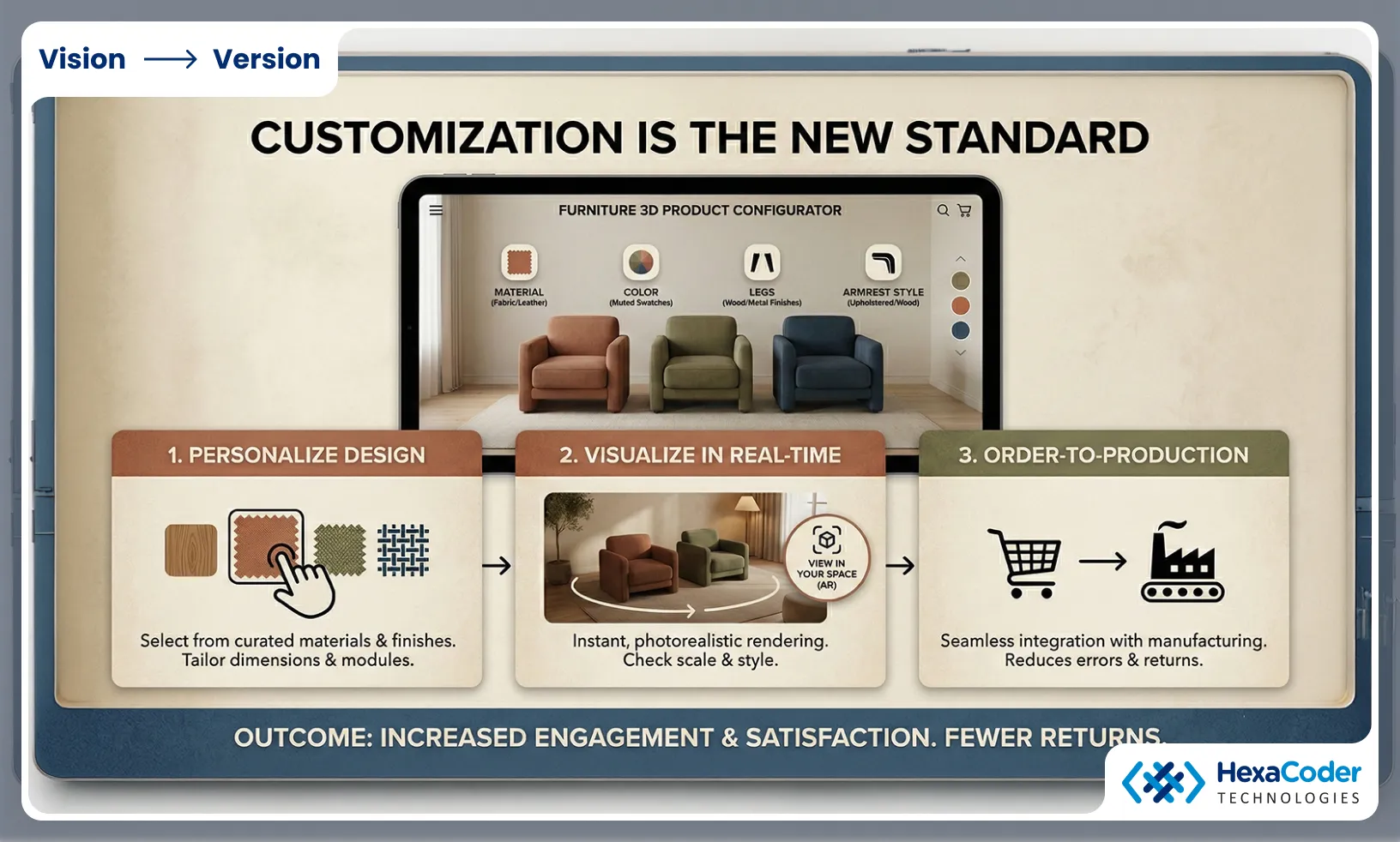
Today's consumers are looking for personalization. They are looking for furniture that complements their spaces as well as their lifestyles. This includes choices in fabric, finish, handle style, size, and in some cases, internal configuration.
Static catalogs or images cannot communicate these options as effectively. 3D configurators can.
Customers can change features by clicking on them and see immediately to every detail of the change in the appearance of the product.
This immediacy has several consequences:
Buyers feel empowered or in control, thus satisfying their needs.
A brand can charge a higher price for raw materials because the consumer can view the value.
Decisions are taken more quickly, reducing the sales cycle.
By incorporating 3D configurators, a furniture brand is not only simplifying complex decisions but also building confidence as well as revenue-generating opportunities.
Reducing Returns and Complaints
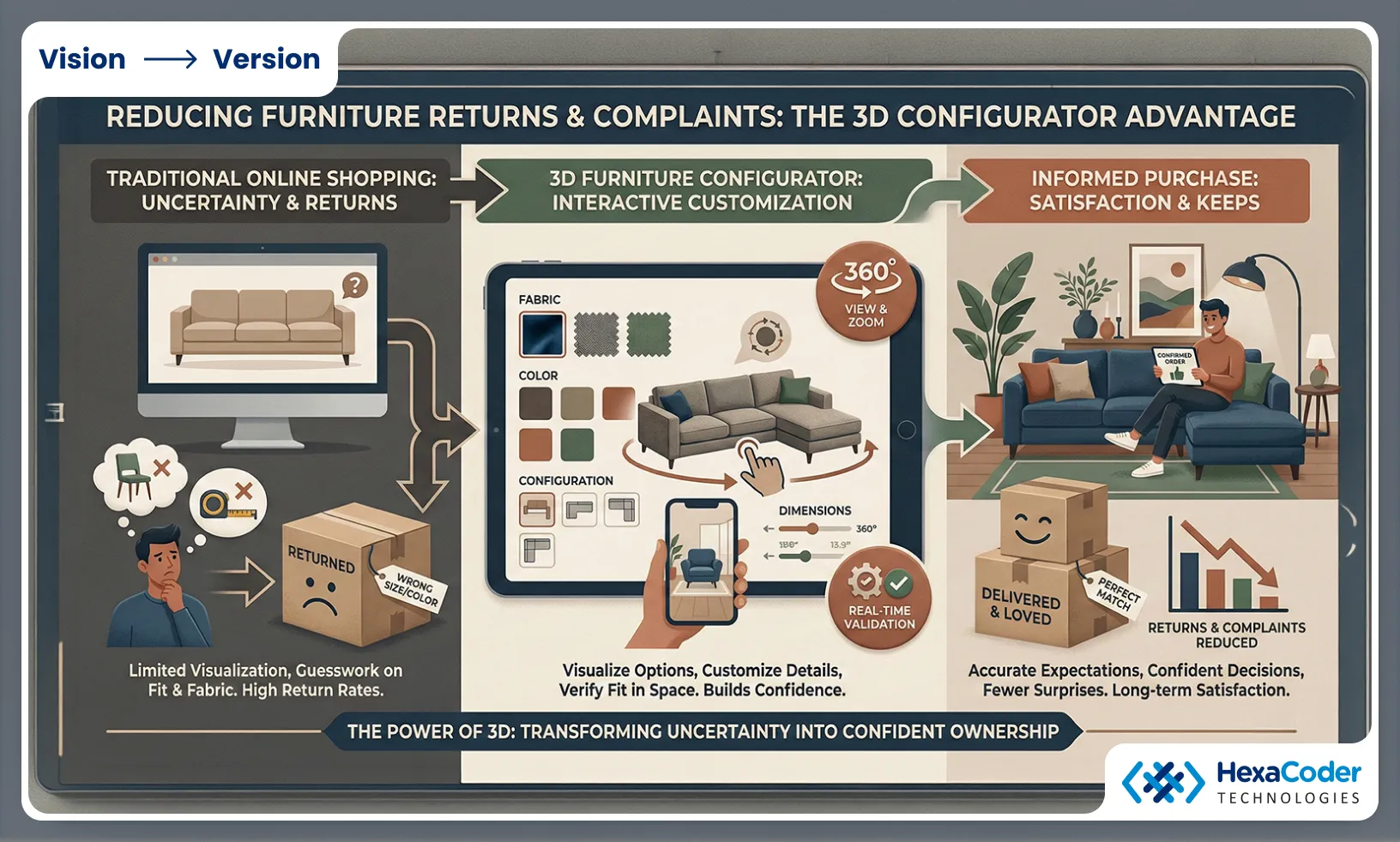
Returns are one of the most important challenges that a furniture retail business faces. A high rate of returns can prove costly to a business in terms of logistics and production costs. Most often, the reason for returns stems from the appearance of the product being different from the image, or the customer having originally confused the product's size.
This is where 3D configurators come into play, addressing the issue head-on. This way, the customer gets the right information on texture, color, size, and proportions before the purchase is made, and they do not get the wrong product, which is usually the case if they had first experienced it virtually.
The advantages to the brand are clear: fewer conflicts, lower operational costs, and a more contented consumer. But what are the advantages to the buyer? Their trust and satisfaction will be bolstered by their newfound confidence.
Shorter Decision-Making Cycles
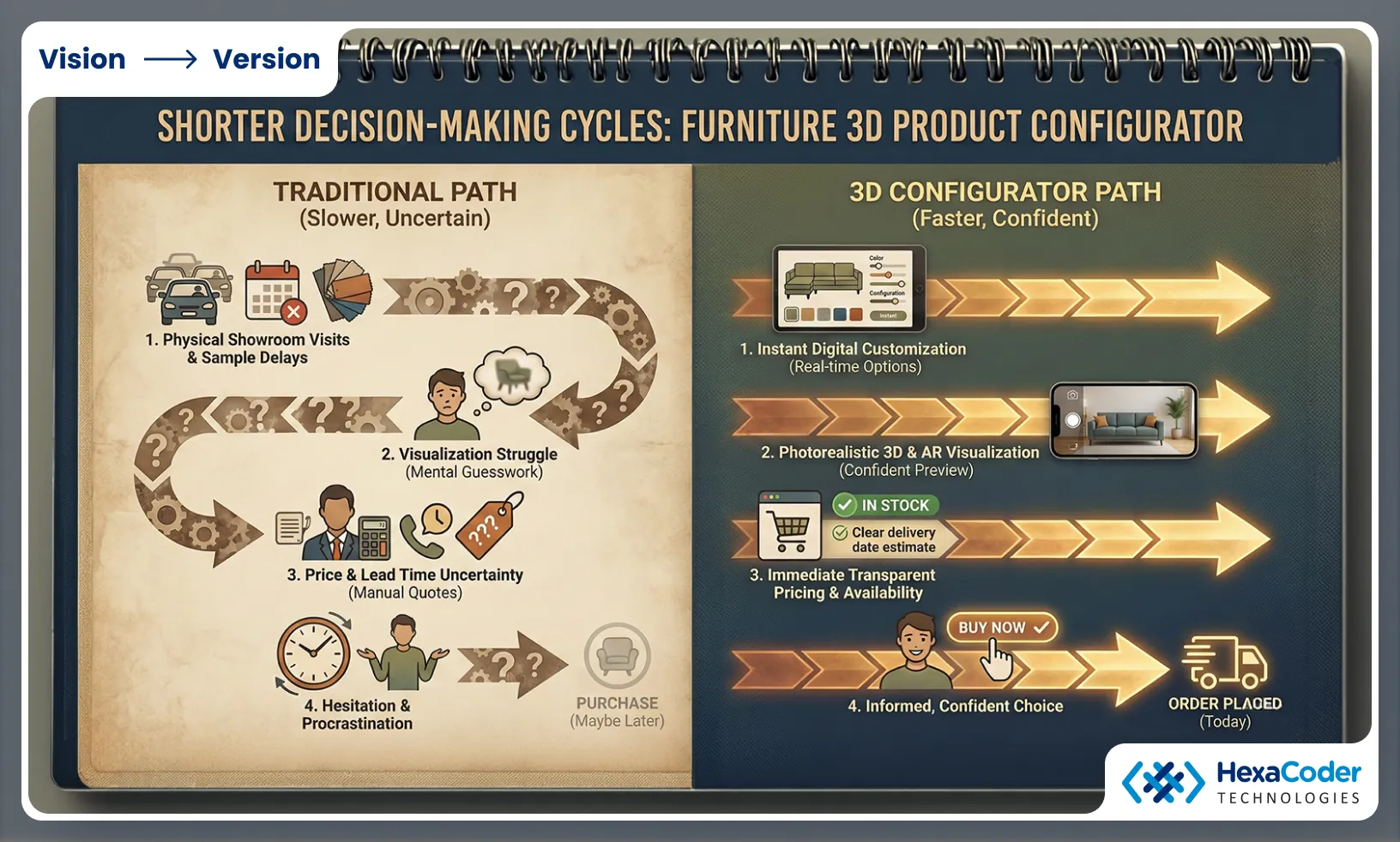
A key financial decision, "furniture purchases can take weeks, with consumers researching, visiting multiple stores, and even talking with family members about which option is best."
The process can be speeded up with the help of 3D configurators since it allows customers to explore, customize, and ultimately make a decision faster due to the instant nature of virtual products.
For brands, this means:
Increased Sales Velocity
Quicker cash flow
Reduced time spent on repeated customer explanations
Similarly, by facilitating the purchase process, 3D configurators can help brands sell more through streamlined processes without additional manpower or cost.
Building an Emotional Connection
Furniture buying is as much an emotional decision as it is a practical one. After all, people don't just buy chairs or tables; rather, they envision this chair or table becoming part of their home, their lifestyle, and daily routine.
3D configurators help customers visualize this experience. They see the sofa in their favorite fabric, they can 'see' the dining table in their space, and even play with layouts. This mental simulation creates ownership prior to a purchase being made-a psychological principle called the endowment effect.
Customers begin to feel that the furniture already belongs in their lives and are far more likely to commit. Emotional engagement translates into higher conversions, repeat business, and strong brand loyalty.
Enhanced Online Shopping Experiences
Currently, the majority of furniture searches in Gujarat, India, and the rest of the world begin online. Virtual representation is the first point of contact, and websites and social media are the starting points for these searches. While an image may hold the eye, it does not necessarily hold the attention.
The 3D configurator helps turn the website into an interactive showroom, whereby users will spend more time interacting with the products and the brand itself, thus making the digital marketing process even better.
The end result is better-quality leads as well as an improved online presence, an attribute that provides a concrete edge to brands in the ever-increasing digital-first market.
Remote Access for Global Customers
Furniture brands are often restricted by their geographical reach, whereby consumers are unable to visit a showroom or may be reluctant to buy from a foreign brand unless they can see the product. This is where 3D configurators can help, enabling users to explore products from anywhere with any device.
It helps to extend new markets, enable worldwide sales without physical stores, and also provide brands with opportunities to engage NRI buyers/remote customers in an effective manner. The customers gain confidence as they know what they're receiving, and in return, the brands expand their customer base and sales in no time.
Streamlining Sales and Manufacturing Alignment
Miscommunication between those involved in sales and those involved in production is one of the leading causes of errors in the manufacturing field and the furniture business. Orders may be miscommunicated, leading to errors such as incorrect finishes, dimensions, or disregarding custom requests. 3D configurators can help eliminate such issues because the digital "blueprint" of exactly what the customer wants is generated. What the customer sees is exactly what production gets.
Reduced Manufacturing Errors: With the configurator, all parts, dimensions, and surfaces are digitally captured and defined. From there, production teams can begin with precise information, significantly reducing potential errors that can occur and lead to costly reworks.
Efficient Production Planning: Precise digital orders provide information that is very detailed and accurate, enabling manufactures to efficiently plan production workflows and assembly procedures, as they understand what is being made, how it is being made, and with what.
Improving Inventory Management: Since the configurator defines every order accurately, it means the inventory can be calculated accurately as well. There will be no cases of unnecessary inventory or shortage of materials.
Lower Operational Risk: Operational risks in production impact timeliness, budget, and customer satisfaction. The application of the 3D configurator reduces risks because of smoother production processes.
By linking sales and production using digital accuracy, 3D configurators offer a universal truth. Everyone works from the same set of data, which helps to streamline processes while providing customers precisely what they have requested.
Data-Driven Insights
Besides visualization, 3D configurators also offer actionable insights. With the help of 3D configurators, brands
Most popular configurations
Frequently chosen materials
Where the customer drops off
Which products get the most attention
This data shapes everything from design choices and inventory levels to marketing pushes and even future product development. Brands make informed decisions based on actual customer interactions, not guesses.
Use Cases by Furniture Type
3D configurators can be broadly used to serve various furniture types:
Living Room Furniture: It comprises sofas, armchair, entertainment units, and coffee tables. It allows buyers to test these.
Bedroom Sets: Various items in the bedroom, comprising beds, wardrobes, and night stands. Users can imagine these.
Office Furniture: Desks, chairs, and storage furniture. Configurators assist clients in planning the space efficiently.
Outdoor and Patio Furniture: Investigate factors like durability, positioning, and hue under a light simulator.
Custom Modular Systems: Ideal for brands who offer modular kitchen, wardrobe, and bookshelf packages. Interactive modules can be tailored according to size, areas, and finishes.
By catering to each category using such tools, brands help customers make choices with complete confidence and knowledge, irrespective of the products being sold.
ROI and Measurable Benefits
Investing in a 3D configurator is not only about technology, but also about business impact:
Higher Conversion Rates – Customers who are more familiar with configurators are more apt to make purchases.
Lower Return Rates: Appropriate visualization builds appropriate expectations.
Faster Sales Cycles: Decision making is accelerated using real-time exploration and customization.
Better Customer Engagement: Interactive elements can help maintain customers' attention and create brand loyalty.
Data Insights: Through this, buyer behavior helps improve marketing, designing, and production techniques.
This translates into higher revenues, lower costs, and improved customer relations for furniture brands.
Integration Tips for Furniture Brands
To truly drive value from 3D configurators, brands must also:
Webpage Embed: Embed the configurator in your product pages for a seamless user experience.
Omni-channel availability: Ensure configurators work on desktops, mobile devices, and VR for consistency in experiences.
Realistic Visualization: Accurate texture, lighting, and materials should be used in order to present information that is believable.
Data Analytics: Track what is going on with your users to derive actionable insights.
Seamless Production Link: Integrate configurator outputs with manufacturing and ERP systems to avoid errors.
A well-integrated configurator is to become a tool, not a novelty, that will serve sales, marketing, and operations.
The Future of Furniture Retail: Digital, Interactive, and Personalized
The furniture retail landscape of the future? Well, it's not about catalogs or even the old showrooms anymore—now it's digital, it's interactive, and it's personal. Today's consumer wants to see that piece of furniture in their home, understand its function, and even get a glimpse of the finish they can select before they'll even think of buying it. This new consumer profile has made 3D, augmented reality, and even artificial intelligence key tools that furniture makers cannot ignore.
AR-Based In-Room Visualization: Augmented reality provides an opportunity for buyers to virtualize furniture items in their homes using a smartphone or tablet device. The buyer gets a clear view of a sofa placed in the corner of the room or whether the table leaves adequate room for walking. This interaction helps overcome any confusion that might be associated with home furniture shopping. It gives the buyer an assurance that their purchase is the right one. Augmented reality also provides the buyer with the opportunity for full exploration.
AI-Powered Recommendations: Personalization can also be taken to the next level by the incorporation of artificial intelligence. It will enable the discovery of furniture items that suit the personal tastes of the buyers, by analyzing their interests and the time spent associated with the furniture items. This will not only promote the shopping experience, but it will also help the sales to increase as the customers will also get to purchase other items that they might not have considered to purchase earlier.
End-to-End Virtual Sales: Current configurators do no longer render a product, however additionally encompass an finish-to-end shopping process. Products, particularly furniture, can be selected, designed, and shopped for through the use of the configurator. Parameters such as fabric, finish, size, and accessories can all be modified, permitting customers to seamlessly transition from browsing to shopping. For furniture manufacturers, this approach removes the want for physical storefronts, making it a potent tool for hitting distant customers.
Sustainability Visualizations: Today's customers consider the environmental consequences of the products they wish to acquire. With the help of modern configurators, brands may simulate products made from sustainable resources and produced with the environment in mind. Companies showing this kind of transparency attract conscious customers while also enhancing their brand image in a competitive marketplace.
By combining these innovations, furniture companies can create engaging, user-friendly, and interactive experiences. Those who incorporate these technologies, which include AR, AI, and 3D, are ahead of their industry, making their customers happy, and witnessing business success in terms of sales, loyalty, and overall business value.
The Strategic Edge of 3D Configurators
The furniture industry is changing fast. Failing to keep up with such changes results in becoming irrelevant. 3D configurators are no longer just tools but are now bridges between reality and imagination. They transform uncertain buyers into confident customers. Furniture brands can benefit from using interactive and visually precise tools by:
Increase conversion rates and prevent returns by making the customer see what they actually purchase.
Speeding Up Decision-Making and Sales Cycles with Immersive, Clear Visualization.
Provide remote accessible experiences for global customers without requiring physical showrooms.
Ensure accurate alignment of sales, design, and manufacture to eliminate errors and increase efficiency.
Get valuable insights to improve continuously through analytics for buyer behaviors and interactions.
AR-Based In-Room Visualization aids buyers in visualizing the product within their space using mobile devices.
AI-Powered Recommendations provide suggestions based on one's likes and past interactions.
"End-to-End Virtual Sales provides the ability for selection, customization, and direct purchasing from the platform."
Sustainability Visualizations are computer stimulations of eco-friendly material.
Hexacoder Technologies supplies high-tech configurator platforms that offer interactive customizations, visualization, and analytics. Partnering with them will enable furniture brands to create compelling customer experiences, create customer delight, and achieve new revenue—thus making innovation their fundamental strength.