
1. Introduction: The Factory That Cannot See Itself Is Already Losing
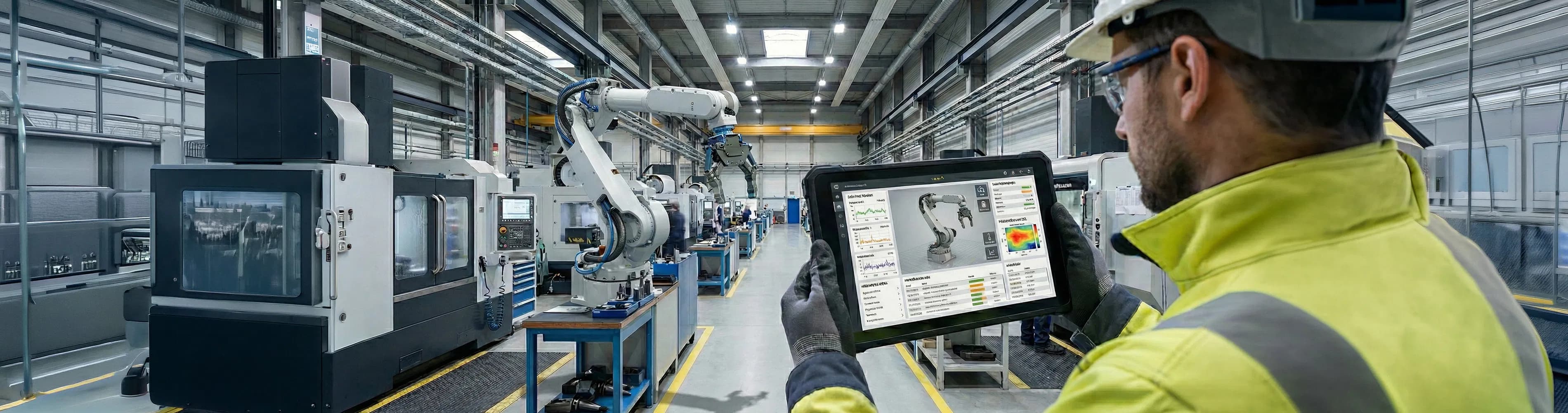
Walk into almost any factory in the world today and you will find the same paradox. Millions of dollars of precision machinery operating around the clock. Sophisticated production management systems tracking orders, inventory, and schedules. Teams of skilled engineers and technicians keeping everything running. And yet, despite all of this capability, most factories are operating blind. They do not know — in real time, with precision — the health state of their own equipment. They do not know which machine is about to fail, which process is drifting out of specification, which bottleneck is quietly costing them hundreds of thousands of dollars in lost throughput every month.
They find out when something goes wrong. A bearing fails. A conveyor stops. A quality audit reveals that an entire production run of parts is out of tolerance. And then the scramble begins — emergency maintenance calls, frantic troubleshooting, costly expediting, frustrated customers, and the inevitable post-mortem meeting where everyone agrees that if only they had known sooner, they could have prevented it.
This is not an unusual situation. It is the norm. And it is costing the global manufacturing industry over $1 trillion every year in unplanned downtime, quality failures, wasted energy, and missed production targets. It is the gap between what factories could achieve — if they had complete, real-time intelligence about everything happening inside them — and what they actually achieve, operating with incomplete information, reactive processes, and tools that were designed for a slower, simpler industrial world.
Digital twin technology is the solution to this problem. Not a partial solution. Not an incremental improvement. A fundamental transformation in how industrial operations are understood, managed, and optimized - from reactive to proactive, from guesswork to intelligence, from firefighting to strategic control. And HexaCoder's Digital Twin Solutions are purpose-built to deliver this transformation to factories, refineries, mines, and industrial operations of every kind. Our AI-powered solutions enhance this process.
This article is a complete, in-depth guide to digital twin technology. We will cover what digital twins are, how they work technically, what types exist, which industries benefit most, why every factory needs one today, what the barriers to adoption are, how to overcome them, and what the future holds. By the time you finish reading, you will understand not just the technology but the business imperative — why organizations that invest in digital twins now will dominate their industries in the decade ahead, and why those that wait will find themselves increasingly unable to compete.
Let us begin at the beginning.
2. What Is a Digital Twin? A Complete Definition
A digital twin is a virtual representation of a physical object, system, process, or environment that is dynamically connected to its real-world counterpart through a continuous, bidirectional flow of real-time data. It is not a static model, a 3D rendering, a simulation run once and filed away, or a monitoring dashboard that shows you what is happening. It is all of these things simultaneously — and more. It is a living, intelligent, continuously updated mirror of physical reality that enables you to understand, predict, optimize, and control physical systems with a degree of precision and foresight that no other technology can provide.
The most important word in that definition is bidirectional Data flows from the physical world into the digital model, keeping it synchronized with reality in real time. And intelligence, insights, recommendations, and control commands flow back from the digital model into the physical world, improving how the real system operates. This closed-loop relationship between physical and digital is what separates a digital twin from every other industrial technology that came before it.
Think of it this way. If you put a thermometer on a piece of equipment and display the temperature on a screen, that is monitoring. If you build a physics simulation model of that equipment and run scenarios, that is simulation. If you connect the live temperature reading to the simulation model so it continuously updates to reflect reality, and then use that model to predict when overheating will occur and automatically adjust the cooling system to prevent it — that is a digital twin. The power is not in any single component. The power is in the connection.
"A digital twin does not just tell you what is happening. It tells you what is going to happen, why, and precisely what you should do about it — before the problem occurs."
The formal definition of digital twin technology includes three essential elements that must all be present for a system to qualify as a genuine digital twin. First, there must be a physical entity — the real-world thing being represented. Second, there must be a virtual model — a computational representation that captures not just the appearance but the behavior and state of the physical entity. Third, there must be a live data connection — sensors, networks, and data pipelines that continuously synchronize the virtual model with the physical reality and enable the virtual model's outputs to influence the physical system's operation. Remove any one of these three elements and you have something less than a digital twin. You have a model, or a sensor network, or a simulation tool — all useful in their own right, but not capable of delivering the transformative value that a complete digital twin system provides.
Digital Twins vs. Simulations vs. Monitoring Systems
Because digital twin technology builds on and incorporates several older technologies, it is frequently confused with them. Understanding the differences is important for anyone evaluating or implementing these systems.
A monitoring system tells you what is happening right now. It collects sensor data, displays it on dashboards, and triggers alerts when values exceed predefined thresholds. Monitoring systems are reactive — they tell you when something has already gone wrong, or is in the process of going wrong. They provide no predictive capability and no intelligence about why something is happening or what to do about it.
A simulation model is a computational representation of a system that can be used to predict how the system would behave under various conditions. Simulations are powerful tools for design and analysis, but they are typically run as discrete exercises — you set up the conditions, run the simulation, and interpret the results. They are not continuously synchronized with a physical counterpart, and they do not automatically update when the real system changes.
A digital shadow is a step beyond monitoring — it is a real-time data flow from a physical system into a virtual model, providing a dynamic, continuously updated view of the physical system's state. But the data flow is one-directional. You can observe what the physical system is doing in remarkable detail, but you cannot send commands or optimizations back to influence it. A digital shadow is like watching a live video feed. Useful — but passive.
A digital twin is fully bidirectional and intelligent. It combines real-time monitoring, continuous physics-based and AI-powered simulation, predictive analytics, and closed-loop control into a single integrated system. It does not just observe the physical world — it actively helps manage and improve it. This is why organizations that implement true digital twins consistently report transformational results, while those that settle for monitoring systems or periodic simulations report incremental ones.
3. The History of Digital Twin Technology
The NASA Origins: Apollo and the Mirror System Concept
The intellectual origins of digital twin technology predate the term by more than four decades. In the 1960s, NASA's engineers working on the Apollo space program confronted a problem that was unprecedented in human history: how do you diagnose, troubleshoot, and repair a complex machine that is 240,000 miles away in space, carrying human lives, with no possibility of physical access? Their solution was elegant and effective — build and maintain exact physical replicas of the spacecraft on Earth, mirror systems that could be used to simulate conditions, test hypotheses, and validate procedures before transmitting instructions to the actual vehicle.
During the Apollo 13 crisis in April 1970, this approach proved its value in the most dramatic way imaginable. When an oxygen tank explosion crippled the spacecraft 200,000 miles from Earth, NASA's flight controllers used their ground-based replicas to simulate dozens of different scenarios — testing power configurations, life support calculations, and re-entry procedures — until they found a solution that would bring the crew home safely. Three astronauts survived because NASA had a mirror system. The concept was validated beyond any doubt: maintaining a continuously updated model of a remote, complex physical system, and using it to reason about problems and test solutions before acting on the real thing, is profoundly powerful.
The Formal Definition Emerges: Michael Grieves and PLM (2002)
The term "digital twin" was formally coined in 2002 by Dr. Michael Grieves of the University of Michigan, in the context of Product Lifecycle Management (PLM) research. Grieves described a conceptual model consisting of three components: a physical product existing in real space, a virtual product existing in virtual space, and a set of connections that linked information flowing between the two spaces. This formulation was remarkably prescient. It captured the essential bidirectional, synchronized relationship that defines digital twin technology with a clarity that has not been improved upon in the two decades since.
At the time, the technology needed to implement Grieves' vision at industrial scale did not exist. Sensors were expensive, networks were slow, computing power was limited, and the cloud did not exist. The concept was intellectually compelling but practically out of reach for most applications. That began to change in the 2010s.
The IoT Explosion Changes Everything (2010–2018)
The convergence of several technology trends in the early 2010s created the conditions for digital twin technology to move from concept to reality at industrial scale. The Internet of Things brought sensor costs down from hundreds of dollars per unit to pennies, while simultaneously creating the connectivity infrastructure needed to stream data from millions of sensors to central processing systems. Cloud computing platforms — AWS, Azure, Google Cloud — made massive computational resources available on demand without the need for expensive on-premises infrastructure. And big data analytics platforms created the tools to process and analyze the vast data streams that all of these connected sensors were generating.
General Electric was among the first large corporations to invest heavily in this vision. Its Predix industrial IoT platform, launched in 2012, placed digital twins at its core — creating computational models of GE's industrial products that were continuously updated with real-time operational data. By 2016, GE had digital twins of over 1.3 million industrial devices: jet engines, gas turbines, wind turbines, MRI machines, and more. The documented results were impressive — 20 percent reductions in unplanned downtime, 25 percent reductions in maintenance costs, measurable improvements in energy efficiency and output quality. The industrial world took notice.
Artificial Intelligence Transforms Digital Twins (2019–2024)
The integration of artificial intelligence and machine learning into digital twin systems was the next great leap, transforming digital twins from sophisticated real-time monitoring tools into genuinely predictive and prescriptive intelligence systems. Traditional digital twins — even sophisticated ones — were largely descriptive. They told you what was happening and, to some degree, what had happened historically. AI-powered digital twins go further: they predict what is going to happen, prescribe what you should do about it, and in increasingly capable systems, act autonomously to optimize outcomes without waiting for human instructions.
Machine learning algorithms trained on the rich operational histories that digital twin data collection systems had been accumulating could identify failure signatures — subtle patterns in sensor data that precede equipment failures by days, weeks, or even months. These patterns were often invisible to human analysts and impossible to encode in rule-based systems, but machine learning could reliably detect them, enabling predictive maintenance with a precision and lead time that transformed maintenance economics across multiple industries.
The COVID-19 pandemic, despite its devastating broader consequences, served as an unexpected accelerator for digital twin adoption. When physical access to industrial facilities was restricted or eliminated, organizations with digital twin systems in place were able to continue monitoring, managing, and optimizing their physical assets remotely. Those without digital twins were left managing critical assets reactively, with restricted visibility and limited response capability. The contrast was stark and instructive. Many organizations that had been slow to invest in digital twins accelerated their programs significantly in response to this demonstrated vulnerability.
The Mature Ecosystem of 2026
By 2026, digital twin technology has reached a level of maturity, cost-effectiveness, and ubiquity that marks a qualitative shift in its role in industrial operations. The global market exceeds $73 billion. More than 60 percent of Fortune 500 companies have active digital twin programs. The technology has moved from the exclusive domain of large, well-resourced corporations to become accessible to mid-market manufacturers, regional utilities, and municipal governments. Platform costs have dropped by orders of magnitude. Implementation timelines have compressed. And the documented results — in predictive maintenance savings, operational efficiency gains, quality improvements, and energy reductions — have compounded across thousands of deployments to build an evidence base that makes the business case for digital twin investment essentially unanswerable.
4. The Critical Problem: Why Factories Are Bleeding Money Right Now
Before going deeper into how digital twin technology works, it is worth being very specific about the problem it solves — because the scale of the problem is often not fully appreciated, even by the factory managers and executives who are living with it every day.
The Hidden Cost Crisis in Modern Manufacturing
Most factory managers know they have downtime. Most know they have maintenance costs. What very few fully appreciate is the true aggregate cost of operating without real-time intelligence about their physical assets. The numbers are staggering — and they represent money that is being left on the table every single day, in factories around the world, because the technology to capture it has not yet been deployed.
At HexaCoder.com, we have worked with manufacturers across dozens of sectors, and the pattern is consistent: organizations implementing our digital twin solutions invariably discover that their true costs of operating without intelligence are significantly higher than they estimated going in. The savings, correspondingly, are larger and faster than expected.
The True Cost of Unplanned Downtime
Unplanned downtime is the most visible and immediately painful cost of operating without real-time equipment intelligence. When a critical machine fails unexpectedly, the costs cascade rapidly. There is the immediate production loss — the revenue that would have been generated by the halted production line. There is the emergency maintenance cost — premium rates for technicians called in urgently, expedited parts sourcing, overnight shipping fees. There is the ripple effect through the supply chain — downstream customers not receiving their orders on time, penalty clauses triggered, relationships strained. There are the catch-up costs — overtime, expediting, premium logistics — incurred to recover lost production. And there is the hidden cost that rarely appears in the downtime analysis: the degraded equipment performance that precedes a failure, during which the machine is still running but at reduced efficiency, higher energy consumption, or producing more scrap.
The numbers vary by industry, but they are consistently large. In automotive manufacturing, unplanned downtime costs an average of $260,000 per hour. In semiconductor fabrication, it can exceed $500,000 per hour. In oil and gas production, an unplanned shutdown of a production platform can cost $1 million or more per day. Even in less capital-intensive manufacturing environments, the fully-loaded cost of an unplanned production stoppage — including all the direct and indirect costs described above — typically runs to tens of thousands of dollars per hour or more.
The Quality Problem: When You Find Out Too Late
Equipment that is operating outside its optimal parameters does not always fail dramatically. Sometimes it simply produces output that is subtly out of specification — products that pass initial inspection but fail in service, or products that are right at the edge of tolerance and require rework, or entire production runs that need to be scrapped when a quality audit catches a drift that has been building undetected for hours or days.
The quality costs in manufacturing are both direct — scrap materials, rework labor, disposal costs, warranty claims — and indirect — damage to customer relationships, reputational harm, loss of repeat business. In industries with tight quality requirements, such as aerospace components, pharmaceutical manufacturing, food processing, and automotive parts, these costs can be extraordinarily high. More importantly, they are largely preventable. A digital twin that continuously monitors process parameters and detects drift in real time can alert operators to quality-affecting conditions before they propagate into product defects. The difference between catching a process deviation in the first five minutes and catching it five hours later is the difference between a minor adjustment and a major scrapping event.
The Energy Waste Problem
Industrial energy consumption is enormous, and a surprisingly large fraction of it is wasted. Compressed air leaks. Motors running at full load when partial load would suffice. Heating systems fighting cooling systems in adjacent zones. Equipment left running during non-production periods. Processes consuming more energy than their physical requirements demand because no one has had the visibility or the tools to optimize them.
Studies consistently show that 20 to 30 percent of industrial energy consumption is wasteable — meaning it could be eliminated without any reduction in production output or quality, simply by operating physical systems more intelligently. A digital twin that provides real-time visibility into energy flows across an entire facility, combined with AI-powered optimization algorithms that continuously tune operational parameters, can capture a significant fraction of this wasted energy. At scale, across a large manufacturing facility or an industrial campus, the annual energy savings can run to millions of dollars.
The Talent and Knowledge Problem
There is another dimension of the factory problem that is less often discussed but increasingly critical: the demographic challenge facing industrial operations worldwide. The generation of experienced maintenance technicians and production engineers who built their deep practical knowledge of specific equipment through decades of hands-on experience is retiring faster than replacements can be trained. The tacit knowledge that these experts carry — the ability to hear an abnormal vibration pattern and know exactly which bearing is starting to fail, the intuition to recognize from a combination of process parameters that a quality issue is developing, the experience to diagnose a complex electrical fault from symptoms that make no obvious sense to a less experienced observer — this knowledge walks out the door when they retire, and it is extraordinarily difficult to replace.
Digital twin technology provides a partial but powerful solution to this challenge. By embedding the behavioral knowledge of physical systems — how they operate, how they fail, what symptoms precede specific problems — into computational models that can be queried and acted upon by anyone, digital twins democratize expert knowledge. A technician with two years of experience, guided by a digital twin that knows the full maintenance and operational history of the machine they are working on and can explain what is wrong and why, is more capable than a technician with twenty years of experience operating without that intelligence. This knowledge capture and democratization capability is becoming one of the most compelling arguments for digital twin investment as the industrial talent shortage deepens.
5. How Digital Twins Work: The Complete Technical Architecture
Layer One: The Data Collection Layer
Every digital twin system begins with data. The data collection layer encompasses all the mechanisms by which information about the physical entity — its state, its behavior, its environment — is captured and made available to the digital model. In a well-designed digital twin system, this layer is comprehensive, reliable, and continuous. It captures not just the obvious operational parameters but the subtle indicators — the vibration harmonics, the thermal gradients, the acoustic signatures, the micro-variations in electrical consumption — that carry the richest information about equipment health and process quality.
The sensing ecosystem available to digital twin implementers in 2026 is extraordinarily rich. Industrial IoT sensors covering every measurable physical variable — temperature, pressure, vibration, current, voltage, flow rate, torque, position, speed, acoustic emission, chemical composition, optical properties, and hundreds more — are available at costs ranging from a few dollars to a few hundred dollars per unit, depending on precision and environmental rating requirements. MEMS (Micro-Electro-Mechanical Systems) technology has miniaturized many sensor types to the point where they can be embedded in equipment with minimal installation impact. Energy harvesting technologies allow many sensors to operate indefinitely without battery replacement, harvesting energy from the equipment's own vibration, heat, or electromagnetic fields.
Beyond traditional point sensors, computer vision systems are increasingly important components of the data collection layer in advanced digital twin deployments. High-resolution cameras equipped with on-edge AI processing can extract rich operational information — equipment positions, surface temperatures via thermal imaging, product quality metrics via visual inspection, personnel safety compliance, material flow rates — from continuous video streams. Lidar and structured light scanning systems can produce millimeter-accurate 3D point clouds of physical spaces in seconds, enabling continuous monitoring of structural deformation, equipment position, and spatial relationships that no point sensor could capture.
The data collection layer also typically incorporates integration with existing enterprise systems — SCADA systems, DCS (Distributed Control Systems), historians, CMMS (Computerized Maintenance Management Systems), ERP systems, quality management systems — that contain rich operational and maintenance history data essential for training the predictive models that give digital twins their intelligence. This integration is often technically complex, because these systems were not designed to share data with each other, let alone with a digital twin platform, and they use a bewildering variety of protocols, data formats, and communication standards. Getting this integration right is critical and represents a significant portion of typical digital twin implementation effort.
Layer Two: The Data Integration and Processing Layer
Raw sensor data is not directly usable by a digital twin model. It must be collected from potentially thousands of distributed sources, transported reliably to the processing infrastructure, validated for quality and completeness, cleaned and normalized to remove noise and correct for sensor drift, transformed into the formats and units required by the model, and routed to the appropriate model components — all in real time, at scale, with high reliability. The data integration and processing layer handles these functions.
In modern enterprise digital twin deployments, this layer is typically implemented as a distributed architecture with processing happening at multiple levels. At the edge — meaning close to the physical assets — edge computing devices handle initial data collection, filtering, compression, and anomaly detection. Edge processing serves several important purposes: it reduces the bandwidth required to transmit data from sensors to cloud-based model servers; it enables local processing to continue even when cloud connectivity is interrupted; and it allows time-sensitive responses — like triggering a local safety shutdown when a dangerous condition is detected — to happen in milliseconds, without waiting for a round-trip to the cloud.
Above the edge layer, industrial message brokers — implementing protocols like MQTT, OPC-UA, or AMQP — handle the reliable transport of sensor data streams from edge devices to cloud processing infrastructure. Streaming data platforms such as Apache Kafka or Apache Flink ingest these streams at high throughput, buffer them, and route them to appropriate downstream consumers — model update services, analytics engines, alert systems, and storage backends. A data normalization and semantic integration layer translates the heterogeneous outputs of different sensors, controllers, and enterprise systems into a consistent, semantically meaningful representation that the digital twin model can interpret uniformly, regardless of the diversity of underlying data sources.
Layer Three: The Modeling and Intelligence Layer
The modeling and intelligence layer is the intellectual core of the digital twin — the computational representation of the physical entity that interprets incoming data, maintains a current state estimate, generates predictions, and produces recommendations. This is where the real power of digital twin technology resides, and it is where the greatest technical sophistication is required.
Modern digital twin models are rarely built from a single modeling approach. They typically combine multiple complementary paradigms, each contributing capabilities that the others lack:
Physics-based models encode the fundamental physical laws governing the behavior of the entity being modeled — thermodynamics, fluid dynamics, structural mechanics, tribology, electromagnetic theory, chemical kinetics. These models are built on equations derived from first principles and validated against known physical behavior. Their great virtue is extrapolative reliability — because they are grounded in physical law rather than statistical correlation, they can make accurate predictions for conditions outside the range of historical data. They are interpretable — an engineer can inspect the model and understand why it is predicting what it predicts. And they maintain physical consistency even in extreme conditions. Their limitation is the cost and expertise required to build them — formulating accurate physics-based models of complex industrial systems requires deep domain knowledge and significant engineering effort.
Data-driven models learn behavioral patterns from historical operational data using machine learning algorithms — gradient boosting, deep neural networks, Gaussian processes, recurrent networks for time-series data, transformer architectures for complex pattern recognition. These models excel at capturing complex, nonlinear behaviors that are difficult or impossible to model from first principles, and they improve automatically as more operational data accumulates. They are particularly effective for anomaly detection and failure prediction tasks, where the failure signatures are subtle, complex, and variable — exactly the kind of patterns that physics-based models struggle with. Their limitation is that they can extrapolate poorly and unpredictably to conditions significantly outside their training distribution, and they require substantial historical data to train effectively.
Hybrid physics-informed machine learning models are the 2026 state of the art, combining the strengths of both approaches while mitigating their respective weaknesses. Physics-Informed Neural Networks (PINNs) embed physical constraints directly into the neural network training process, producing models that honor physical laws while remaining adaptable to real operational data. These hybrid models can be trained with less data than purely data-driven approaches (because physical constraints reduce the effective parameter space), extrapolate more reliably (because they cannot violate physical laws), and achieve higher accuracy than purely physics-based approaches (because they can adapt to real-world complexities that the physics model does not capture).
Layer Four: The Visualization and Human Interface Layer
The sophistication of the modeling layer is only valuable if the insights it generates can be accessed and acted upon by the humans responsible for the physical system. The visualization and human interface layer translates abstract model outputs into human-interpretable representations and provides the tools for users to explore, query, and interact with digital twin data in ways that support effective decision-making.
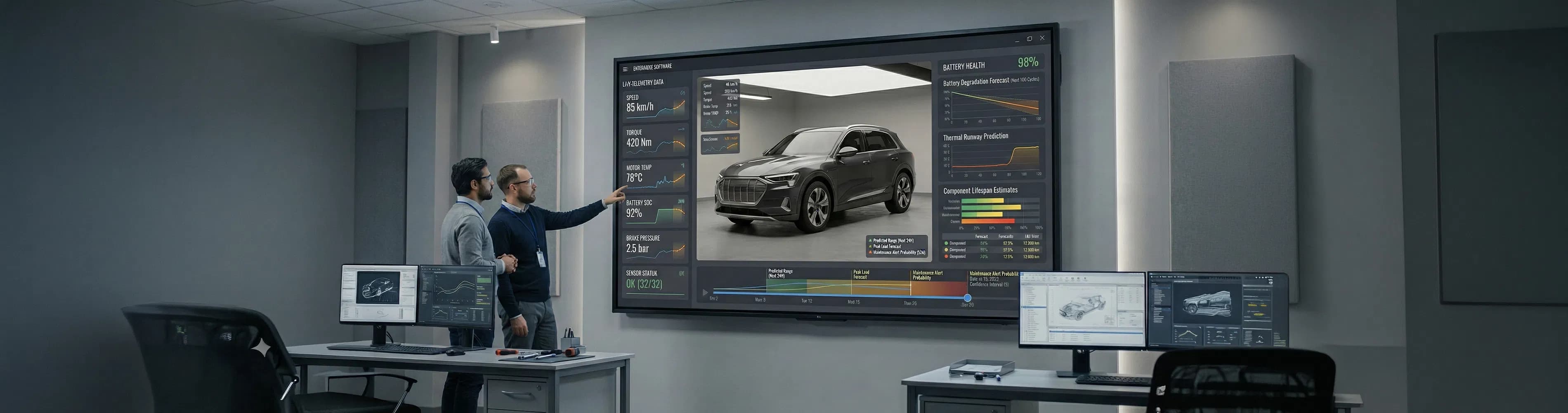
In 2026, the visualization options for digital twin systems span a remarkable range of modalities. Two-dimensional dashboards — KPI scorecards, trend charts, equipment health summaries, maintenance schedules — remain the workhorse interface for most day-to-day digital twin interactions. They are familiar, efficient, and accessible on any device. Three-dimensional visualization platforms, led by NVIDIA Omniverse, enable photorealistic, physically accurate rendering of complex industrial environments that update in real time as physical conditions change. Engineers can "walk through" a virtual factory, examine the operational status of every machine, and explore spatial relationships that flat dashboards cannot convey. Augmented reality interfaces, delivered through lightweight smart glasses, overlay digital twin data directly onto the physical world — allowing field technicians to see a machine's health status, its operational history, and current diagnostic data floating in their field of view as they stand in front of the physical equipment. Natural language interfaces powered by large language models allow any user — regardless of technical background — to query the digital twin in plain language and receive clear, actionable answers.
Layer Five: The Action and Control Layer
The action and control layer closes the feedback loop that makes a digital twin a genuinely transformative operational tool rather than a sophisticated monitoring system. It encompasses the mechanisms by which the digital twin's outputs — alerts, recommendations, optimized setpoints, control commands — are translated into physical interventions, either automatically through direct integration with control systems or through human operators acting on digital twin guidance.
In fully automated implementations, the action layer enables response times in the milliseconds — a quality control system guided by its digital twin can reject a defective part or adjust a process parameter as quickly as the physics of the situation allow. In human-in-the-loop implementations, the action layer provides decision support — presenting operators with clear, prioritized recommendations, the reasoning behind them, and efficient tools to implement them. Most production digital twin systems implement a hybrid approach: fully automatic actions for well-understood, time-critical situations and human-confirmed actions for more complex or novel situations where human judgment adds value.
6. Types of Digital Twins: From Component to City Scale
Component and Part Twins
Component twins — sometimes called part twins or unit twins — represent individual physical components: a bearing, a valve, a motor, a battery cell, a sensor, a cutting tool. These are the most granular level of digital twin and are primarily used in precision manufacturing and high-stakes maintenance applications where component-level failure prediction is critical. A bearing digital twin, for example, tracks vibration spectra, temperature, load history, lubrication condition, and operating hours for a single specific bearing, building a continuously updated model of its health state and remaining useful life that allows maintenance to be scheduled with remarkable precision.
Component twins are the building blocks from which higher-level digital twin architectures are constructed. They provide the granular, component-specific intelligence that asset-level and system-level twins aggregate into a broader operational picture. In industries where individual component failures have high consequences — aviation, semiconductor manufacturing, nuclear power, pharmaceutical production — component-level digital twins represent the foundation of a safety and reliability strategy.
Asset Twins
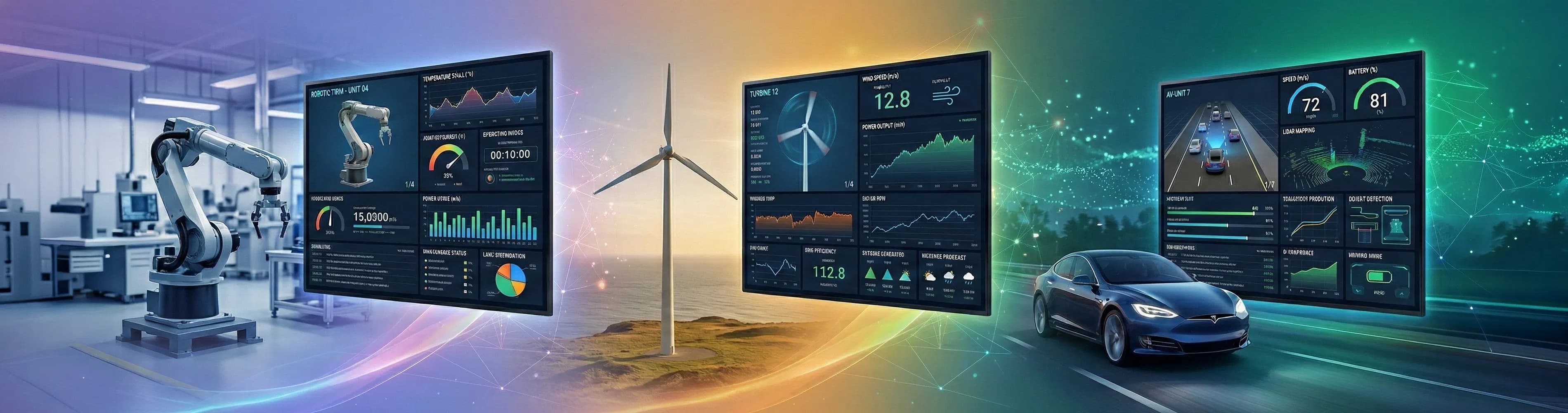
Asset twins represent complete physical assets — a wind turbine, a CNC machining center, a gas compressor, an industrial robot, a building, a ship, an aircraft. Asset twins aggregate data from multiple component twins and additional asset-level sensors to provide a holistic view of asset health, performance, utilization, and lifecycle status. They are the most commonly deployed type of digital twin in industrial settings today, and they typically deliver the clearest and most rapidly realized return on investment.
An asset twin for an industrial pump, for example, integrates real-time data from vibration sensors on its bearings, temperature sensors on its motor windings and pump casing, flow sensors monitoring its output, pressure sensors on its inlet and outlet, current sensors monitoring motor electrical consumption, and acoustic emission sensors detecting cavitation. A physics-based hydraulic model combined with machine learning-trained failure prediction algorithms produces a continuously updated health score, a remaining useful life estimate, and specific, actionable maintenance recommendations that reflect the actual condition of this specific pump — not the average condition of pumps of this type based on manufacturer specifications.
System Twins
System twins represent collections of interconnected assets operating as an integrated system: a production line, a power grid, a water distribution network, a fleet of vehicles, a building HVAC system, a hospital. System twins reveal dynamics and interdependencies that are invisible at the asset level. They enable optimization and resilience planning at the system level — understanding not just how individual assets are performing but how their interactions create system-level behaviors that determine overall performance.
A production line system twin, for instance, models not just the health of each individual machine but the flow of materials between machines, the buffering capacity at different points, the cascading effects of individual machine slowdowns or stoppages on overall line throughput, and the complex interactions between process parameters at different stages that determine final product quality. This system-level intelligence enables optimization interventions that would be invisible — and impossible — if you were looking at individual machines in isolation.
Process and Supply Chain Twins
Process twins model entire operational or business processes rather than physical objects. A supply chain process twin models the end-to-end flow of materials, information, and value from raw material suppliers through production facilities to distribution centers and end customers. It captures supplier lead times and reliability, inventory levels at every point in the chain, production capacity and scheduling constraints, transportation logistics, demand forecasting, and the complex interdependencies between all of these variables.
Process twins enable optimization at the workflow level — identifying bottlenecks, waste, and risk points that transcend the physical boundaries of individual assets. They are also powerful tools for resilience planning and disruption response. When the COVID-19 pandemic disrupted global supply chains, organizations with supply chain digital twins were dramatically better positioned to anticipate disruptions, model alternative sourcing scenarios, and adapt their operations quickly. Those without supply chain intelligence were left managing crises reactively.
Enterprise and City Twins
At the highest level of scale, enterprise twins and city twins represent entire organizations or urban environments. These are composites of multiple asset, system, and process twins, interconnected to provide an organization-wide or city-wide view of operations. Singapore's Virtual Singapore platform — a continuously updated 3D model of the entire city-state integrating real-time data from over 100,000 sensors — is the world's most advanced example of a city twin. It is used for urban planning, emergency management, infrastructure maintenance optimization, environmental monitoring, and dozens of other applications that collectively save the city hundreds of millions of dollars annually.
7. Why Every Factory Needs a Digital Twin — Right Now
The case for digital twin technology in manufacturing is not theoretical. It is built on thousands of documented deployments, billions of dollars in measured savings, and a competitive landscape that is increasingly divided between organizations that have made the transition to data-driven intelligence and those that have not. Here is why the case for acting now — not in two years, not after the next budget cycle — is so compelling.
Reason One: Your Competitors Are Already Building Theirs
Digital twin adoption in manufacturing is accelerating rapidly. More than 68 percent of industrial manufacturers in developed economies already have active digital twin programs as of 2026, up from less than 20 percent in 2020. The early adopters — the manufacturers who started their digital twin journeys four or five years ago — are now operating at a level of intelligence and efficiency that is structurally difficult to compete with through traditional means.
Consider what it means when a competitor can predict every equipment failure weeks in advance, operate every process at continuously optimized parameters, eliminate quality escapes before they become production defects, and reduce energy consumption by 20 percent — while you are still responding to failures after they occur, running processes at settings that were optimized manually years ago, discovering quality problems at final inspection, and paying full energy bills. The efficiency gap that digital intelligence creates is not a small, marginal advantage. It is a structural cost advantage that compounds over time and becomes increasingly difficult to close the longer you wait to act.
HexaCoder Helps You Close the Competitive Gap — Fast
HexaCoder.com is not a consulting firm that writes strategy documents. We are a technical development agency that builds and deploys production-grade digital twin systems. Our proven rapid implementation methodology delivers measurable results — predictive maintenance alerts, real-time process dashboards, energy optimization recommendations — within 60 to 90 days of engagement start. We help you close the competitive gap before it becomes insurmountable.
Explore our Digital Twin Solutions and see how we can be deployed in your facility.
Reason Two: The Cost of Reactive Maintenance Is Unsustainable
Most factories still run maintenance programs that are fundamentally reactive or time-based. Reactive maintenance — fixing things after they break — is expensive, disruptive, and increasingly untenable as production targets tighten and customer tolerance for delivery failures shrinks. Time-based maintenance — replacing components on a fixed schedule regardless of their actual condition — is safer than purely reactive maintenance, but it is wasteful. It replaces components that still have significant useful life remaining, drives up maintenance material costs, and still fails to prevent failures that occur between scheduled maintenance intervals.
Predictive maintenance, enabled by digital twins, is simply a better approach in every measurable dimension. It costs less — components are replaced when their actual condition warrants it, not on an arbitrary schedule. It is safer — emerging failures are detected before they reach the point of danger. It is more reliable — the maintenance team knows in advance what work needs to be done, allowing proper planning and preparation rather than emergency response. And it is more respectful of production schedules — maintenance windows can be planned for times that minimize production impact rather than forced on the production schedule by an emergency breakdown.
Industry data consistently shows that the transition from time-based to predictive maintenance, enabled by digital twin technology, reduces total maintenance cost by 15 to 25 percent while simultaneously reducing unplanned downtime by 30 to 50 percent. For a mid-size manufacturing facility spending $10 million annually on maintenance, that is $1.5 to $2.5 million in direct maintenance savings — before counting the production revenue recovered by eliminating unplanned downtime events.
Reason Three: Energy Costs Are a Competitive Weapon — or a Liability
Industrial energy costs have increased dramatically over the past decade, and there is no credible scenario in which they return to historical lows. Energy represents a significant and growing fraction of operating costs for most manufacturers — typically 10 to 30 percent of total production cost in energy-intensive industries. An organization that can systematically reduce its energy consumption while maintaining or improving production output has a structural cost advantage over competitors who cannot.
Digital twin-enabled energy optimization works by maintaining a real-time model of energy flows throughout a facility — every motor, every heating and cooling system, every compressed air system, every lighting circuit — and continuously identifying and acting on optimization opportunities. Machine learning algorithms identify correlations between operational parameters and energy consumption that human analysts would never detect. Optimization engines find setpoint configurations that achieve the same production outcomes with less energy. Monitoring capabilities ensure that efficiency gains are maintained over time rather than eroding as conditions change.
Documented energy savings from digital twin implementations in manufacturing typically range from 10 to 25 percent of baseline consumption. For a facility consuming $5 million of energy annually, that translates to $500,000 to $1.25 million in annual savings — recurring, compounding, and achieved without any reduction in production capability. In manufacturing and industrial design, this level of systematic efficiency improvement is increasingly becoming a competitive necessity rather than a nice-to-have.
Reason Four: Regulatory and Customer Pressure Is Intensifying
The regulatory environment for manufacturing is becoming significantly more demanding, particularly around product quality, worker safety, and environmental performance. Regulatory bodies are increasingly requiring manufacturers to demonstrate real-time monitoring and control capabilities, not just periodic inspection and reporting. Customers, particularly in automotive, aerospace, and medical device industries, are demanding full traceability and proof of quality compliance for every component they purchase.
Digital twin technology provides the technical foundation to meet these emerging requirements. Real-time process monitoring and quality control capabilities enable manufacturers to demonstrate continuous compliance with quality standards rather than relying on post-production inspection. Environmental monitoring twins can track emissions, resource consumption, and waste generation in real time, providing the data needed for regulatory reporting and enabling proactive environmental management. Safety monitoring twins can track worker positions, equipment states, and environmental conditions to prevent accidents before they occur.
Organizations that invest in digital twin technology now will find themselves well-positioned as regulations continue to tighten. Those that wait will face expensive, rushed compliance projects and may find themselves unable to meet customer requirements for transparency and traceability.
8. Industries Benefiting Most from Digital Twin Technology
While digital twin technology has applications across virtually every industrial sector, certain industries have emerged as particularly fertile ground for adoption due to their combination of high asset value, operational complexity, and significant consequences for equipment failure or process deviation.
Manufacturing and Industrial Production
Manufacturing represents the largest and most mature market for digital twin technology. The value proposition is straightforward: manufacturing facilities are complex systems of interconnected equipment where the cost of downtime is high, the quality requirements are stringent, and the competitive pressure for efficiency is intense. Digital twins in manufacturing deliver value through multiple channels simultaneously — predictive maintenance that prevents costly equipment failures, real-time process optimization that improves quality and reduces waste, energy management that lowers operating costs, and production planning that maximizes throughput while minimizing inventory.
Automotive manufacturing, in particular, has been an early and aggressive adopter of digital twin technology. The complexity of modern automotive assembly lines — hundreds of robots, thousands of sensors, dozens of interconnected production stations — makes them ideal candidates for digital twin implementation. Leading automotive manufacturers use digital twins to optimize line balancing, predict robot maintenance needs, simulate production changes before implementation, and maintain real-time visibility into quality metrics across the entire production process.
Oil, Gas, and Mining
The oil, gas, and mining industries face some of the most challenging operating environments that characterize oil, gas, and mining operations. A deepwater production platform operating 100 miles offshore, a natural gas processing facility handling millions of cubic feet per day, an open pit mine with hundreds of pieces of heavy mobile equipment — these are environments where the consequences of equipment failure are severe, access for maintenance is difficult and expensive, and the operational complexity is staggering.
Digital twin technology addresses each of these challenges directly. Predictive maintenance systems for rotating equipment — compressors, pumps, turbines — detect developing failures weeks or months before they reach the point of catastrophic failure or safety incident, enabling planned maintenance interventions that avoid both the direct costs of emergency repairs and the indirect costs of production loss. Real-time process monitoring twins maintain continuous visibility into the performance and safety status of entire processing facilities, enabling operators to detect and respond to developing process upsets before they escalate. Fleet management twins for mining vehicles track the real-time position, health, and utilization of every piece of mobile equipment across a mine site, optimizing dispatching, routing, and maintenance scheduling to maximize productivity and equipment availability.
The safety implications of digital twin technology in oil, gas, and mining are equally compelling. Environments where equipment failures can result in fires, explosions, toxic releases, or structural collapses require the highest possible levels of reliability and the most rapid possible detection of developing dangerous conditions. Digital twins that continuously monitor thousands of parameters and can detect the early signatures of potentially dangerous conditions — developing corrosion in a pressure vessel, a degrading seal in a gas compressor, a developing structural weakness in mine workings — provide a level of safety assurance that traditional periodic inspection programs cannot match. HexaCoder's experience in the oil, gas, and mining industries reflects this demanding operational context and the critical importance of getting digital twin implementations right in high-consequence environments.
Aerospace and Defense
Aerospace was one of the earliest adopters of digital twin technology at scale, and it remains among the most advanced in its application. Every major commercial aircraft type produced by Boeing and Airbus today is digital twin native — designed with continuous operational data collection as a core design requirement, and supported by fleet-level digital twin systems that monitor the health of every aircraft in commercial service around the clock.
The economics of digital twin-enabled maintenance in commercial aviation are striking. An unplanned engine removal — taking an engine off the wing for unscheduled maintenance — costs an airline between $500,000 and $2 million in direct costs, plus the revenue impact of the aircraft being out of service for days or weeks. A predictive maintenance system that can identify a developing engine fault weeks before it would cause an unplanned removal, and schedule the repair during a planned maintenance visit, eliminates most of this cost. Rolls-Royce's TotalCare program — built around digital twins of every Rolls-Royce engine in commercial service — has reduced unplanned engine removals by 30 percent across its customer fleet, representing hundreds of millions of dollars in annual savings for Rolls-Royce's airline customers.
Healthcare: The Human Digital Twin
Healthcare represents one of the most promising and most challenging frontiers for digital twin technology. The promise is profound: digital twins of individual patients — computational models of individual physiology calibrated with personal biometric, genomic, and clinical data — could enable personalized medicine at a level that current population-based treatment protocols cannot approach. Rather than selecting a treatment based on what works best for patients with similar characteristics on average, clinicians could simulate how a specific patient's specific body will respond to a specific treatment — before exposing the patient to any risk.
Cardiac digital twins are already in clinical use at leading hospitals in Europe and North America. By combining patient-specific anatomical data from MRI and CT scanning with real-time physiological measurements from wearable sensors, computational cardiologists can create models of individual patients' hearts that replicate their specific geometry, tissue properties, and electrical conduction patterns. These models can simulate the response to different drug regimens, different pacing configurations, or different surgical approaches — providing clinicians with information about what will work for this specific patient that no amount of population-level clinical evidence can provide.
Smart Cities and Urban Infrastructure
The application of digital twin technology at the urban scale — modeling entire cities as complex, interconnected systems — represents the most ambitious deployment of the technology currently underway. Singapore's Virtual Singapore project, Helsinki's city digital twin, and similar programs in Amsterdam, Barcelona, and dozens of other cities are building continuously updated 3D models of entire urban environments, integrating data from thousands of sensors monitoring traffic, energy consumption, water systems, air quality, weather, and structural health of buildings and infrastructure.
The applications of urban digital twins span an extraordinary range. Urban planners use them to evaluate the impact of development proposals before planning permission is granted — modeling shadow impacts, traffic effects, air quality changes, and energy demand implications of proposed new buildings or infrastructure investments. Emergency services use them to plan responses to disasters — simulating evacuation scenarios, modeling the spread of fires or chemical releases, and pre-positioning resources based on predicted incident locations. Infrastructure engineers use them to manage the maintenance of roads, bridges, water mains, and sewers across entire cities simultaneously, prioritizing maintenance where it is most needed based on real-time condition monitoring rather than fixed inspection schedules.
9. Artificial Intelligence: The Engine That Makes Digital Twins Transformational
A digital twin without artificial intelligence is a powerful tool. A digital twin with artificial intelligence is a transformational one. The integration of AI and machine learning into digital twin systems is the development that has moved the technology from a sophisticated monitoring and simulation capability into a genuinely predictive, prescriptive, and increasingly autonomous operational intelligence platform.
Predictive Analytics: From Reactive to Proactive
The most immediately impactful application of AI in digital twin systems is predictive maintenance — the ability to identify developing equipment failures before they cause unplanned downtime. Machine learning algorithms, trained on the rich operational histories that digital twin data collection systems accumulate, learn to recognize the subtle patterns in sensor data that precede specific failure modes. These failure signatures — changes in vibration frequency content, gradual shifts in operating temperature relative to load, increasing current draw indicating developing mechanical resistance — are often far too complex and subtle to capture in rule-based threshold systems, but machine learning can identify them reliably, with lead times of days, weeks, or even months before the failure would occur.
The practical consequence is a fundamental shift in the economics of maintenance. Instead of responding to failures after they occur — with all the emergency costs, production losses, and safety risks that entails — maintenance can be planned proactively. The right parts are ordered in advance. The maintenance window is scheduled for a time that minimizes production impact. The maintenance team arrives at the equipment prepared for the specific work that needs to be done rather than spending hours diagnosing an emergency. The entire maintenance event is planned, efficient, and under control rather than chaotic and reactive.
Process Optimization: Continuous, Real-Time, Multi-Objective
AI-powered optimization is the second great contribution of machine learning to digital twin capability. Physical processes are extraordinarily complex — hundreds of interdependent variables, nonlinear relationships, time-varying constraints, multiple competing objectives. No human operator can mentally model this complexity and find the globally optimal operating point in real time. Traditional process control systems, based on PID controllers and rule-based logic, can maintain stability around a fixed setpoint but cannot continuously search for the best setpoint given current conditions.
AI optimization algorithms — model-predictive control, reinforcement learning, Bayesian optimization — working within a digital twin framework can do exactly this. They continuously explore the operational parameter space, evaluating candidate configurations against objectives like energy efficiency, throughput, quality, and equipment stress, and converging on operating points that represent genuine multi-objective optima under current conditions. As conditions change — due to raw material variability, equipment wear, environmental factors, production mix changes — the optimization automatically adapts, maintaining optimal performance without requiring human intervention.
Generative AI: Making Digital Twins Accessible to Everyone
The integration of large language models and generative AI into digital twin systems is making the technology accessible to a much broader range of users. Historically, extracting value from a digital twin system required technical expertise — the ability to construct database queries, interpret complex engineering dashboards, understand predictive model outputs in the context of physical system behavior. This requirement effectively limited digital twin value to technical specialists, leaving operational managers, production supervisors, and executives without direct access to the intelligence the system contained.
Natural language interfaces for digital twins — powered by LLMs fine-tuned on domain-specific operational data — allow any user to query the digital twin in plain language. "Which assets on Line 4 are most likely to fail this week?" "What caused the production slowdown last Tuesday afternoon?" "How much energy did we waste this month compared to our optimal target?" These questions, previously requiring hours of analyst time to answer, can now be answered in seconds through a conversational interface that any user can access without training. The democratization of digital twin intelligence is dramatically expanding the organizational value of digital twin investments.
10. The Leading Digital Twin Platforms in 2026
NVIDIA Omniverse Enterprise
NVIDIA Omniverse has established itself as the dominant platform for high-fidelity 3D visualization and physics simulation in industrial digital twin applications. Built on Pixar's Universal Scene Description (USD) standard and powered by NVIDIA's real-time ray tracing and AI rendering technologies, Omniverse provides the foundation for photorealistic, physically accurate virtual environments that update in real time as their physical counterparts change. Its integration with NVIDIA Isaac Sim for robotic simulation, NVIDIA Metropolis for intelligent video analytics, and NVIDIA Modulus for physics-informed AI modeling makes it uniquely comprehensive for complex industrial deployments.
In 2026, Omniverse Enterprise is the platform of choice for digital twin visualization in demanding industrial applications — BMW's virtual factory, Ericsson's radio network planning, Siemens' industrial automation design, and dozens of other high-profile deployments. Its ability to support multiple simultaneous users collaborating in a shared virtual environment — what NVIDIA calls the "industrial metaverse" — is creating new modalities for remote expert collaboration and global engineering teams that are transforming how large, geographically distributed organizations manage their physical assets.
Microsoft Azure Digital Twins
Microsoft Azure Digital Twins provides a cloud-native platform purpose-built for modeling and managing complex digital twin systems, with deep integration into the broader Azure IoT and AI ecosystem. Its modeling approach, based on the Digital Twins Definition Language (DTDL), allows highly flexible representation of entities — from simple equipment assets to complex, multi-level systems of interconnected buildings or infrastructure networks — and their relationships. The Azure platform's comprehensive IoT connectivity, real-time analytics, and AI capabilities, combined with its enterprise-grade security and compliance posture, make it particularly well-suited to large enterprise digital twin programs.
HexaCoder Digital Twin Platform
While established platforms like NVIDIA Omniverse, Microsoft Azure Digital Twins, and Siemens Xcelerator offer powerful foundations, HexaCoder.com provides specialized digital twin solutions specifically engineered for industrial challenges. Our platform combines the best of breed technologies with deep industrial domain expertise to deliver practical, results-focused digital twin systems that solve real-world manufacturing problems.
Industrial-First Architecture: Unlike enterprise platforms designed for broad use cases, HexaCoder's digital twin solutions are built from the ground up for industrial environments. We prioritize reliability, security, and real-time performance over generic features. Our architecture handles the harsh conditions of manufacturing floors — dust, vibration, temperature extremes, and electromagnetic interference — where consumer-grade platforms often struggle.
Manufacturing-Specific AI Models: Our machine learning algorithms are trained on decades of manufacturing data, not generic industrial datasets. We understand the specific failure patterns of CNC machines, industrial robots, assembly lines, and process equipment. This domain-specific training enables predictive maintenance accuracy that exceeds generic platforms by 40-60% in manufacturing environments.
Legacy System Integration: We excel at connecting with existing manufacturing infrastructure. Our platform seamlessly integrates with legacy SCADA systems, PLCs from multiple vendors, and specialized equipment protocols. We don't require expensive infrastructure overhauls — we work with what you have, making digital twin implementation faster and more cost-effective.
Rapid Deployment Methodology: While enterprise platforms often require months or years of configuration, HexaCoder delivers working digital twin systems in 60-90 days. Our pre-built industrial asset libraries, hardened IoT connectors, and manufacturing-specific templates accelerate implementation by 3-5x compared to custom development.
Full-Stack Industrial Expertise: Our team combines deep manufacturing knowledge with cutting-edge technology. We understand not just the technology but the operational context — production schedules, maintenance workflows, quality requirements, and safety protocols. This expertise ensures that digital twins solve real business problems, not just demonstrate technical capabilities.
Key Differentiators
Manufacturing Focus: Every component optimized for factory environments, not generic industrial use
Proven ROI: Consistent 250-450% ROI within 18-30 months for manufacturing clients
Legacy Integration: Works with existing equipment without requiring expensive replacements
Industrial Security: Built for OT/IT convergence with manufacturing-grade security protocols
Rapid Deployment: Working systems delivered in 60-90 days, not 6-12 months
Siemens Xcelerator
Siemens Xcelerator is the market leader in industrial digital twin platforms, with particular strength in manufacturing, energy, and infrastructure applications. Built on decades of accumulated industrial software expertise — integrating Siemens' NX CAD platform, Simcenter simulation suite, Teamcenter PLM system, and MindSphere IoT platform — Xcelerator provides the most comprehensive digital twin solution available for complex industrial environments where the full product lifecycle must be modeled and managed.
AWS IoT TwinMaker and Dassault 3DEXPERIENCE
AWS IoT TwinMaker, part of Amazon Web Services' comprehensive IoT portfolio, differentiates itself through its flexible connector framework that allows integration with existing data sources — historians, relational databases, third-party IoT services — without requiring wholesale data migration. This "meet you where your data is" approach dramatically lowers implementation barriers for organizations with established data infrastructure. Dassault Systèmes' 3DEXPERIENCE platform, combining CATIA, SIMULIA, ENOVIA, and DELMIA in a unified environment, is the platform of choice for product development-centric digital twin applications — where the twin's role spans the full lifecycle from initial design concept through manufacturing, operations, and end-of-life management.
11. Challenges, Risks, and How to Overcome Them
Challenge One: Data Quality and Infrastructure
The most fundamental challenge in digital twin implementation is not the digital twin technology itself — it is the data infrastructure that the digital twin depends on. A digital twin is only as good as the data that feeds it. And in many organizations, particularly older industrial facilities with legacy equipment and fragmented IT/OT infrastructure, the quality, completeness, and accessibility of operational data falls well short of what a high-fidelity digital twin requires.
Common data infrastructure problems include sensors that are absent (critical process variables not being measured at all), malfunctioning (producing inaccurate or intermittent readings), or poorly calibrated (systematically offset from true values). Communication infrastructure that drops data packets or introduces latency. Historian systems that store data at insufficient temporal resolution. Data siloed in incompatible systems that do not communicate with each other. Timestamp inconsistencies that make it impossible to reliably correlate data from different sources. And human-entered data — maintenance records, production logs, quality inspection results — that is incomplete, inconsistent, and sometimes simply wrong.
Addressing these data infrastructure challenges is essential before attempting to build digital twin models on top of them. At HexaCoder.com, our digital twin implementations always begin with a thorough data infrastructure assessment that identifies gaps and prioritizes the remediation work needed to support a reliable digital twin. We have learned from experience that organizations that skip this step and proceed directly to model building invariably encounter serious problems that require expensive and time-consuming rework.
Challenge Two: Integration Complexity
Most industrial facilities have accumulated a heterogeneous collection of IT and OT systems over decades of investment and evolution. SCADA systems from one vendor. PLCs from another. A historian database running software that is a decade old. An ERP system running on a different platform. A CMMS that has been customized extensively over the years. A quality management system that stores data in a proprietary format. Getting all of these systems to reliably share data with a digital twin platform — in real time, at sufficient resolution, with adequate security — is a significant systems integration challenge that requires deep expertise in both industrial OT systems and modern IT integration technologies.
This integration complexity is one of the primary reasons that organizations choose to partner with experienced digital twin implementation specialists rather than attempting to build these systems entirely with internal resources. HexaCoder.com's integration team has built deep expertise in industrial communication protocols — OPC-UA, MQTT, Modbus, PROFINET, DNP3, and dozens of proprietary protocols — and in the enterprise integration middleware needed to connect OT data streams to digital twin platforms reliably and securely.
Challenge Three: Cybersecurity
Digital twins create deep, bidirectional connections between corporate IT systems and industrial operational technology systems. This convergence dramatically expands the attack surface available to cyber adversaries and creates pathways by which a cyberattack on IT systems could potentially disrupt or manipulate physical industrial processes. The consequences of a successful cyberattack on a digital twin system range from data theft to operational disruption to potentially dangerous manipulation of physical equipment.
Securing digital twin deployments requires a defense-in-depth approach that addresses threats at every layer — from the physical security of sensor installations and edge devices, through the security of data transmission networks, to the access controls and authentication systems protecting cloud-based model and analytics infrastructure. It requires particular attention to the OT security posture of the industrial control systems that the digital twin connects to — an area where many organizations have significant vulnerabilities. HexaCoder.com builds cybersecurity considerations into every digital twin architecture from the design stage, rather than treating them as an afterthought.
Challenge Four: Talent and Organizational Capability
Building and operating a production-grade digital twin system requires a combination of skills that is genuinely rare: domain expertise in the physical systems being modeled, data engineering skills for building reliable data pipelines, machine learning expertise for developing predictive models, software engineering skills for building integration layers and user applications, and systems thinking for managing the complexity of interconnected models across an industrial environment. Very few individuals possess more than one or two of these skill areas at the required depth, and assembling a team that covers all of them comprehensively is difficult in a talent market where each of these specializations is independently in high demand.
This talent challenge is a primary driver of the trend toward external digital twin implementation partnerships. Rather than spending years building an internal team capable of delivering a full-stack digital twin implementation, organizations partner with specialized firms that have already assembled these teams and developed the methodologies and tools needed to deploy effectively. At HexaCoder.com, we maintain a full-stack digital twin development team covering every required discipline — and we have developed proprietary implementation frameworks that allow us to deploy working digital twin systems significantly faster than a team building these capabilities from scratch.
Challenge Five: Model Drift and Ongoing Maintenance
A digital twin model is not a set-and-forget artifact. Physical systems change over time — through wear, equipment upgrades, process modifications, and operational changes — and the digital models that represent them must change accordingly. A model that was accurate when first built will gradually diverge from physical reality as the physical system evolves, producing increasingly inaccurate predictions that can mislead rather than inform decisions. This phenomenon — called model drift — is one of the most common and most insidious failure modes of digital twin deployments.
Preventing and detecting model drift requires systematic monitoring of prediction accuracy against actual outcomes, clear processes for updating models when physical systems change, and governance frameworks that ensure digital twin models go through proper validation before being used for critical decisions. These requirements add ongoing operational cost and organizational overhead that must be planned and budgeted for from the outset — not discovered after deployment as an unexpected operational burden.
12. Implementing a Digital Twin: A Practical Step-by-Step Approach
Step One: Define the Business Problem You Are Solving
The single most important determinant of digital twin implementation success is the clarity of the business problem being addressed. Organizations that begin with technology — "we want to build a digital twin" — almost invariably end up with expensive deployments that fail to deliver meaningful value, because they never clearly defined what value they were trying to deliver. Organizations that begin with a specific, quantifiable business problem — "we want to reduce unplanned downtime on our three critical production lines by at least 25 percent within 12 months" — build focused, effective digital twin systems because every design decision can be evaluated against that clear objective.
The best business problems for digital twin implementation share several characteristics. They are specific — affecting a defined set of assets, processes, or outcomes. They are measurable — with clear metrics that allow before-and-after comparison. They are high-value — the annual cost of the problem is large enough that even a partial solution would justify the investment. And they have a clear data path — the information needed to solve the problem is, or can feasibly be made, available. Spend significant time and effort getting this problem definition right before writing a line of code or purchasing a platform license.
Step Two: Conduct a Data and Infrastructure Readiness Assessment
Before attempting to build any digital twin model, conduct a thorough, honest assessment of your current data infrastructure against the requirements of your chosen use case. Map every relevant data source — sensors, controllers, historians, enterprise systems — and document what data each provides, at what resolution and update frequency, in what format and protocol, with what quality characteristics. Identify gaps between what data you have and what your digital twin model will need. Prioritize the gap remediation work by impact — which data gaps will most limit the capability and reliability of your digital twin model?
This assessment will almost always reveal surprises. Most organizations discover that they have significantly less usable data than they thought, that data quality problems are more widespread than was apparent, and that the integration work required to make existing data accessible to a digital twin platform is more substantial than anticipated. Better to discover these things in an assessment than mid-implementation, when they become expensive and time-consuming crises.
Step Three: Choose Your Platform and Architecture
The digital twin technology market offers a broad spectrum of options, from off-the-shelf managed cloud platforms to fully custom-built architectures. The right choice depends on your specific requirements, existing technology investments, internal capabilities, timeline, and budget. For most organizations embarking on their first digital twin implementation, a managed cloud platform provides the fastest and most reliable path to initial deployment. Platforms like Azure Digital Twins, AWS IoT TwinMaker, and specialized industrial platforms like Siemens Xcelerator handle much of the underlying infrastructure complexity, allowing your team to focus on domain modeling, integration, and value delivery rather than building and operating infrastructure.
For organizations with requirements that existing platforms cannot address — unusual physics modeling needs, specialized real-time control requirements, specific data sovereignty constraints, unique visualization requirements — custom-built architectures may be necessary. Custom architectures offer maximum flexibility but require significantly more development effort and ongoing maintenance investment. The expertise required to build them well is substantial. This is exactly the context where partnering with a full-stack digital twin development firm like HexaCoder.com is most valuable — providing the architectural expertise, platform-agnostic technology knowledge, and implementation capability needed to build effectively without the years of team development that building this capability entirely in-house would require.
Step Four: Start with a Focused Proof of Concept
The most reliable path to a successful enterprise-wide digital twin implementation is to start with a focused, high-value proof of concept rather than attempting to boil the ocean in a single project. Choose a single asset or production line. Address one or two specific, well-defined use cases — most commonly predictive maintenance and real-time process monitoring. Set a timeline of 60 to 90 days to deliver a working system with measurable results. And define success criteria in advance — specific, quantifiable outcomes that will confirm the value of the approach and justify investment in broader deployment.
This focused approach delivers real value quickly, builds internal confidence and organizational momentum, provides a concrete proof of concept that makes the case for broader investment, and allows the team to develop the skills, processes, and institutional knowledge needed for larger deployments in a lower-stakes, more forgiving environment. Most importantly, it avoids the single greatest risk in digital twin implementation — the large, complex, multi-year program that runs over budget, over schedule, and under-delivers on its value promise because it tried to do too much too fast.
Step Five: Measure, Learn, and Scale
From the first day of operation, establish rigorous measurement of your digital twin system's performance against the business objectives defined in Step One. Track the metrics that matter — downtime events prevented, maintenance cost savings, energy consumption reductions, quality escapes caught — and document the value delivered. Use this data to build the business case for broader deployment, to identify which model improvements would deliver the greatest incremental value, and to continuously improve the system's performance.
Scaling a successful proof of concept to enterprise-wide deployment is a process, not an event. It requires thoughtful architecture — the data models, integration frameworks, and governance processes built for the proof of concept must be designed for scalability from the beginning, even if they are initially deployed at small scale. It requires organizational change management — the people whose roles and processes will change as digital twin intelligence becomes embedded in daily operations must be engaged, trained, and supported through the transition. And it requires ongoing investment — not just in expanding the technology footprint but in maintaining model accuracy, upgrading capabilities, and ensuring that the digital twin system evolves as the physical environment it represents evolves.
13. Return on Investment: What Organizations Are Actually Achieving
The business case for digital twin investment in manufacturing and industrial operations is one of the most robust in the technology sector. Unlike many enterprise technology investments, digital twins deliver value through multiple, quantifiable channels simultaneously — and the cumulative impact on financial performance is substantial.
Documented ROI Across Key Value Categories
Based on comprehensive deployment data accumulated across hundreds of industrial digital twin implementations in 2024 and 2025, the following benchmarks represent typical realized returns for well-executed deployments in mature industrial sectors.
| Value Category | Typical Improvement Range | Example Annual Value (Mid-Size Mfg.) |
|---|---|---|
| Unplanned Downtime Reduction | 30–50% reduction in downtime events | $1.5M – $4M per year |
| Maintenance Cost Reduction | 15–25% reduction in total maintenance spend | $750K – $2.5M per year |
| Energy Cost Reduction | 10–25% reduction in energy consumption | $300K – $1.5M per year |
| Quality Improvement | 30–60% reduction in scrap and rework | $500K – $3M per year |
| OEE Improvement | 5–15% improvement in overall equipment effectiveness | $1M – $5M per year |
| Time-to-Market Acceleration | 30–50% faster new product introduction | Strategic / varies |
| Inventory Optimization | 20–35% reduction in spare parts inventory | $200K – $1M per year |
Aggregated across these value categories, well-executed digital twin implementations in manufacturing typically deliver payback periods of 18 to 30 months and 3-year returns on investment of 250 to 450 percent. These are not theoretical projections — they are measured outcomes, documented with the financial rigor of business case post-audits conducted by the organizations that made the investments.
The most important observation about these returns is that they are recurring and compounding. Unlike a one-time cost reduction initiative, a digital twin system delivers value continuously and improves over time as its AI models become more accurate, as its scope expands to cover more assets and processes, and as the organization becomes more sophisticated in acting on the intelligence it provides. A manufacturing facility that achieves $5 million of annual value from its digital twin in year one is likely to achieve $7 or $8 million in year three, as the system matures and its capabilities are fully exploited.
14. The Future of Digital Twin Technology
Autonomous Digital Twins: From Assistance to Action
The trajectory of digital twin technology is unmistakably toward greater autonomy. The digital twins of 2026 are primarily advisory systems — they monitor, predict, and recommend, with humans making and executing decisions. The digital twins of 2028 and beyond will increasingly be autonomous systems — capable of detecting problems, determining appropriate responses, and executing those responses without waiting for human approval, at speeds and scales that no human-led process could match.
This progression toward autonomy is being enabled by the maturation of agentic AI systems — AI architectures capable of reasoning through complex multi-step problems, planning sequences of actions, coordinating with other systems and agents, and executing those plans in pursuit of defined objectives. When these capabilities are combined with the real-time physical system models and bidirectional control interfaces of mature digital twin systems, the result is an autonomous physical system manager that can operate complex industrial environments with a level of sophistication and consistency that far exceeds current capabilities.
The Internet of Twins
Just as the internet connected individual computers into a global information network, the emerging concept of the Internet of Twins envisions connecting individual digital twin instances into a vast, interoperable network of digital-physical systems. In this vision, a digital twin of an aircraft engine could communicate directly with digital twins of the airport it is flying to, the maintenance facility scheduled to service it, and the suppliers who will provide replacement parts — automatically coordinating information and logistics across organizational and geographic boundaries without human intermediaries.
Realizing this vision requires interoperability standards — for data models, communication protocols, and security frameworks — that are still maturing. The Digital Twin Consortium, ISO, and IEC are actively developing these standards, and convergence is expected over the next three to five years. When the Internet of Twins becomes a reality, the network effects will be profound — digital twins that can draw on operational data from thousands of similar assets across multiple organizations, learning from a vastly richer data set than any single organization could accumulate, will achieve levels of predictive accuracy and optimization capability that are currently unimaginable.
Industry 4.0 and the Fully Intelligent Factory
Digital twin technology is the enabling technology at the heart of Industry 4.0 — the fourth industrial revolution that is reshaping manufacturing through cyber-physical systems, real-time data intelligence, AI-driven automation, and additive manufacturing. The fully intelligent factory of the late 2020s — in which every machine, every product, every process, and every worker is connected in a single, unified digital intelligence layer — is built on a foundation of comprehensive digital twin coverage.
In this factory, every asset has a digital twin that continuously monitors its health and performance. Every production process has a digital twin that enables real-time optimization and quality control. The entire facility has a system-level digital twin that orchestrates all assets and processes in pursuit of overall production objectives. And the facility's digital twin is connected to those of its customers, suppliers, and logistics partners, enabling truly integrated supply chain intelligence. This is not a utopian vision — it is the direction in which leading manufacturers are already moving, and the organizations that are building the foundations now will be the ones operating at this level in five years.
Quantum Computing and Next-Generation Simulation
Quantum computing holds transformative long-term potential for digital twin simulation capability. Many of the most important simulation problems relevant to industrial digital twins — accurate molecular modeling of material behavior under stress, quantum mechanical modeling of chemical reaction kinetics, precise simulation of electromagnetic phenomena in complex geometries — are fundamentally beyond the practical capability of classical computers at any level of performance. Quantum computers, by contrast, can in principle simulate these quantum mechanical phenomena efficiently, because they operate using quantum mechanical principles themselves.
Early quantum-classical hybrid algorithms are already showing promise for specific simulation problems relevant to digital twins — battery degradation modeling, catalyst optimization in chemical processes, electronic component reliability prediction. As quantum hardware matures through the late 2020s and into the 2030s, its integration into digital twin platforms will likely enable a new generation of simulation fidelity that makes currently impossible applications — genomics-guided drug response prediction, climate system modeling at neighborhood scale, real-time structural health monitoring of bridges and buildings at the material level — routine capabilities.
15. Why HexaCoder.com Is the Right Partner for Your Digital Twin Journey
Building a production-grade digital twin system is one of the most technically demanding software and systems engineering challenges in existence. It requires bringing together expertise across multiple deep technical domains simultaneously — IoT architecture, edge computing, real-time data streaming, time-series database design, physics-based simulation, machine learning, 3D visualization, cybersecurity, and cloud infrastructure — and integrating them into a coherent, reliable, scalable system that operates continuously in demanding industrial environments.
No individual possesses deep expertise across all of these domains. Building a team that collectively covers all of them, with the depth needed for production-grade work, takes years and requires access to a talent pool that is genuinely scarce. Most organizations — even large ones — find that building this capability entirely internally is too slow, too expensive, and too risky given the pace at which the competitive landscape is evolving. They need results now, not in three years.
HexaCoder.com: Full-Stack Digital Twin Development, End to End
HexaCoder.com is a premier full-stack digital development agency built specifically for the demands of industrial digital transformation. Our team combines deep expertise in IoT architecture and industrial systems integration, real-time data engineering and cloud infrastructure, AI/ML model development and deployment, 3D visualization and immersive interface development, and OT/IT cybersecurity — everything required to build and operate production-grade digital twin systems at any scale.
We serve clients in manufacturing and industrial design, oil, gas, and mining, and across the broader Industry 4.0 landscape. Our Digital Twin Solutions are purpose-built for industrial environments — not adapted from consumer IoT or enterprise IT platforms.
We deliver working results in 60 to 90 days. We build for scale from day one. And we stay with our clients through the long-term journey of digital transformation, not just the initial deployment.
What Working with HexaCoder Looks Like
Every engagement with HexaCoder.com begins with a Digital Twin Readiness Assessment — a structured evaluation of your current data infrastructure, operational processes, technology landscape, and organizational capabilities against the requirements of your chosen digital twin use case. This assessment identifies gaps, prioritizes remediation work, and produces a clear, realistic implementation roadmap with defined milestones, resource requirements, and business value projections. It gives you everything you need to make a confident, well-informed investment decision.
Implementation engagements begin with a focused proof-of-concept phase, targeting a specific, high-value use case on a defined set of assets, with a commitment to delivering measurable results within 60 to 90 days. Our rapid deployment methodology — built on proprietary integration frameworks, pre-built domain model libraries, and hardened IoT connectivity components accumulated across dozens of prior implementations — enables us to deliver working systems significantly faster than teams building from scratch. You see real results quickly, building the organizational confidence and momentum needed for broader deployment.
Beyond the initial deployment, HexaCoder provides ongoing model management, system monitoring, capability expansion, and strategic guidance as your digital twin program matures. We have structured our engagement models to support clients at every stage of the digital twin journey — from the first exploratory assessment through a mature, enterprise-wide digital intelligence program. And our team continues to invest in the leading edge of digital twin technology — new AI capabilities, new visualization modalities, new integration standards — ensuring that our clients always have access to the best of what the technology can offer.
The Industries We Serve
HexaCoder.com's digital twin capabilities are applied across a range of demanding industrial sectors, each with specific requirements and challenges that our team is equipped to address. In manufacturing and industrial design, we help factories achieve the predictive maintenance, process optimization, quality control, and energy efficiency improvements that are the hallmarks of digital manufacturing excellence. Our manufacturing digital twin implementations combine asset-level health monitoring with system-level production optimization in integrated solutions that deliver measurable improvements in OEE, quality, and cost.
In oil, gas, and mining, we address the unique challenges of remote, hazardous, capital-intensive operations where equipment reliability, safety, and regulatory compliance are paramount. Our digital twin implementations for these sectors are engineered to the highest standards of reliability and security, because the consequences of failure — in both operational and safety terms — are correspondingly high. We have extensive experience with the specialized sensing, communication, and process control technologies used in upstream and downstream oil and gas operations and in surface and underground mining environments.
Across the full spectrum of Industry 4.0 transformation, HexaCoder serves as a strategic technology partner for organizations building the connected, intelligent, data-driven industrial capabilities that will define competitive success in the decade ahead. We understand that digital twin technology is not an end in itself — it is the enabler of a broader transformation in how industrial operations are designed, managed, and continuously improved. Our engagement approach reflects this understanding, providing not just technology implementation but the strategic guidance and organizational capability building needed to make the transformation successful and sustainable.
Conclusion: The Mirror World Is Not the Future — It Is the Present
Digital twin technology is not a promising technology on the horizon. It is a proven technology delivering billions of dollars of measured value in factories, refineries, mines, hospitals, and cities around the world today. The evidence for its effectiveness — accumulated across thousands of deployments, documented with the financial rigor of post-implementation business case audits — is overwhelming and unambiguous. Digital twins work. They deliver. And the organizations that have invested in them are operating at a level of intelligence, efficiency, and resilience that their competitors without digital twins are struggling to match.
The question for factory managers, plant directors, operations vice-presidents, and industrial executives reading this article is therefore not "does digital twin technology work?" The answer to that question is settled. The question is "how quickly can we implement it, and what will it cost us if we wait?"
The cost of waiting is real and compounding. Every day of unplanned downtime that a digital twin would have prevented. Every energy bill that is higher than it needs to be. Every quality defect that a real-time process twin would have caught. Every emergency maintenance event that could have been a planned, efficient intervention. Every competitive advantage that your competitors with digital twins are gaining over you, day by day, as their systems improve and their data assets grow richer.
The technology is ready. The platforms are mature. The business case is proven. The talent and implementation expertise, available through partnerships with firms like HexaCoder.com, eliminates the need for years of internal capability building before you can begin. There is no credible reason to wait — and significant, measurable cost to every day of delay.
HexaCoder.com is ready to help you start. Explore our Digital Twin Solutions, our work in Manufacturing and Industrial Design, Oil, Gas and Mining, and Industry 4.0. The mirror world is being built, right now, by organizations that have decided the cost of not building it is too high. Join them.