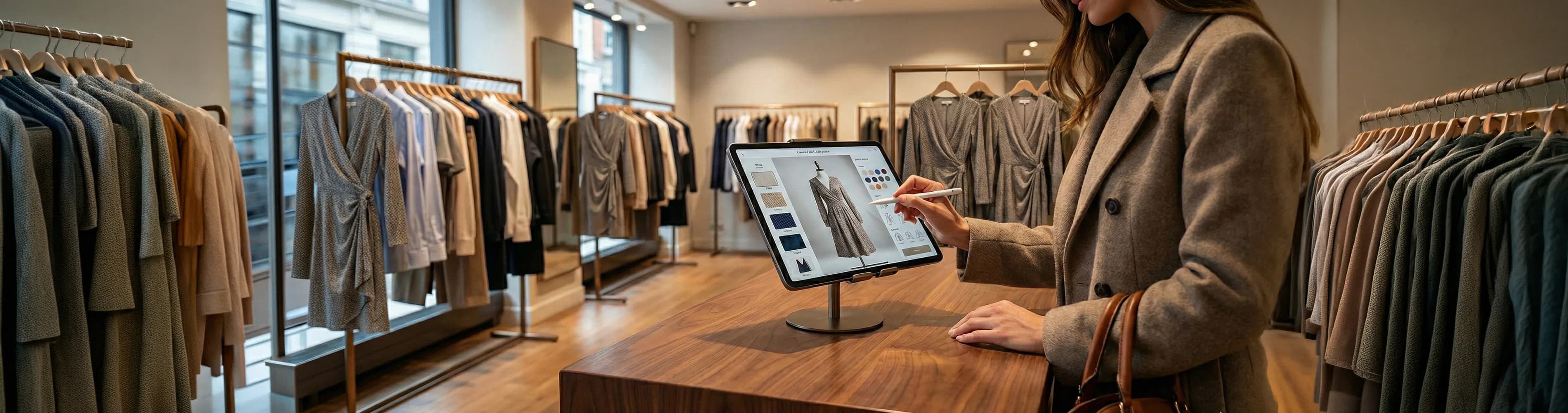

The fashion industry combines creative expression with technological advancements, but digital innovation now enables fashion brands to create customized products which exceed existing capabilities. Brands have gained new marketing possibilities because they can now present products through dynamic digital content which extends beyond their previous methods of showing static product pictures and standard online shopping displays. Fashion and apparel businesses can provide their customers with interactive shopping experiences which combine virtual reality technology and customized virtual solutions through the implementation of 3D configurators. Users of a 3D configurator can experience products in real time because they can use the tool to change product attributes such as color and texture and size and pattern. The brand gains benefits through increased customer interactions, which result in fewer product returns and higher customer satisfaction and better production planning operations. Hexacoder has established itself as an industry leader because it provides fashion and apparel brands with a complete 3D configurator solution which works for businesses of all dimensions.
Why Fashion Brands Need 3D Configurators
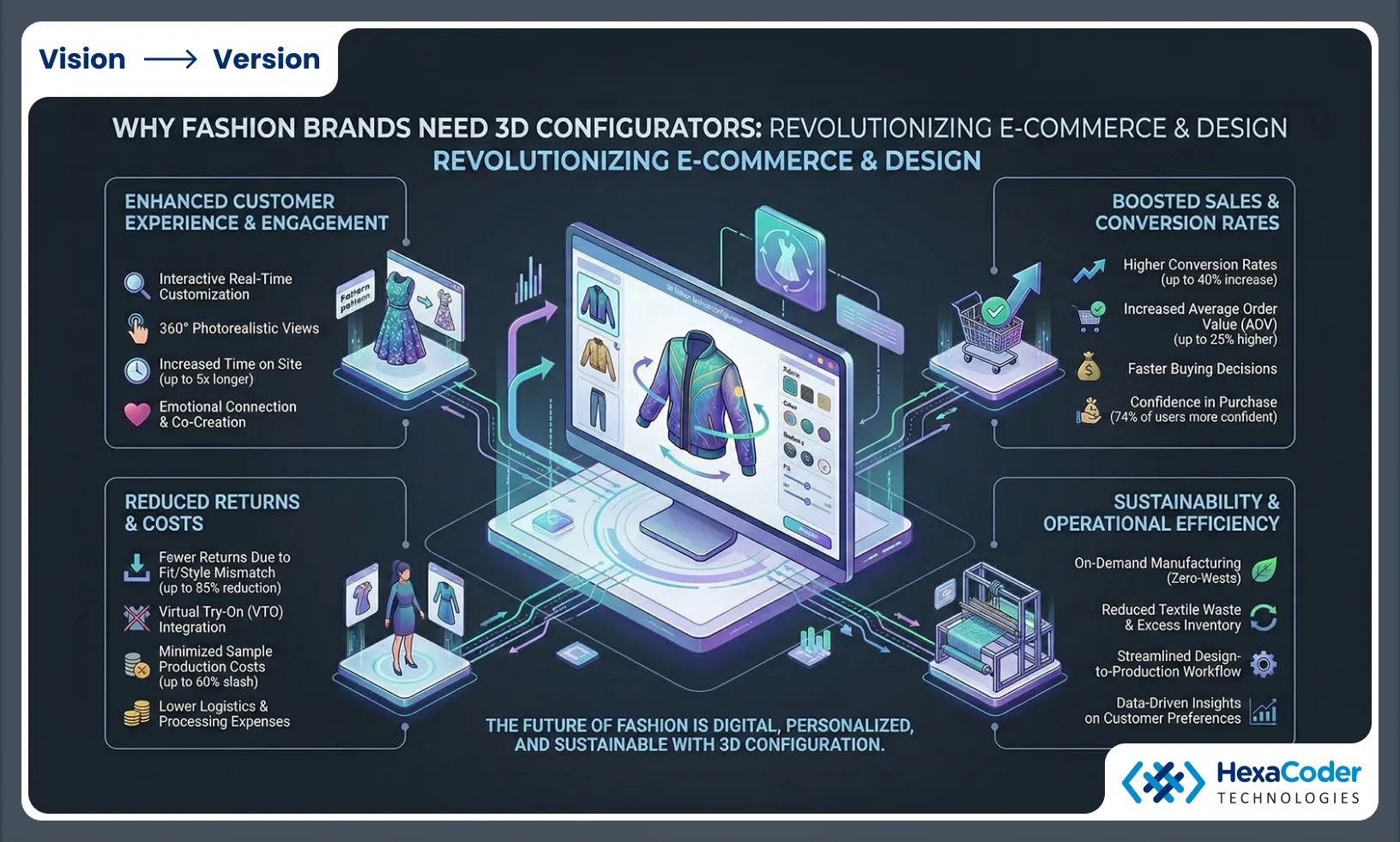
Fashion exists as a visual and tactile experience, but e-commerce platforms have failed to create the authentic in-store shopping experience. Customers often hesitate to make purchases online because they cannot see how a garment will look in different colors, styles, or fabrics, or how it fits on their body type. Customers leave their shopping carts abandoned because they face uncertainty about product quality which results in higher return rates.
The 3D configurators serve their most valuable function at this point. Brands enable customers to interact with products by providing them with the ability to customize colors and fabrics and styles while viewing authentic product simulations. Customers can use their devices to view clothing items from multiple angles and observe fabric details and create complete outfit combinations. This interactive experience helps customers become more involved with the product, which boosts their buying confidence and makes their shopping experience more pleasing.
3D configurators work to improve customer satisfaction while delivering to brands valuable data which they can use to improve their business operations. By monitoring customer engagement with various colors materials and designs brands acquire better knowledge of their customer preferences which they can use to develop better products and predict market trends and create new collections which will appeal to their target customers. Configurators solve the problem of returns which represents a significant obstacle for online clothing sales by providing customers with precise item representations that allow them to understand their purchases.
3D configurators have become essential tools for fashion brands which want to maintain their competitive edge because customers now expect personalized experiences. The system changes customer shopping patterns while it enables businesses to use data for making better decisions which lead to greater operational productivity and decreased resource consumption and sustained organizational success.
Top 10 3D Configurators for Fashion and Apparel Brands
1. Hexacoder Technologies
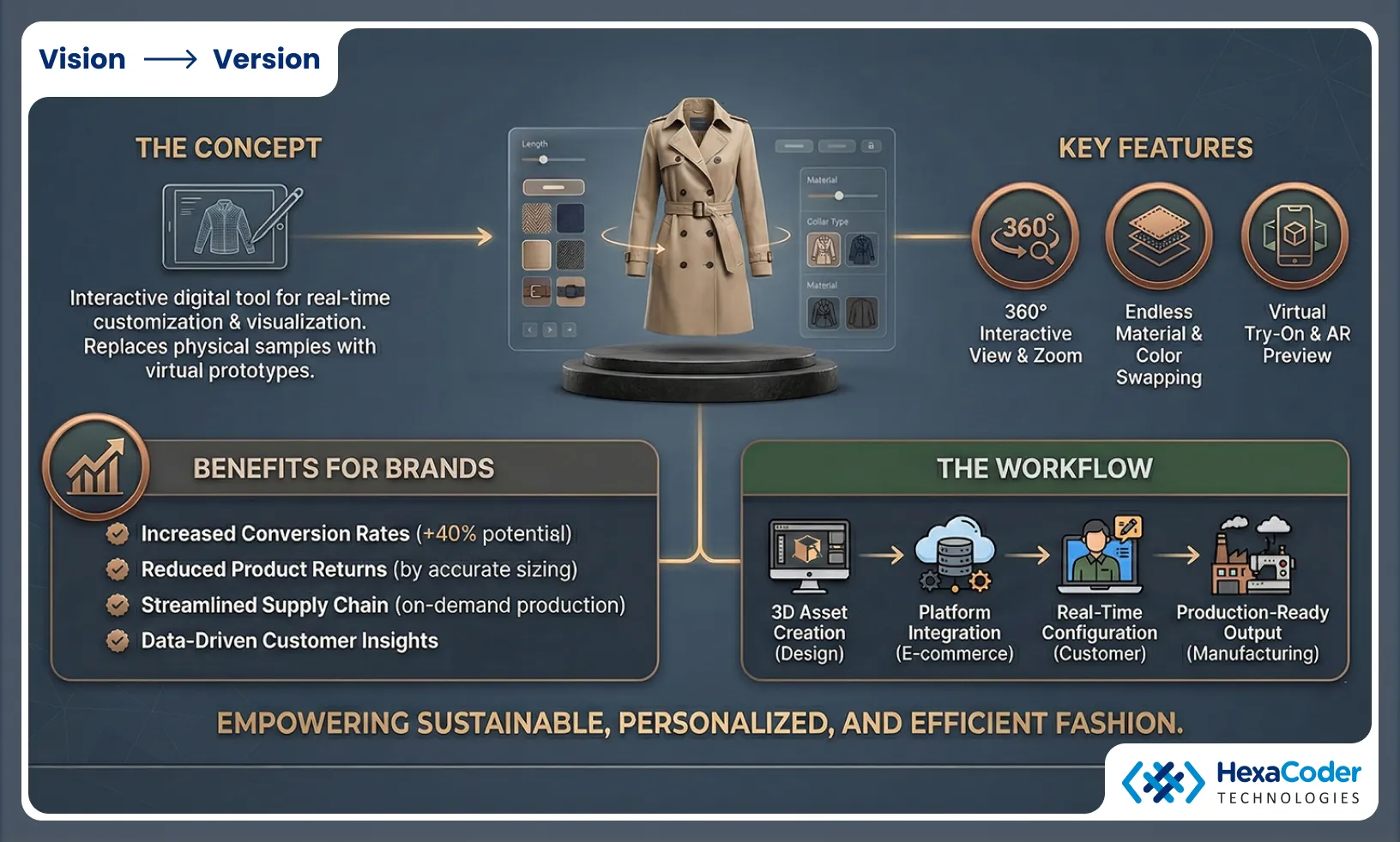
Hexacoder technologies provide fashion brands with flexible and expandable 3D configurator systems. The platform enables users to interact with clothing items and shoes and accessories through real-time virtual simulations which display their design elements with extreme visual accuracy. The system enables users to perform augmented reality virtual try-on tests combined with real-time light assessment capabilities which function on mobile devices and tablet computers and desktop computers. Hexacoder provides brands with customer interaction data which enables them to monitor customer design preferences while making marketing and inventory choices based on actual data. The online shopping experience of customers improves because they do not need to see physical samples. The brand uses Hexacoder technologies to increase customer participation. The brand uses Hexacoder technologies to create customer loyalty. The brand uses Hexacoder technologies to decrease product returns. The brand uses Hexacoder technologies to increase product sales.
2. Browzwear
Browzwear has established itself as a leader in 3D garment visualization because it delivers precise three-dimensional fabric representation. Its platform enables fashion designers to decrease their need for physical samples while still achieving their desired standards of excellence. Users of VStitcher software can design virtual clothes which look real and study how the fabric will behave when worn by digital models while they change their virtual clothing to various fabric types and body dimensions. Large fashion houses and sustainable brands use this configurator because it allows them to decrease their need for physical product testing through its advanced features.
3. CLO 3D
Clo 3D operates as a premier fashion configurator platform which delivers precise three-dimensional garment simulation results. Users can examine different fabrics and colors and textures through the platform while the system accurately predicts how materials will behave during movement. The simulation engine of CLO 3D reproduces actual draping behavior and stretch capabilities which enables brands to reduce fitting mistakes and provide an enhanced customer shopping experience. The program serves as a complete fashion enterprise solution through its compatibility with product lifecycle management (PLM) systems.
4. TUKAcad
The 3D configurator of TUKAcad enables users to create technical clothing designs through its interactive visualization system. The system gains its highest usage from fashion companies that specialize in creating custom suits and military uniforms. The system enables users to modify patterns and change measurements while seeing garments from different perspectives which helps designers and customers maintain full control over the process. The TUKAcad platform enables designers to send manufacturing data to production facilities which creates a connection from design work to actual manufacturing processes.
5. VNTANA
VNTANA created the V-Commerce platform to allow online retailers to show their products using 3D visual displays. The platform enables fashion brands to showcase their clothing and accessory items through 3D models which customers can modify by choosing different colors and styles and materials. Customers can use the website to explore products which they can access through online stores without any requirement for extra software installations. The system enables brands to see live data about customer behavior which shows them which product customization options are most appealing to customers.
6. Style3D
Style3D develops virtual clothing solutions and interactive design systems which retail stores use for customer engagement. The system enables designers to create complex design elements which include embroidery work and pattern designs and fabric texture details. The software allows customers to interact with every garment item they want to personalize while they observe instant updates about their modifications. Style3D promotes sustainable practices by decreasing the number of physical product samples that designers require during the development process. The system provides its users with an adaptable platform that supports both small fashion shops and major fashion companies through its capacity to grow with their needs.
7. iDesigner by CGTrader
Fashion brands use iDesigner to create product configurators which use CGTrader's 3D model library as their main resource. The platform allows brands to create interactive 3D models which customers can use to customize their product design through style and color and material selection. Users can experience garments through real-time rotation and zoom and exploration features which create a more interactive shopping experience. The platform enables customers to test products through AR try-ons which demonstrate how items appear in their actual surroundings and this feature helps customers make more confident purchasing decisions. The interactive tool from iDesigner helps digital marketing brands create better campaigns which attract viewers and increase conversion rates through its realistic visual elements and interactive features.
8. ExactFlat
ExactFlat 3D configurator creates precise product models which meet technical requirements for industrial clothing and performance sportswear and technical garments. Brands can test virtual prototypes, adjust measurements, and instantly visualize design changes without producing physical samples. The design process benefits from this feature because designers can make faster design changes which result in better fitting products and decreased material consumption. The platform connects with CAD systems to optimize production planning and accelerate the manufacturing process from design to production. ExactFlat helps workwear and outerwear and specialized apparel brands create products which meet their specifications through sustainable and cost-efficient production processes.
9. Lectra
The fashion technology sector has recognized Lectra as a market leader since its inception, and its 3D configurator platform maintains this tradition through its precise design capabilities and interactive design viewing system. Designers create virtual prototypes to test fabric behavior and fit in their digital presentations to customers. The study uses Lectra 3D to establish collaborative workflows which allow design teams and production staff and brand managers to evaluate design elements in a virtual space before making physical samples. The process helps brands to maintain high-quality standards while building products which they can deliver to customers within shorter time frames and with greater reliability.
10. Avametric
Avametric provides a 3D configurator platform which enables businesses to create outstanding customer journeys. The system enables shoppers to see how different body types will fit various products through its realistic product display system and AR virtual try-ons and interactive product customization features. Customers can use the platform virtual fitting rooms to digitally test multiple pieces of clothing which helps them make better purchasing decisions while decreasing their need to return items. The company provides analytics tools which enable users to monitor customer engagement, track popular fashion items, and observe customization trends, which help companies develop products and plan their inventory and develop marketing campaigns. The fashion industry uses Avametric to build interactive shopping experiences which combine immersive elements with realistic features and data-driven insights to improve customer loyalty and boost sales.
Key Advantages of Using 3D Configurators in Fashion
1. Enhanced Customer Engagement
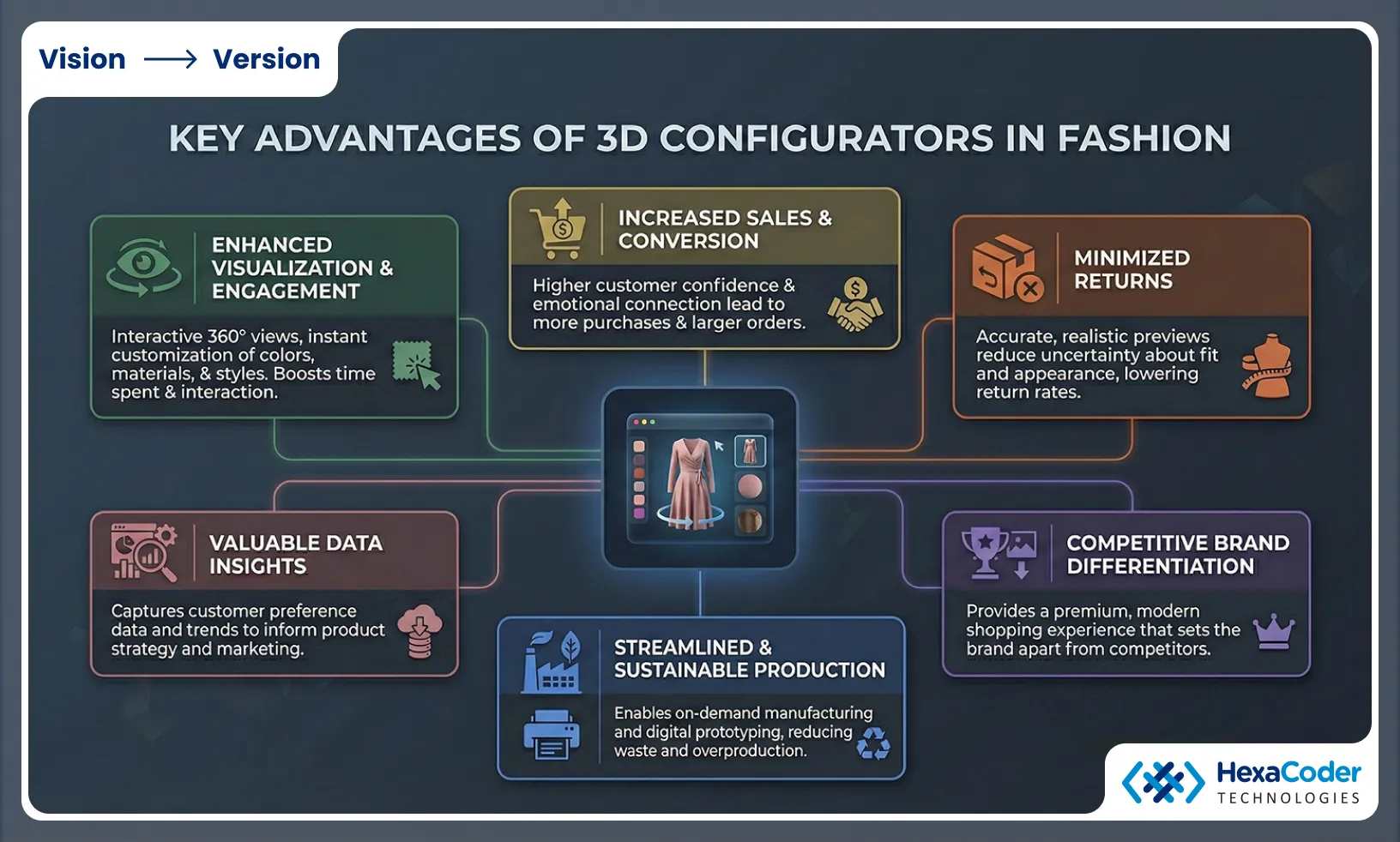
3D configurators enable customers to engage with their products through direct interaction instead of merely observing them. Customers have the ability to investigate clothing items from multiple perspectives while they adjust colors and fabrics and patterns and see their outfit combinations through dynamic visualization. The interactive features of the platform allow users to test the products which results in extended usage time because users build stronger emotional connections with the products. The active involvement of customers with a brand increases their likelihood to make purchases which helps to establish customer loyalty.
2. Increased Conversion and Reduced Returns
3D configurators show customers the exact appearance and fit of garments which decreases their doubts about making a purchase. Shoppers who make better decisions because of their improved understanding experience a higher conversion rate. The decline in return rates results from customers making fewer mistakes about selecting their correct size and color and style because they now understand their exact measurements and preferred style. This outcome benefits brands because it decreases their operational costs and helps them avoid the difficult process of handling reverse logistics.
3. Operational Efficiency and Faster Time-to-Market
Virtual prototyping through 3D configurators eliminates the need for multiple physical samples. Designers can test colors, fabrics, and cuts digitally before producing anything in the real world. Designers can test colors, fabrics, and cuts digitally before producing anything in the real world. The process leads to shorter production cycles and reduced material expenses and quicker introduction of new collections to the market. The product development process becomes more flexible because brands can instantly modify designs according to feedback received during virtual testing.
4. Sustainability and Waste Reduction
3D configurators support sustainable fashion by minimizing waste. Traditional trial-and-error sampling requires excessive amounts of fabrics and energy and labor. Brands can create their perfect designs through virtual testing because it enables them to develop their designs in a digital format which reduces material waste and decreases their carbon emissions. This practice attracts environmentally conscious customers while it builds a brand's sustainable business credibility.
5. Data-Driven Insights
3D configurators function as more than visualization tools because they produce useful data. Brands can monitor which styles colors and customizations customers choose to interact with. The data drives design choices and inventory management and marketing plan development. Brands can create tailored product offerings and accurate demand predictions and focused marketing campaigns through customer preference analysis at detailed levels.
6. Omnichannel Integration
Shoppers nowadays demand uninterrupted shopping across online and physical store and mobile app platforms. 3D configurators maintain their complete operational capacity when they connect with e-commerce platforms and mobile applications and retail store kiosks to deliver a unified shopping journey. Customers can proceed with product design on their mobile device and then switch to their tablet before making their final purchase at the store without any interruption to their design work.
7. Immersive AR and VR Experiences
The customer experience reaches new heights when 3D configurators combine with AR and VR technologies. Shoppers can virtually try on garments using AR on their devices, seeing how clothes fit and move in real life. VR systems enable customers to navigate entire collections within a virtual showroom where they can handle products and test different combinations which traditional retail systems cannot provide. The interactive experiences create enthusiasm that leads customers to participate more with the brand while they develop stronger connections with it.
8. Competitive Differentiation
3D configurators enable brands to create unique market identities which help them stand out from their competitors. The ability to offer real-time customization, immersive experiences, and interactive product exploration positions a brand as innovative and customer-focused. This technological edge attracts tech-savvy shoppers while it boosts the complete brand image and consumer perception of the brand's value.
9. Scalability for Product Lines
3D configurators enable brands to handle their entire product range because of their ability to support multiple product collections. Companies can introduce new color and fabric options and design elements through digital channels without any impact on their current inventory and operational processes. The system enables brands to develop new products through three different product categories which include seasonal products and limited-time offers and special partnership collections.
10. Improved Marketing and Social Engagement
Companies can use interactive 3D content to create marketing materials that will reach their audience through social media platforms and email newsletters and online advertisements. Shoppable 3D models create more interactive product experiences which increase customer engagement and lead to more website visits. The visual appeal and interactivity of configurators enhance storytelling, making campaigns more memorable and impactful.
Elevate Your Fashion Brand with Hexacoder
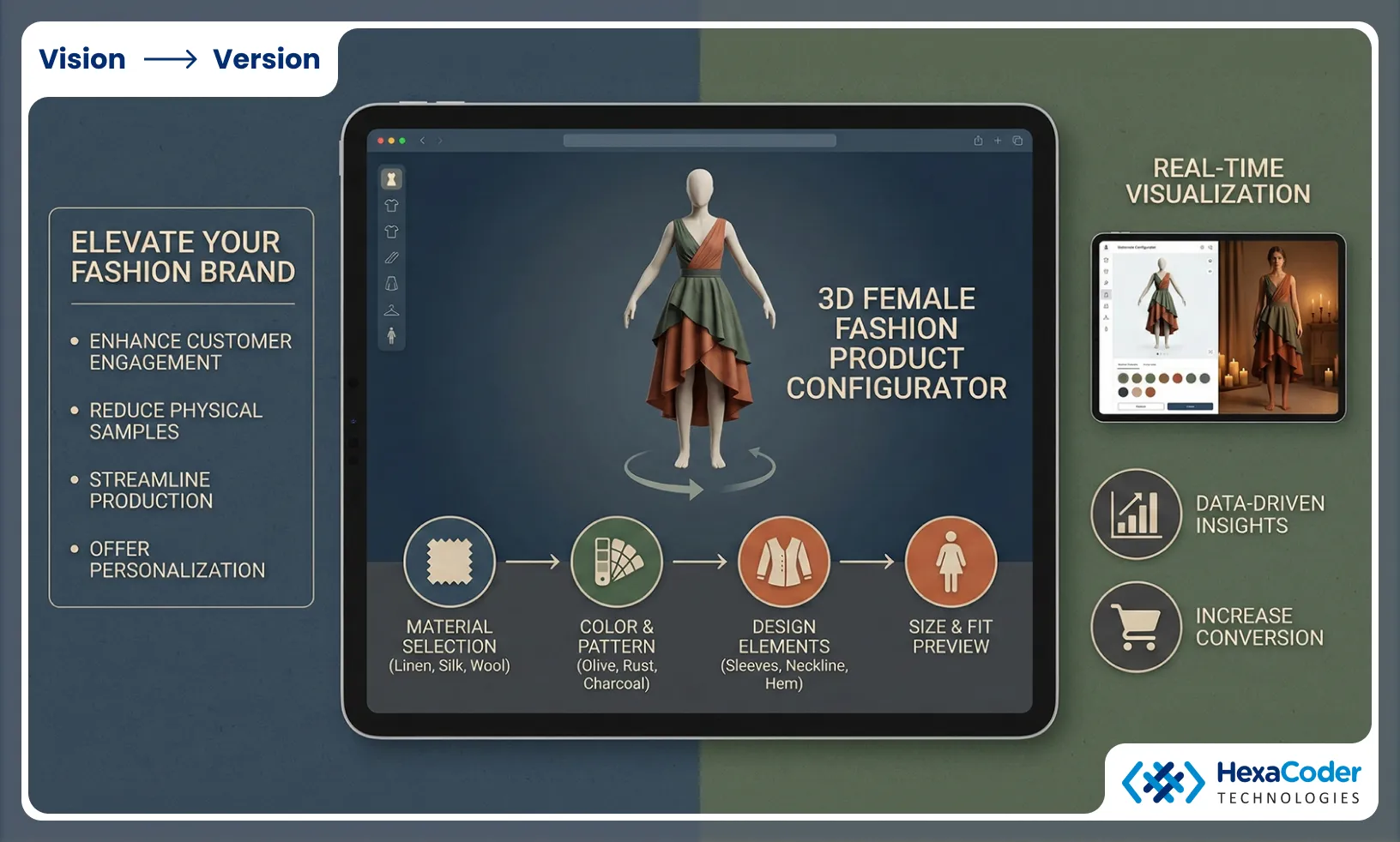
The fashion and apparel industry can use 3D configurators through Hexacoder which delivers an advanced solution. The platform provides customers with highly realistic 3D visualizations which enable them to see products from all directions while selecting their preferred colors and materials and patterns. The AR support system allows virtual try-ons which show customers how products will fit and look in actual life. This detail improves shopping confidence while decreasing product returns.
Hexacoder provides e-commerce platforms with a complete integration that enables customers to access stores through kiosks and mobile devices while maintaining a unified shopping experience. Brands obtain practical customer behavior data which reveals their most appealing products to create upcoming fashion lines and marketing strategies. The company uses Hexacoder to decrease its need for physical samples which helps the business cut expenses while maintaining environmentally friendly practices.
Hexacoder enables fashion brands to provide customers with tailored shopping experiences which help them boost business results through higher customer satisfaction rates. The brand needs to transform its customer interactions by creating exceptional experiences for its target audience.