
Best Product Configurator Solutions for B2B Print and Packaging Design

Your packaging design process is costing you money with every iteration.
The brand manager asks for a change in the box size. You redesign the mock-up. Samples take two weeks to reach them physically. The clients approve, but they discover that the color doesn't match what they had visualized. Further modifications. Yet another wasted month. Another truth traveling through email trails.
This is the price that traditional packaging design entails—not just in terms of monetary cost, but in terms of opportunity lost, frustration built, and errors committed. When, by 2026, the digital printing packaging market grows to the tune of an estimated USD 31.97 billion in revenue worldwide, in an era where online sales mean quicker deadlines, and individualization means basic necessity, this workflow cannot be justified.
Product configurators, especially 3D product configurators tailored to suit print & packaging processes in a B2B environment, are no longer a mere feature. They are the backbone behind which you succeed or fail.
Why Packaging Configurators Became Essential in 2026
Print and Packaging industry is confronted with an ideal situation of contradictory pressures.
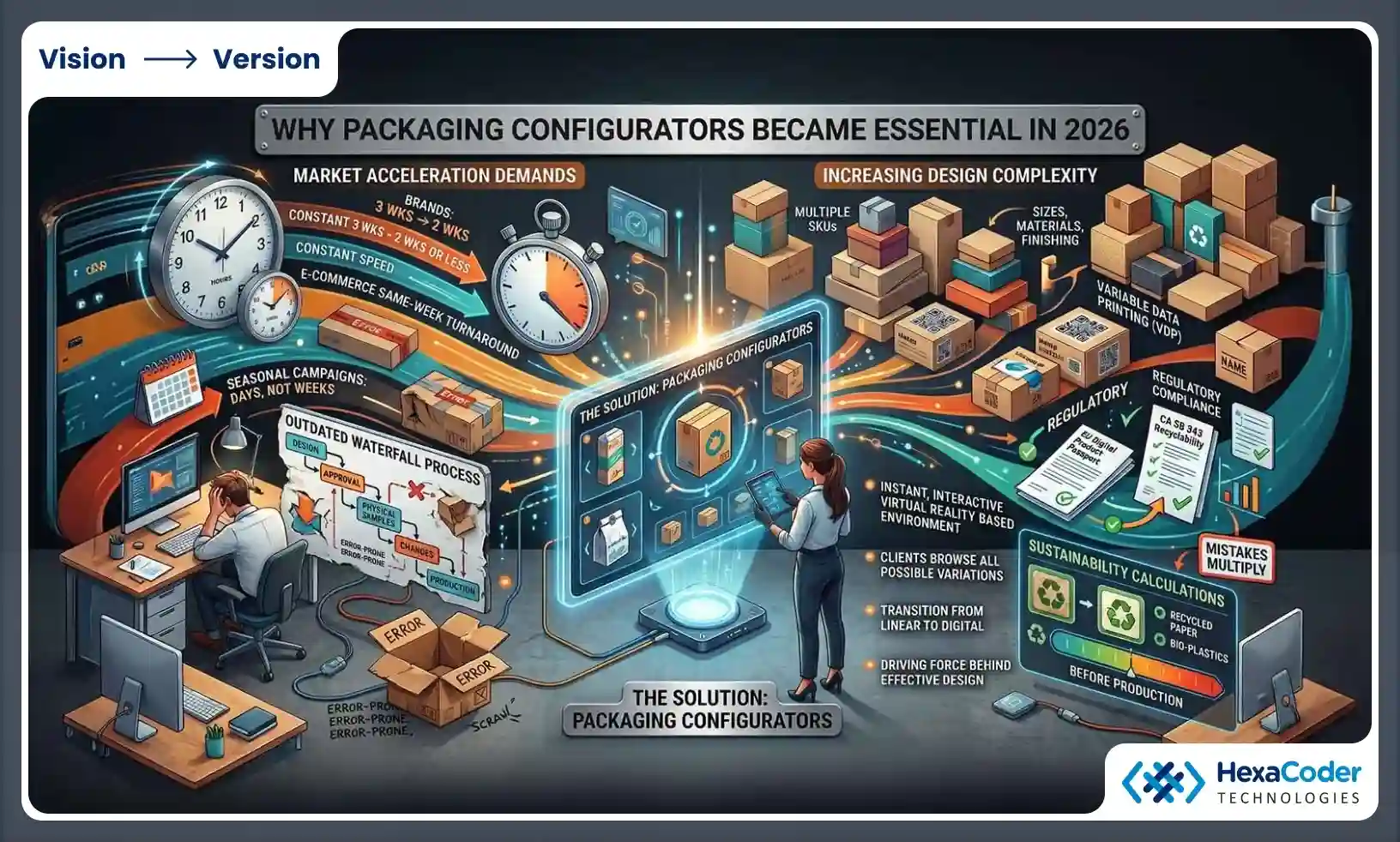
On the one hand, the push from the market to accelerate is constant. Brands demand short lead times—three weeks after PO is the industry norm, but competitors insist on two weeks or even less. E-commerce requires same-week turnaround time. Campaigns for seasons reduce the time span to days. The traditional waterfall approach of Design, Approval, Physical Sample, Change, Production cannot survive under such speed.
On the other hand, design is becoming increasingly complex. Single brands may handle hundreds of SKUs which differ by size, materials, printing, and finishing. Variable Data Printing is the new trend that results in each product being uniquely designed. Regulatory compliance, such as EU's Digital Product Passport and CA's SB 343 recyclability requirement, demands accuracy in all details. Calculations for sustainability dictate that material selection must be defined before production starts. Mistakes will multiply through thousands of pieces.
There is only one solution: to switch from linear error prone manual decision-making to instant interactive virtual reality-based environments in which clients can browse all possible variations.
That is precisely how configurators work. In the world of B2B packaging, they have graduated from being an additional marketing gimmick to becoming the driving force behind effective design processes.
What Makes a Product Configurator Work for B2B Packaging
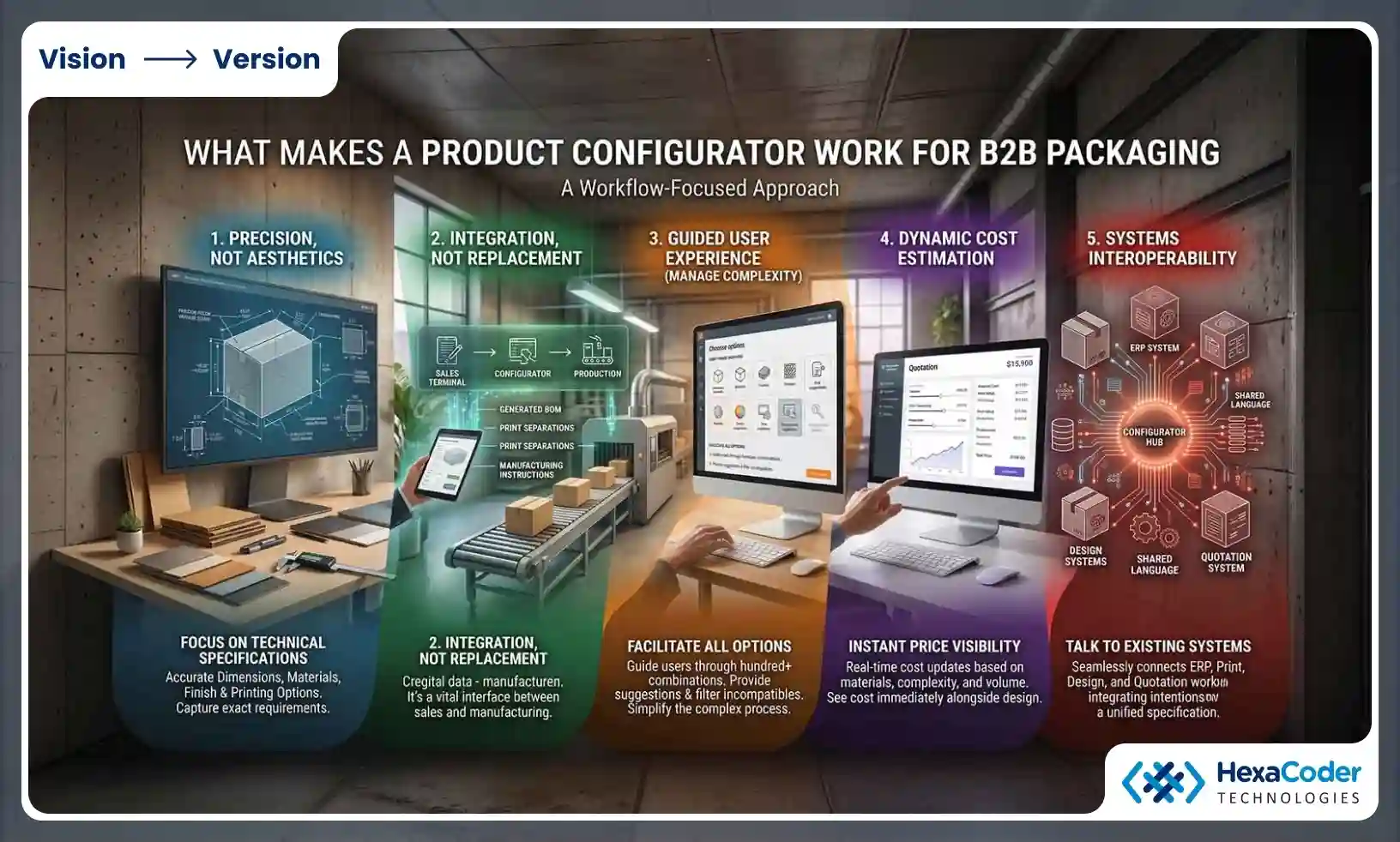
All configurators are not created equal. An optimally designed configurator for jewelry sales on the e-commerce channel may not work effectively for B2B packaging design workflow. First of all, what's needed is precision and not aesthetic. A good packaging configurator should provide the precise measurements of box, materials, finish and printing options. In order for a packaging to meet the client requirements, all these should be captured in the correct manner.
The second important feature of a packaging configurator should be its integration into manufacturing processes, not replace them. The configurator would generate the required details for the manufacturer, including precise measurements, bill of materials, print separations and manufacturing instructions, thereby making its placement on the interface between sales and manufacturing inevitable.
Finally, there could be hundred options when designing a packaging, starting from the dimensions of the box, choice of material and finish, printing options and special features. Packaging configurator should facilitate all this without complicating the process by guiding users through choices, giving suggestions and filtering incompatible options.
Fourth, it has to be costed dynamically. Dynamic cost estimation based on material selection, printing complexity, and volume of production is absolutely essential. The clients not only have to know how their project looks, they also have to see instantly what it is going to cost once the quotation comes.
Finally, it has to interoperate with existing systems. ERP systems, print management systems, design systems, and quotation systems have to talk to each other in one language. The configurator is not a closed world; rather, it's an intersection of intentions becoming a production specification.
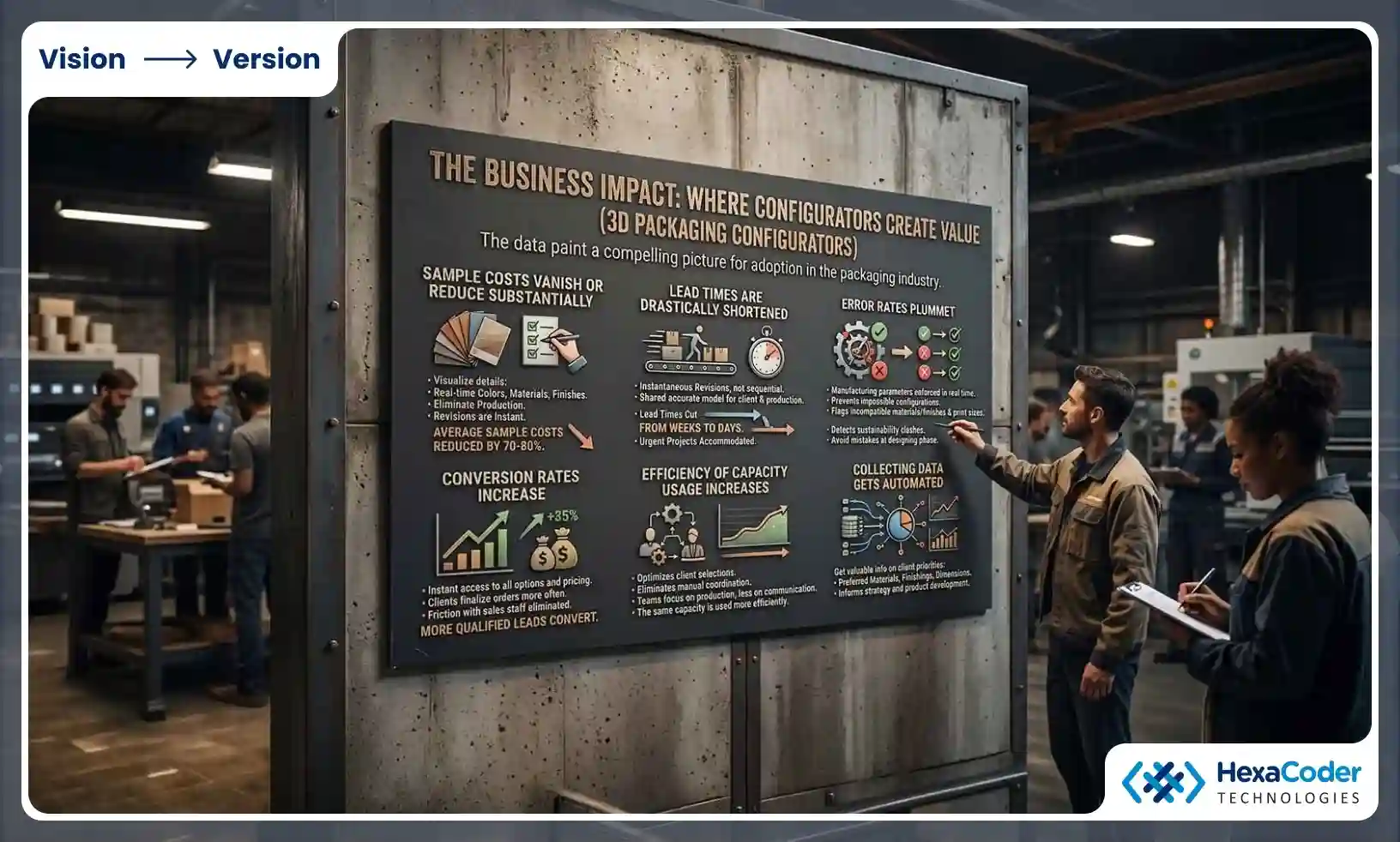
The Business Impact: Where Configurators Create Value
The data paint a compelling picture regarding why the packaging industry is moving quickly toward the adoption of 3D product configurators.
Sample costs vanish or are reduced substantially. Current packaging development involves producing samples to confirm design, materials, and printing. Revisions are part of the process and cost hundreds or thousands of dollars each time, requiring weeks between rounds. The comprehensive capabilities of a 3D configurator enable clients to visualize all these details in real time—accurate colors, materials, print, and finishes—thus eliminating the need for sample production. Average sample costs are reduced by 70-80 percent.
Lead times are drastically shortened. As revisions become instantaneous rather than sequential and as both client and production team work from the same accurate model, lead times are significantly reduced. Lead times are cut from weeks to days. Urgent projects can be accommodated since the design process is no longer the choke point.
Error rates plummet. By enforcing manufacturing parameters through a 3D configurator in real time, impossible configurations cannot get passed down to the production line. Incompatible material and finish selections are prevented, while excessive print sizes are flagged. Requirements for sustainability that clash with selected materials get detected immediately. Mistakes that could lead to expensive fixes later on in the manufacturing process get avoided at the designing phase.
Conversion rates increase. When clients have access to all possible options and get prices instantly, there is a higher chance that they will finalize their orders. The friction that required prospective clients to get in touch with the sales staff and then wait for a response gets eliminated. More qualified leads will turn into customers.
The efficiency of capacity usage increases. With configurators helping you optimize your clients' selections and eliminating the need for manual coordination, your teams will spend less time communicating with each other and more time producing goods. The same capacity gets used more efficiently.
Collecting data gets automated. Whenever a client uses the configurator to place an order, you get valuable information about his priorities—preferred materials, finishings, dimensions.
Packaging Industry Trends That Drive Configurator Adoption
A number of changes to the nature of packaging in 2026 have made configurators not only helpful but necessary.
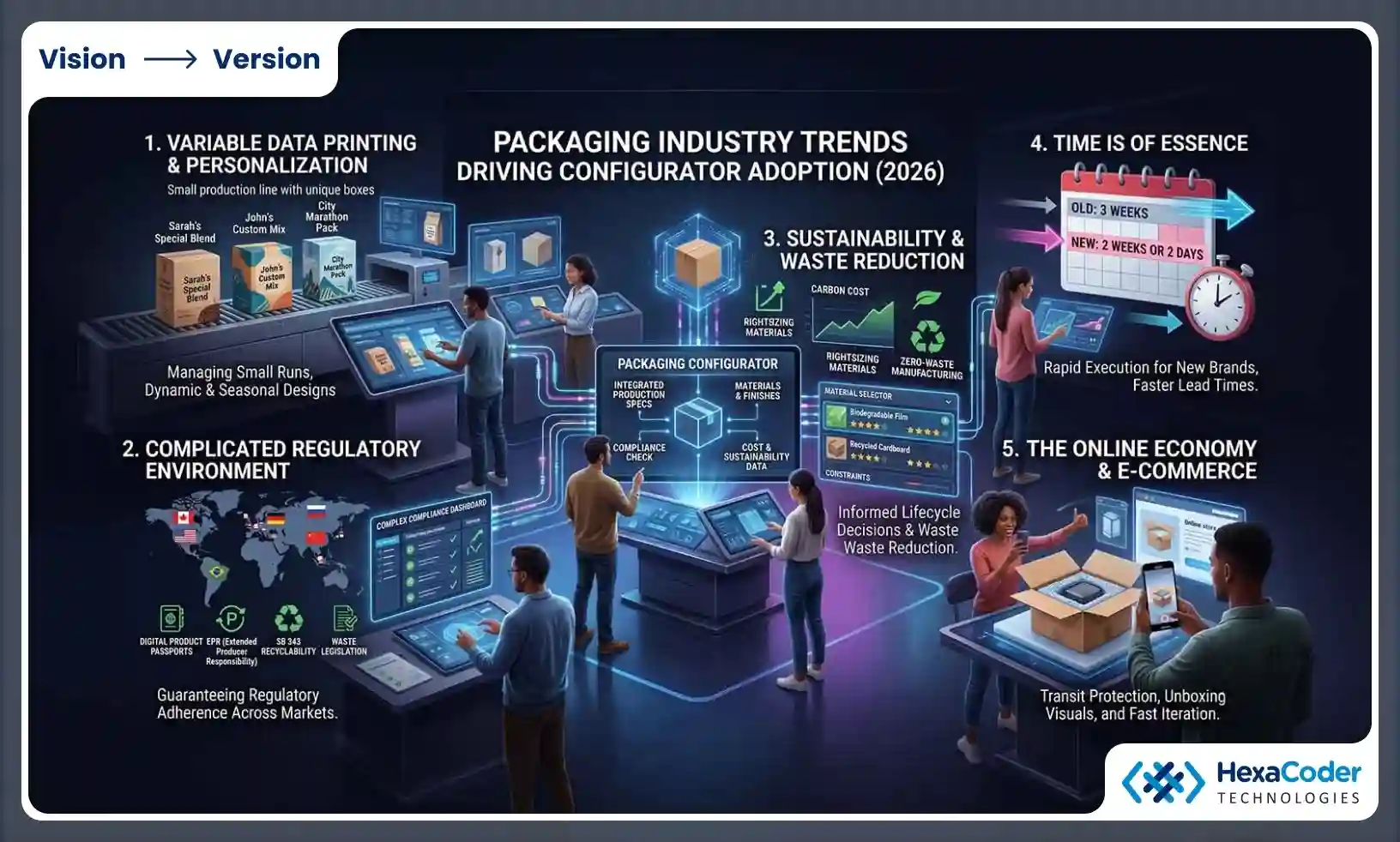
Variable data printing and personalization have become commonplace. Companies are recognizing that packaging can be dynamic, incorporating different design features depending on the market, season, personalization opportunities, and special edition packs. What used to be one large run has splintered into many small runs, making management without configurators impossible.
The regulatory environment has become increasingly complicated. Digital Product Passports, Extended Producer Responsibility (EPR), SB 343 recyclability claims, and packaging waste legislation are just a few of the issues companies must consider. A configurator can incorporate all the necessary regulations, guaranteeing that the chosen materials, finishes, and print specifications adhere to the regulations in every market.
Sustainability is not just optional anymore. The debate is now moving from questions of recycling to questions of waste during the production process. Zero-waste manufacturing, rightsizing materials, and lifecycle thinking demand that the client make well-informed decisions along with the designer. The configurator can incorporate sustainability parameters by displaying the carbon cost of various materials options, highlighting finishes that undermine recyclability, and suggesting materials options that meet environmental standards.
Time is of essence. The industry norm used to be three weeks, but the new generation brands demand lead times of two weeks or even two days, which is impossible with old-fashioned design workflows but quite possible with the configurator since the process of capturing and verifying the design becomes the actual production spec itself.
The online economy changes the way brands think about packaging design. E-commerce packaging needs to provide proper protection during transit, look good when being opened in the video, and photograph nicely in the online store. It is also crucial to go through several iterations quickly as they learn about their customers' preferences.
How the Best Configurators Actually Work in Practice
High-quality configuration for packaging in a B2B context:
Client enters basic parameters. They have an idea of what they need, whether that is a folding carton, a corrugated box, or a label of a particular size. These basic parameters narrow down the set of possible designs right from the start.
Configurator shows possible materials and finishes. It offers the client options for further design based on the basic parameters. Anything that would cause manufacturing difficulties or break constraints is automatically not included in these options to avoid unnecessary hassle.
Client plays with their ideas. They can rotate the 3D view of the box, zoom in to examine the printing detail, experiment with color options in real time, try out different finishes and any other special properties they might wish to add.
Price calculations happen instantly. With every change the client makes to their order, they immediately see how much additional cost is required. It is not just about how the end product looks, it is also about the price.
Sustainability analysis becomes visible. Configurator calculates how much material will be wasted, finds possibilities for optimizing design and warns about any problems that could arise from choosing a particular material or finish.
Final specification becomes final. After the client agrees to everything, they sign off on the design. A production-ready specification file is created by the configurator—dimensions, materials, separations, assembly instructions. Absolutely no translation. Absolutely no version control problems.
Real-World Implementation: What Success Looks Like
The change for packaging converters and print service providers utilizing configurators is real.
A corrugated box maker said their lead times were shortened from 18 days on average to 5 days post-configurator implementation. Their clients would design, approve, and lock the specs in hours rather than weeks. The manufacturing crew would get verified specs ready for execution without clarification calls.
A flexible packaging maker reduced their samples' cost by 75 percent. Their customers would look at many different materials and finishes through the configurator before requesting only one sample. Only proven concepts would advance to the sample phase. Production rework due to design errors became virtually zero.
A custom label printer saw an increase in their quote conversion rate by 40 percent. Prior to the configurator, their prospects would get static mock-ups and have the urge to request more options. But now, they can freely browse through their options through the configurator. Quote velocity increased; more prospects got their quotes, and more quotes became orders.
A food packaging expert added information on sustainability to their configurator tool. The brand could now know the carbon footprint for various materials in real-time. It also became an advantage in that the companies interested in sustainability could make informed decisions about the best choice.
Integration with Your Existing Infrastructure
Another major myth about product configurators is that their use demands a complete revamp of your current systems. Nothing could be further from the truth.
Leading configurators work perfectly well with ERPs, design programs, and quotation systems already in use in your organization. Client specifications are fed from the configurator straight to your production planning system. Costs come directly from your cost database, including real material and labor costs. Print specifications interact with your platemaking and color management processes.
In essence, a configurator works like a smart front door to all your existing infrastructure. The client's requirements are captured in a structured manner that can be consumed by your production systems directly.
The Competitive Window: Moving Now vs. Later
The packaging industry is split quickly into two distinct groups. Companies with configurators are seeing quantifiable benefits in terms of lead time, efficiency, fewer errors, and happier customers. Companies without configurators are losing ground.
That margin will only increase going forward. With digital printing growing by 9.8 percent CAGR up to 2035, with the trend toward personalization continuing to rise, and with the increasing regulation in the field, companies with configurators are able to move quicker and at lower costs than companies without them.
More importantly, configurators are becoming essential to doing any business at all. Companies with foresight—particularly those with e-commerce roots, sustainable practices, and complex portfolios—are demanding self-service design tools, real-time pricing, and an ability to explore their options without involving sales. Companies that don't offer this will lose RFP battles before sending an estimate.
Deployment times are crucial. Configurators can be implemented within 3-6 months if properly architected. By starting today, you will be in contention in Q3 2026. By waiting one more year, you will be losing the opportunity to take market share to your competitors.
The Future: AI, Automation, and Intelligence
Modern product configurators are great devices for capturing customer needs and creating verified specifications. Future product configurators will be smart software applications that assist customers in making choices.
Consider a product configurator that provides optimal sizes for boxes depending on the size and weight of the product, provides finish recommendations based on sustainable development objectives, and identifies potential problems with print registration in advance. Consider a product configurator that understands what material and design combination results in the highest quality and production efficiency by analyzing your production history.
None of this is imaginary. The process of integrating artificial intelligence recommendations into product configuration is just about starting. Those who install configurators now will benefit from this technology in the future.
This is How You Compete in 2026 and Beyond
Packaging design through emails, sampling, and successive approvals is an obsolete practice. Companies that continue to do business like this are losing out on competitiveness.
Product configurators are not optional extras for marketing or convenience but necessary components of operations that distinguish successful organizations from lagging players. Configurators help save money, cut down time, avoid mistakes, and enhance client satisfaction. This technology fundamentally changes your approach to capturing customer needs and producing the required product accordingly.
The growth of digital printing packaging industry is 9.8% per year. Brands need more customized products in less time. Legislation grows stricter. Competitors act faster. Companies are getting rewarded for dealing with complexity without compromising either speed or quality.
The issue of implementing a product configurator into your operations is no longer open for debate. You only need to discuss the timeframe during which you will be able to take action and acquire competitive advantage.
As a matter of fact, in 2026, success in printing and packaging will have nothing to do with how big your press or company is. Competitive edge will belong only to those who have better tools enabling clients to design, approve, and go straight into manufacturing their custom product.