
It takes one second, and something amazing happens in the retail world. A consumer lifts up his mobile device, scans his living room, and watches as the sofa becomes visible, perfectly scaled against his walls. Not a computer render. Not an estimate. A virtual and interactive experience that's so tangible he can walk around it, spin it, change the fabric color, and even see it in a variety of lighting scenarios. Three seconds later, he hits "purchase." This isn't the future, it is the present.
Augmented Reality (AR) has stealthily made its way beyond being just another piece of cool technology into becoming an absolute necessity for businesses, and the companies gaining market share aren't the ones waiting for the adoption rate to rise; rather, they're the ones who have been in the game, revolutionizing how consumers discover, envision, and fall head-over-heels for products before even getting their hands on them.
And the question isn't whether AR changes the customer experience. It's whether you're ready to capitalize on the trend.
Understanding Augmented Reality: More Than Just Filters and Novelty
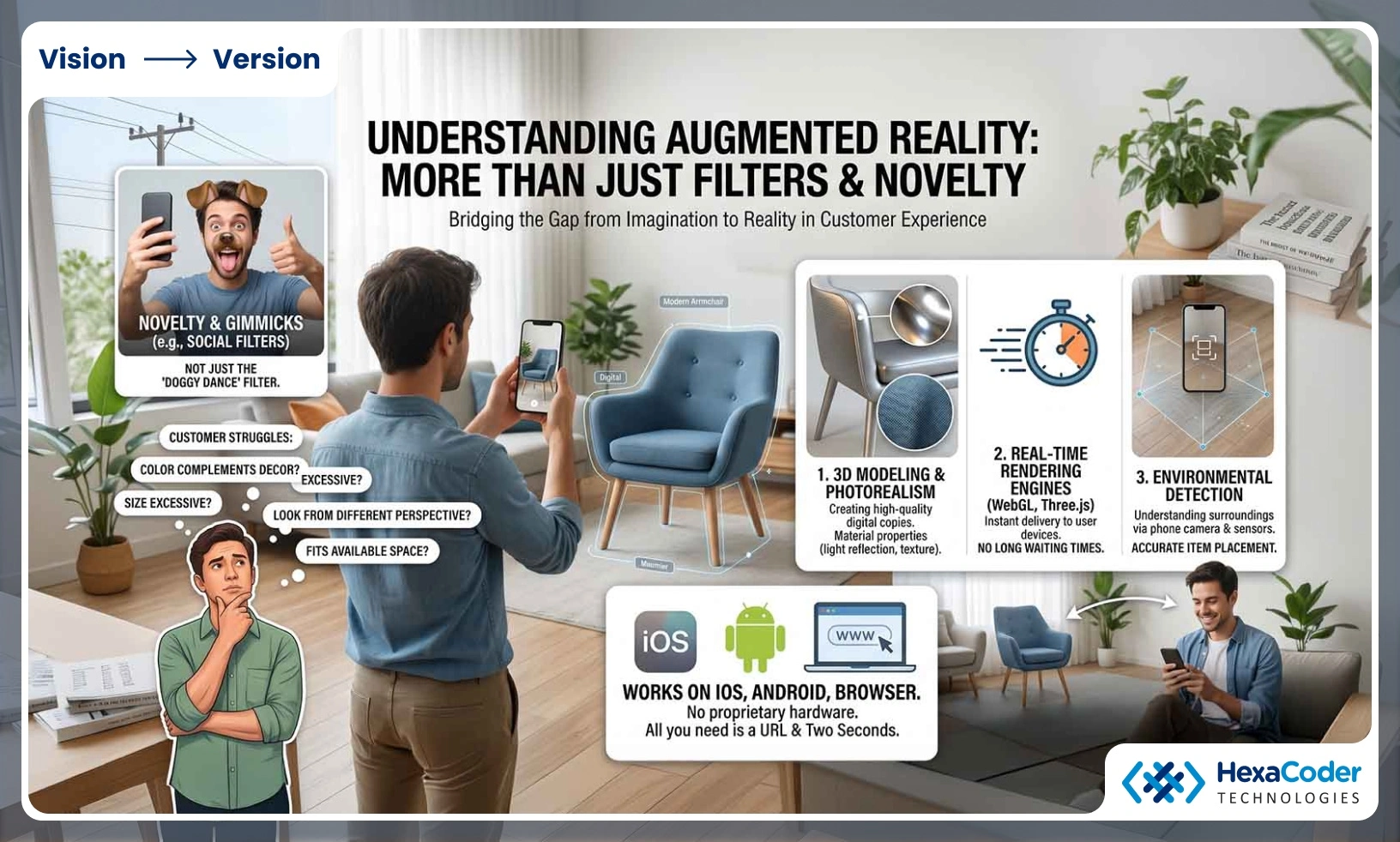
Let's set one thing straight: AR is not the "doggy dance" filter your cousin loves using on Instagram; it's a novelty that no one remembers anyway.
This is real augmented reality: the blending of digital and physical worlds by adding information to the real world a customer perceives through his device. But there's one crucial point that distinguishes the gimmicky from the truly valuable application of AR in marketing and sales:
Augmented Reality in customer experience involves making the transition from imagination to reality less effortful.
As a person makes up his or her mind regarding purchasing a product, he or she struggles to come up with solutions to such concerns as whether the particular color will complement one's home décor, whether the size is excessive, how the item looks when viewed from another perspective, whether the item would fit the available room space. Traditionally, the issue is resolved through the provision of static images and videos. AR solves it in an interactive manner.
Here's how the technology utilizes a set of essential elements:
First of all, 3D modeling ensures the creation of high-quality digital copies that are highly photorealistic. This means creating models with an emphasis on specific properties of materials how light is reflected from metal surfaces, what the texture of fabrics looks like, etc.
Secondly, there are real-time rendering engines based on technologies such as WebGL or Three.js. They deliver models to users' devices without requiring 20 minutes of waiting which may drive customers crazy. This point cannot be stressed enough.
Thirdly, environmental detection ensures understanding of what the surroundings are like thanks to the use of a customer's phone camera and other sensors. This allows for placing items in real-life environments accurately.
The key to device-agnostic delivery is that it works on iOS, Android, browser, and more. The consumer doesn't need proprietary hardware or specialized software. All they need is a URL and two seconds.
When everything comes together seamlessly, you give your consumer something that's less about the tech and more about the possibilities.
The Psychology of Augmented Visualization: Why AR Actually Changes Minds
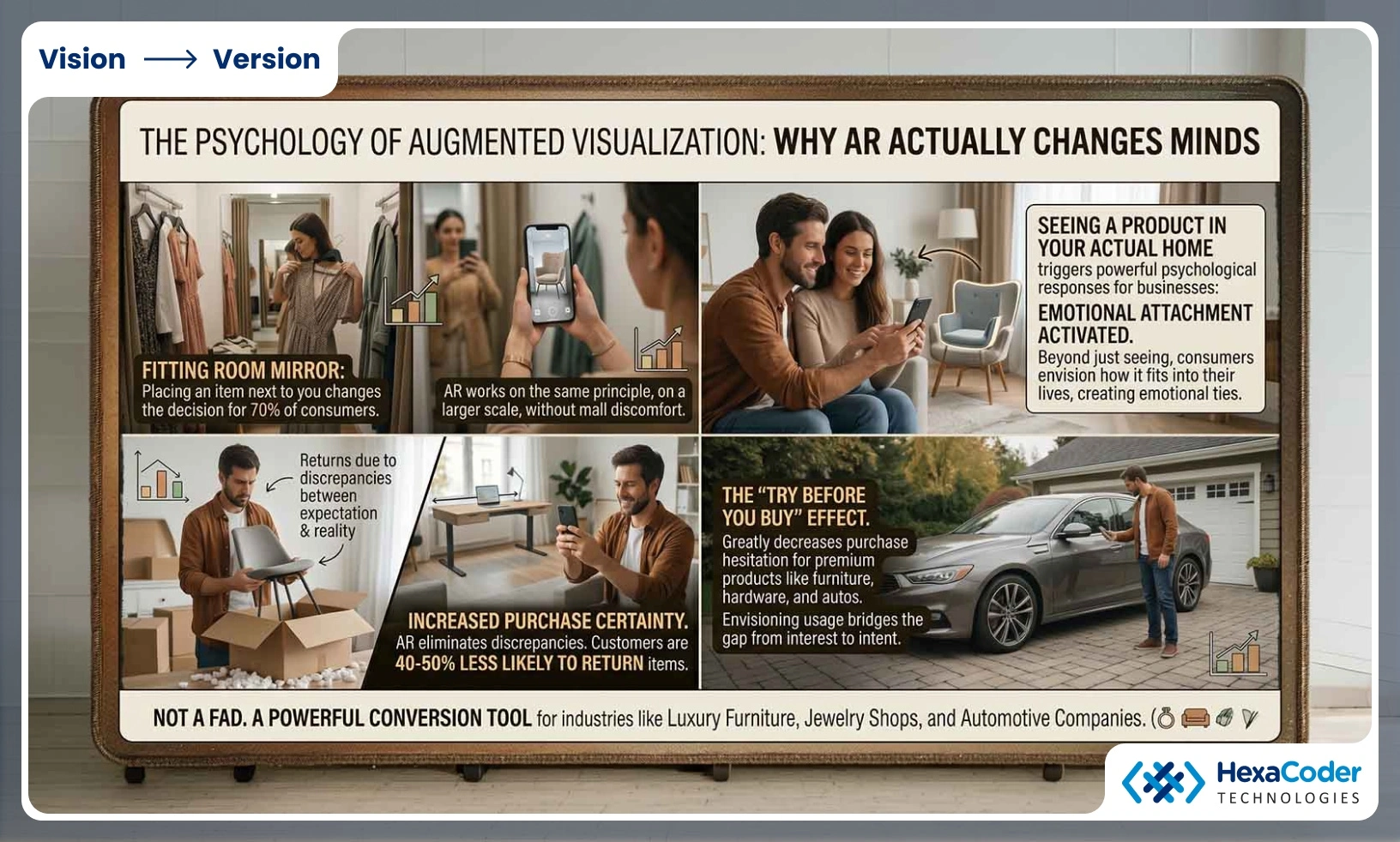
This is why retailers are so focused on providing customers with a mirror in fitting rooms, as placing an item next to you changes the decision by nearly 70 percent of consumers. AR works on the same principle psychologically, just at a large scale and without the discomfort of putting on a coat in a crowded mall.
Seeing a product in its actual place in your personal environment not a fancy showroom, but your literal house triggers multiple psychological responses that benefit businesses:
The feeling of ownership gets activated: Once the consumer is able to see the product placed in their environment, they start developing an emotional attachment that goes beyond seeing the product in general; instead, they see how it would fit into their lives.
The certainty in making a purchase increases dramatically: By far, the most common cause of product returns is the difference between what was expected and what really happens upon arrival. AR allows eliminating such discrepancies, and a customer that has already seen the product in their home using AR technology will be 40 to 50 percent less likely to return it.
The "try before you buy" effect: It greatly decreases purchase hesitation. For premium products like furniture, hardware components, and automotive parts, consumers have to envision themselves utilizing the item. AR bridges that gap between interest and intent.
It's not surprising that luxury furniture manufacturers, jewelry shops, and automotive companies are scrambling to develop AR technology. It's not a fad. It's a conversion tool.
When AR Shines: Industry Applications
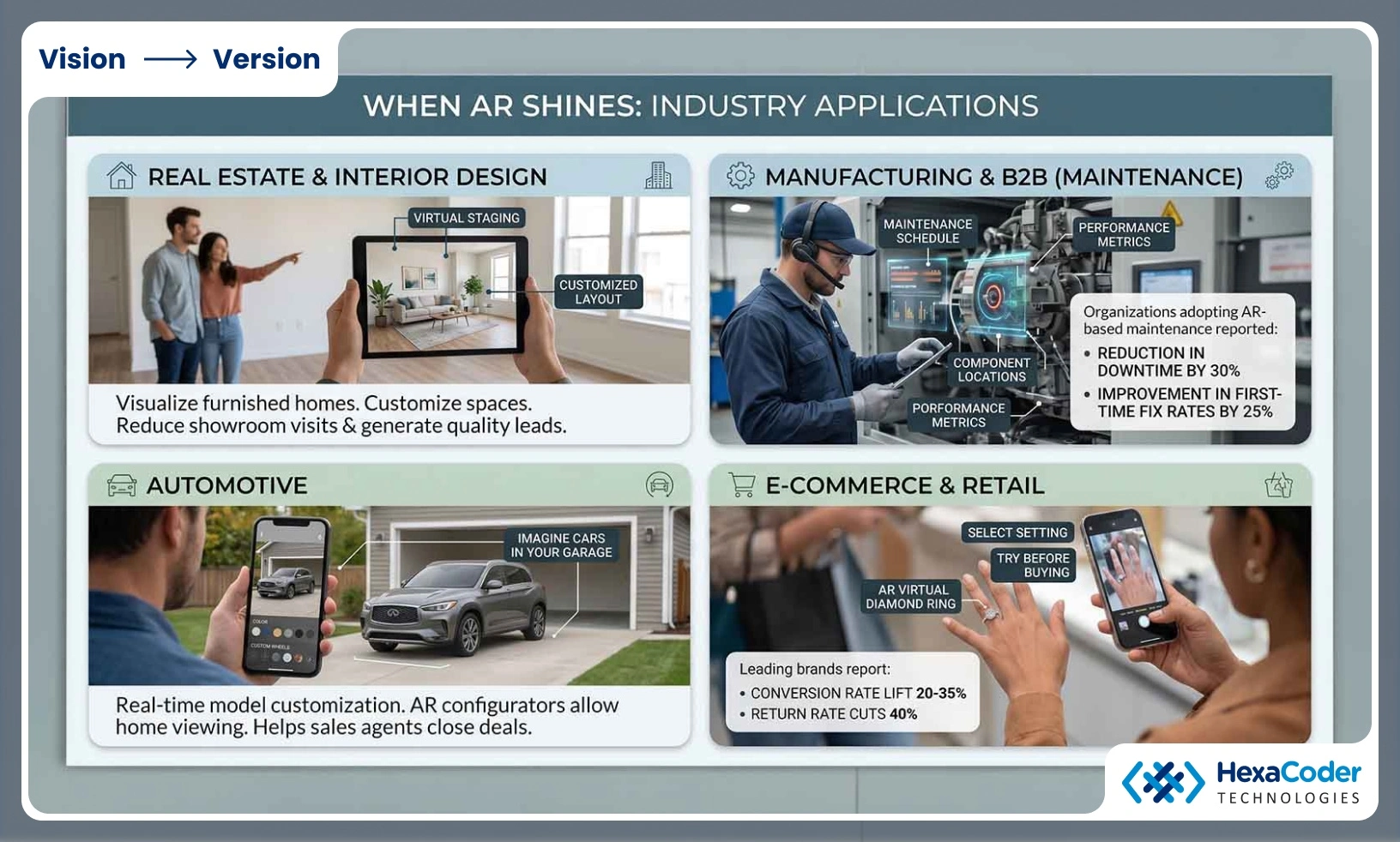
AR innovations you may have heard of virtual makeup tests and furniture placement apps are only scratching the surface. AR's true value is being realized in sectors where visualization drives purchasing decisions and operations.
Real Estate & Interior Design
An estate developer could integrate AR visualization right into their listing. Consumers won't be viewing a blank canvas, but rather the home furnished, decorated, and customized to fit their lifestyle needs. One well-designed AR application could save countless showroom visits while generating quality leads.
Manufacturing and B2B
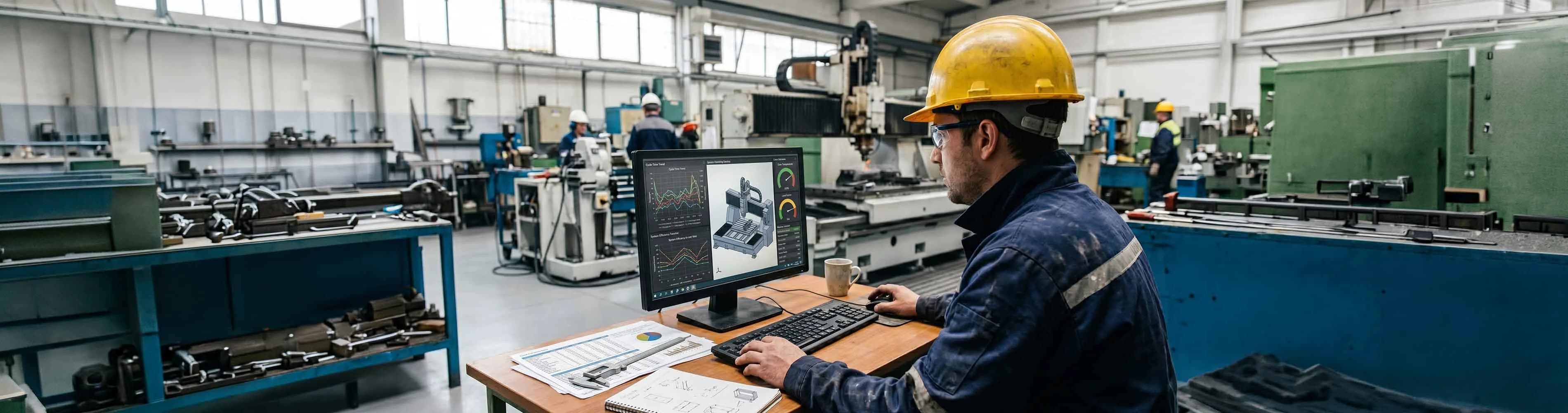
Here comes the magic of AR. Imagine a manufacturing company dealing with complicated machines or industrial equipment. No more depending on a printed manual; instead, a worker can take out a tablet or mobile device, aim it at the equipment, and see overlays of information: maintenance schedule, locations of components, performance metrics, and even analysis of when a particular component might fail.
Organizations that have adopted AR-based maintenance processes have reported a reduction in downtime by 30%, and improvement in first-time fix rates by 25%.
Automotive
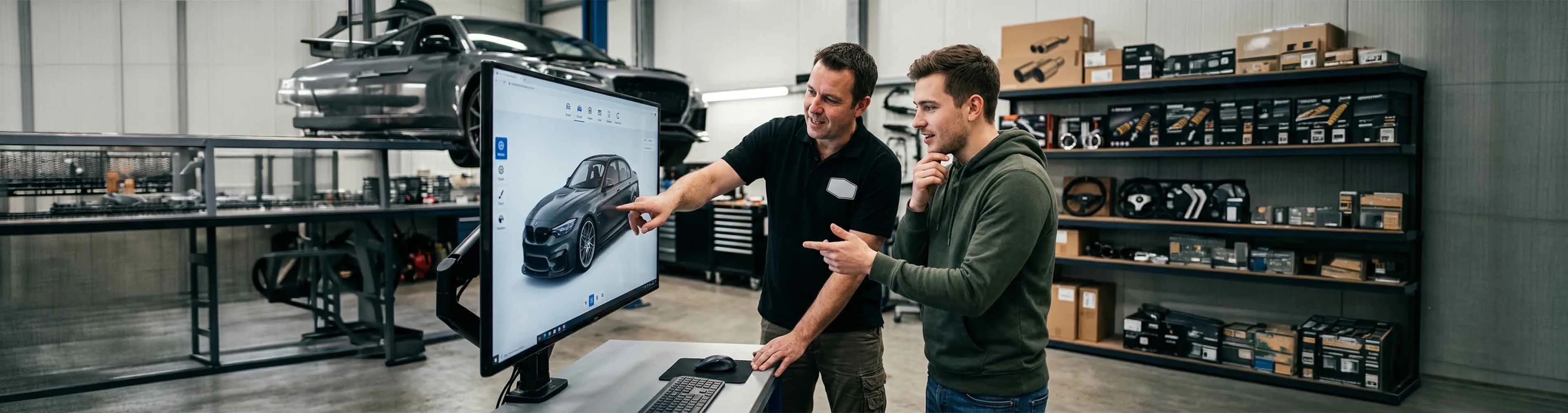
Consumers want to customize their car models in real time. Consumers want to sit in that driver's seat. Consumers want to imagine how that particular shade will look like against their garage. AR configurators allow for all of this to be done without setting foot in an automobile dealership. For sales agents, AR becomes a tool that makes the sale close itself.
E-Commerce and Retail
The easiest use case, yet still the most overlooked. A fashion label can enable customers to view how clothes will really fit on their body frame using AR mirrors. A jeweler can enable buyers to picture how the engagement ring will look on their hand. A furniture merchant can enable customers to place items in their own space and see how they match the rest of the décor.
Leading brands in this niche have reported conversion rate lifts between 20-35% and return rate cuts of 40%.
Building AR Experiences That Actually Work
But this is the point where most businesses fall into trouble: they understand the value of AR but do not realize the technical challenge associated with creating smooth, efficient, and truly useful experiences.
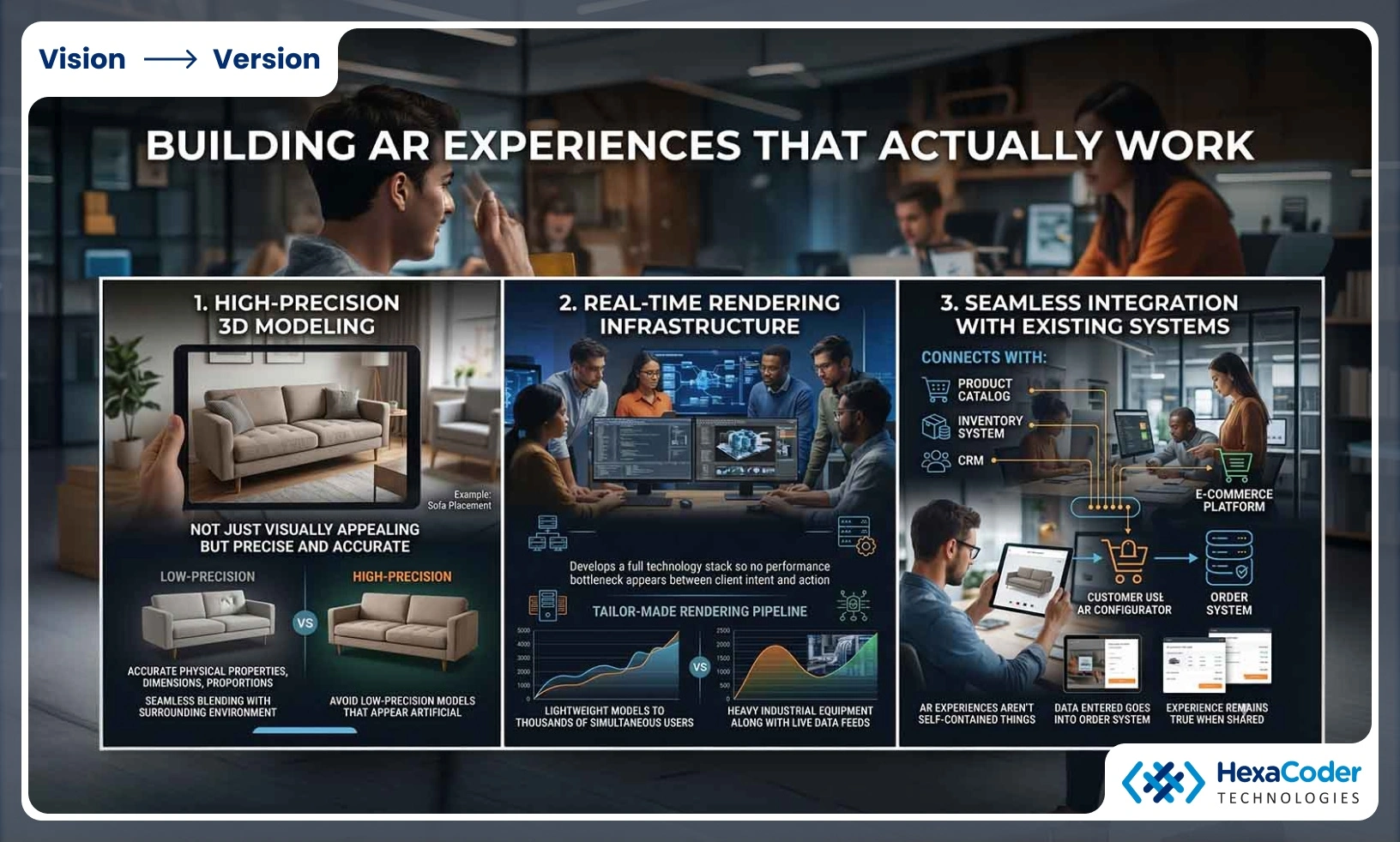
In order to design an effective AR experience, it is essential to establish three technical prerequisites:
1. High-precision 3D modeling
The task at hand is not to make something visually appealing but rather something that will be as precise and close to the actual product as possible. In other words, the 3D model of the sofa has to accurately depict all its physical properties, dimensions, and proportions and, at the same time, seamlessly blend with the surrounding environment when placed there.
Most businesses choose to ignore this prerequisite and work on AR technology based on low-precision models. Consequently, such products appear obviously artificial.
2. Real-Time Rendering Infrastructure
That's because there is something called a "rendering pipeline," and not all of them are created equal. In order to develop a customized 3D product configurator and interactive AR solutions for your customers, you will need to have a tailor-made rendering pipeline for your specific business case: whether it's sending light weight models to thousands of simultaneous users or rendering heavy industrial equipment along with live data feeds.
Here comes a company such as Hexacoder Technologies. They do not just create AR solutions; they develop a full technology stack so that no performance bottleneck appears when there is a need between your client's intent and his action.
3. Seamless integration with the existing systems
AR experiences aren't self-contained things. You will need to connect them with a product catalog of your company, the inventory system, the CRM, and your e-commerce platform. The information entered by your customer in an AR configurator should go into your order system; the AR experience shared by your client should remain as true on the other end as it was created in your application.
Technical challenges are no joke; that's why wise companies choose partners who understand the intricacies involved in executing AR well.
Evaluating Effectiveness: What Indicators Show AR Is Working
This part cannot be stressed enough: AR must be considered a business solution, not just a marketing trick. It needs to deliver measurable results.
Here are the key performance indicators:
First, engagement metrics indicate how engaged customers are in AR content.
The customer who takes at least 3 minutes trying to design something through AR will very probably buy it. Businesses reporting these numbers claim that AR increases the length of visits on average from 150 to 300%.
Secondly, conversion improvement reflects the ultimate goal of using AR.
How many people who experienced AR ended up making a purchase? How does their conversion rate differ from customers who have not tried AR? Retailers report a jump in conversion rates for items with AR features between 20 and 40%.
Thirdly, Reduction in return rates gives you the true return on investment.
Consumers know exactly what they are buying once they see an item in action through augmented reality visualization. Return rates are typically reduced by 25-45% for products that use augmented reality visualization technology.
Fortly, Customer satisfaction and net promoter scores show whether the product is useful or just a gimmick.
Does the product help the consumer gain confidence in their purchase decisions? Do they recommend the service to other people?
Lastly, Operational efficiency is important for B2B applications.
Augmented reality tools can help employees be more efficient in their tasks. It can speed up maintenance operations, assembly, and training programs.
The Competitive Advantage Window: Why Now Matters
There is a defined period of competitive advantage during technology adoption. We are currently in this period with regard to AR.
Most organizations are looking at AR as a "nice to have" — a feature that is nice to look into. But early adopters are already collecting valuable information on what makes for successful AR, what makes people convert, and how to build experiences that consumers want.
In six months, AR will be a requirement in certain categories. In a year's time, AR may become table stakes.
Brands that create complex AR experiences today, and not just use AR as a gimmick, will define the customer experience in their industry. Brands that collect valuable data, develop insights, and have the muscle memory to innovate will continue to dominate.
For organizations in ecommerce, manufacturing, retailing, and B2B, the discussion should not be whether they should use AR but how to leverage AR strategically for business success.
Building Your AR Future: Where to Start
If you've decided that AR will play a critical role in your CX strategy (which it absolutely should), here's what your implementation might look like:
Focus on the use case with the greatest impact first.
Don't try to make AR for everything at once. Pick out a product category or customer experience pain point where visualization has a major influence on purchase decisions. Make AR for that. And measure like crazy.
Prioritize the creation of high-quality 3D models.
Essential. Your 3D assets are the core component for everything you'll do in the world of AR. Low-quality or low-resolution models will sink even the most technically advanced application.
Work with partners that know how to bridge creativity and technical excellence.
AR is neither a marketing department project nor an engineering department project. Rather, it's a project that requires both expertise areas to be present.
Make speed a priority.
Speed kills when it comes to AR experiences. Users expect fast experiences, particularly on their phones which can load Instagram in a matter of milliseconds.
Measure everything, from day one.
Percentage of user engagement with AR features, time spent in the AR experience, improved conversions, reduced returns, these are some important metrics to collect and monitor.
The Future Isn't About Technology—It's About Expectation
And here's the secret about transformative technologies: at some point, they stop being about technology and start being about customer expectation.
A decade ago, we were amazed by the ability to view high-resolution images of products online. Today, this is considered just the starting point. Five years ago, videos were still "nice-to-haves" for brands. Today, videos have become a must-have. In the next few years, AR might become the minimum standard. But in this period of time, there's an opportunity.
Brands that integrate AR into customer experience early on are likely to benefit from this decision. Not only do they get an opportunity to establish stronger relationships with their customers, but also to accumulate the necessary data in order to use it further.
The transformative potential of augmented reality comes from its unique capability to close a certain gap between consumer expectations and actual experience. That change, on a large scale, will be transformational.
The time for your customers is now. The time for your technology is now. The only thing left is whether you're prepared to meet them on their turf—not in a brick-and-mortar retail environment, not even on a web page—but on their own turf, in their own world, making decisions with unprecedented clarity.
This is not the future of customer experience, it is the present.
To connect AR with configuration-led commerce, explore our car configurator guide and our automotive 3D configurator article.