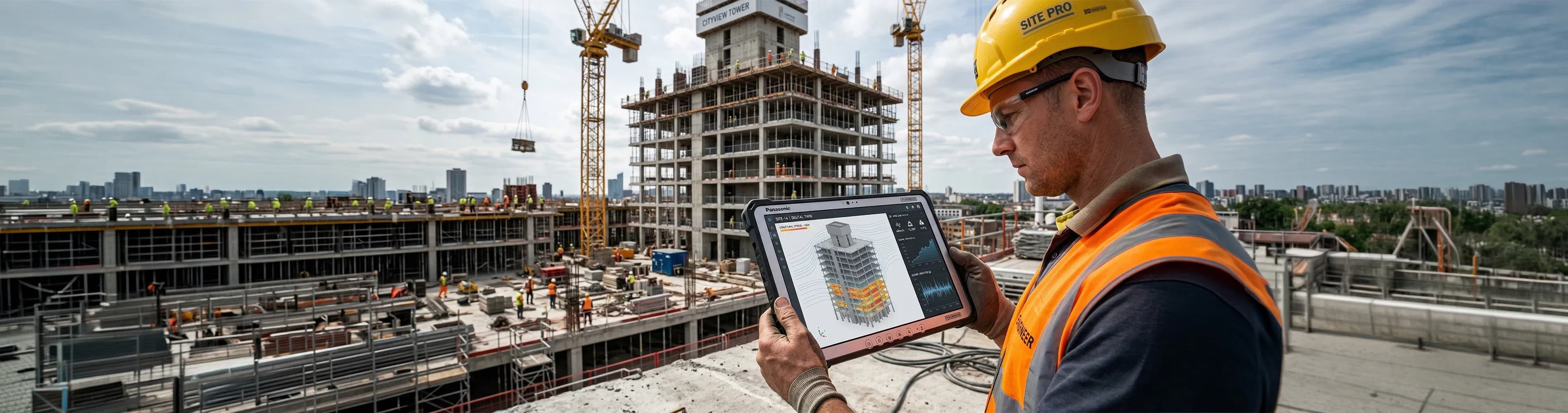
Top 5 Digital Twin Use Cases in Construction Industry

The construction industry has always faced complex challenges. The execution of large projects requires coordination of numerous elements which includes architects, engineers, contractors, subcontractors, suppliers, and regulators who possess distinct duties and timetable requirements and channels for their communication. The project elements required for construction projects to operate effectively were controlled through the use of permanent design documents and printed project plans and separate methods of communication which resulted in expensive mistakes and project delays and work productivity losses. Construction projects have reached a size and scope which makes conventional construction techniques no longer effective.
Digital twin technology serves as a high-impact solution which creates virtual representations of physical assets and construction sites that operate in real-time. Digital twins create interactive models which operate continuously by linking actual-time sensor data from IoT devices and drones and other digital sources to their 3D environment. The model shows the existing project status while enabling future scenario development through outcome prediction and workflow optimization from project start to finish. Our construction solutions are comprehensive. See our portfolio for examples.
Digital twins create a new reality for construction work because they connect physical objects with virtual systems. Digital twins deliver stakeholders complete project visibility which enables them to make forecasts and operate essential decision-making processes. Digital twins enable users to convert construction data into useful business information through their ability to monitor project development and evaluate design modifications and track equipment performance and control energy consumption.
This article presents five essential digital twin applications which show how construction companies use this technology to achieve beneficial results which have become vital for their operations. The case study shows how construction businesses achieve time savings and financial advantages through their implementation of technology in construction.
What Is a Digital Twin in Construction?
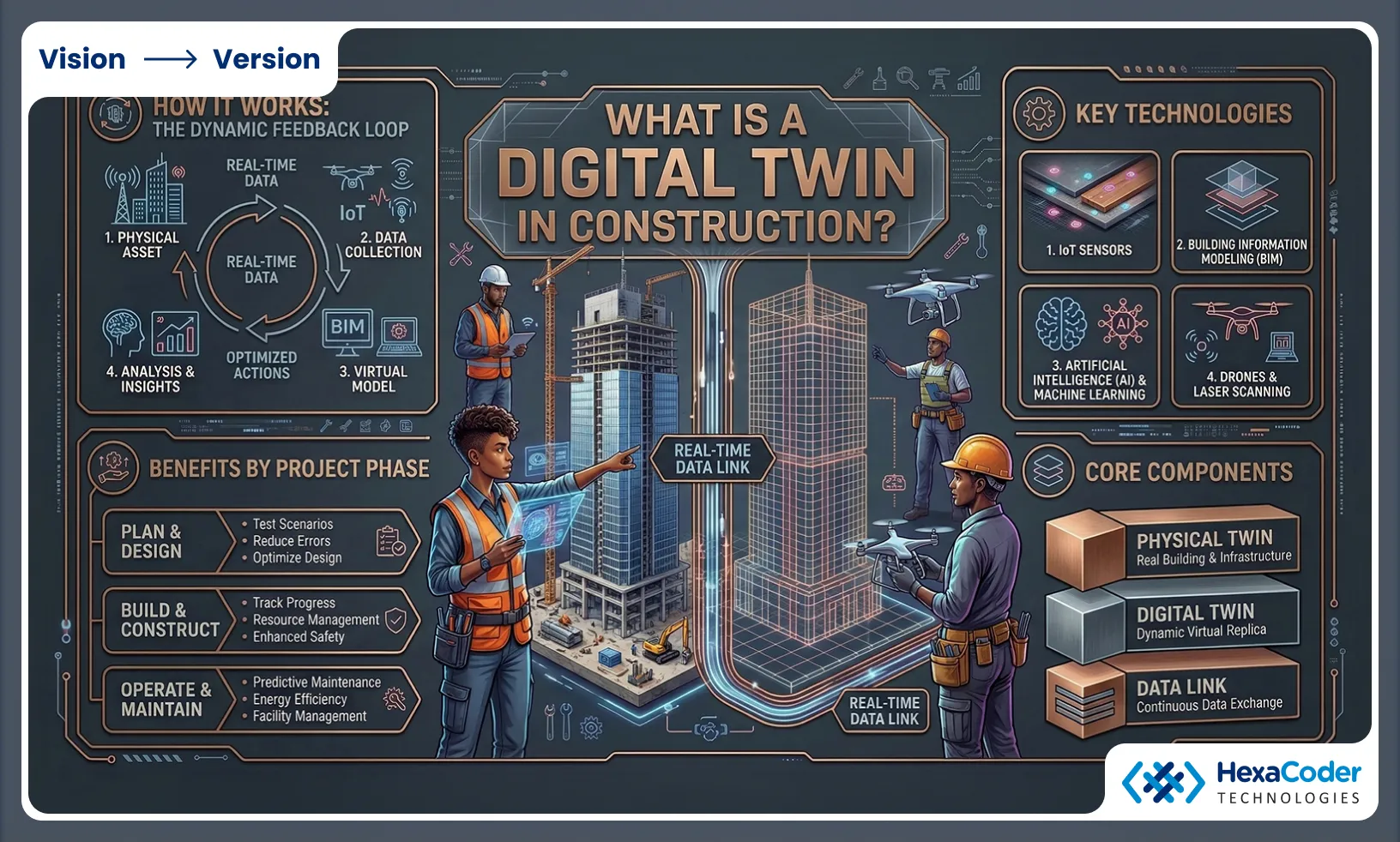
The construction sector needs to establish what a digital twin is before it can start studying different use cases. The foundation of a digital twin consists of a living digital reproduction which represents an actual physical asset or structure or operational system. The construction industry develops digital twins to create digital models of buildings and bridges and roads and pipelines and industrial structures. Digital twins operate through a system which combines 3D modeling with sensor data and Building Information Modeling (BIM) designs and cloud analytics tools to show real-time information about physical assets.
Digital twins differ from static models because they receive ongoing real-time data updates which enable users to track construction advancement and measure system efficiency and identify system faults during construction. The system operates through six primary stages which cover all periods of the structure's existence starting from initial design through to construction and throughout operational periods and maintenance work until the end of its life cycle. The construction digital twin system consists of essential elements which include the following components:
- The system receives real-time data through IoT sensors and GPS trackers and drones and wearables which supply instant updates about material consumption and worker movements and machine operations and environmental conditions.
- The system enables stakeholders to walk through virtual environments by using high-fidelity models which accurately depict physical structures to assess design choices through interactive design assessment.
- The system uses machine learning algorithms which evaluate both past and present data to identify potential problems while optimizing operational processes and making suggestions for necessary preventive measures.
Digital twins use their virtual simulation capabilities to create construction simulations which test environmental effects and equipment performance and structural stress tests. The system uses its digital twin technology to enable project managers and architects and contractors to visualize their projects through new methods which surpass the capabilities of existing tools.
Top 5 Digital Twin Use Cases in Construction
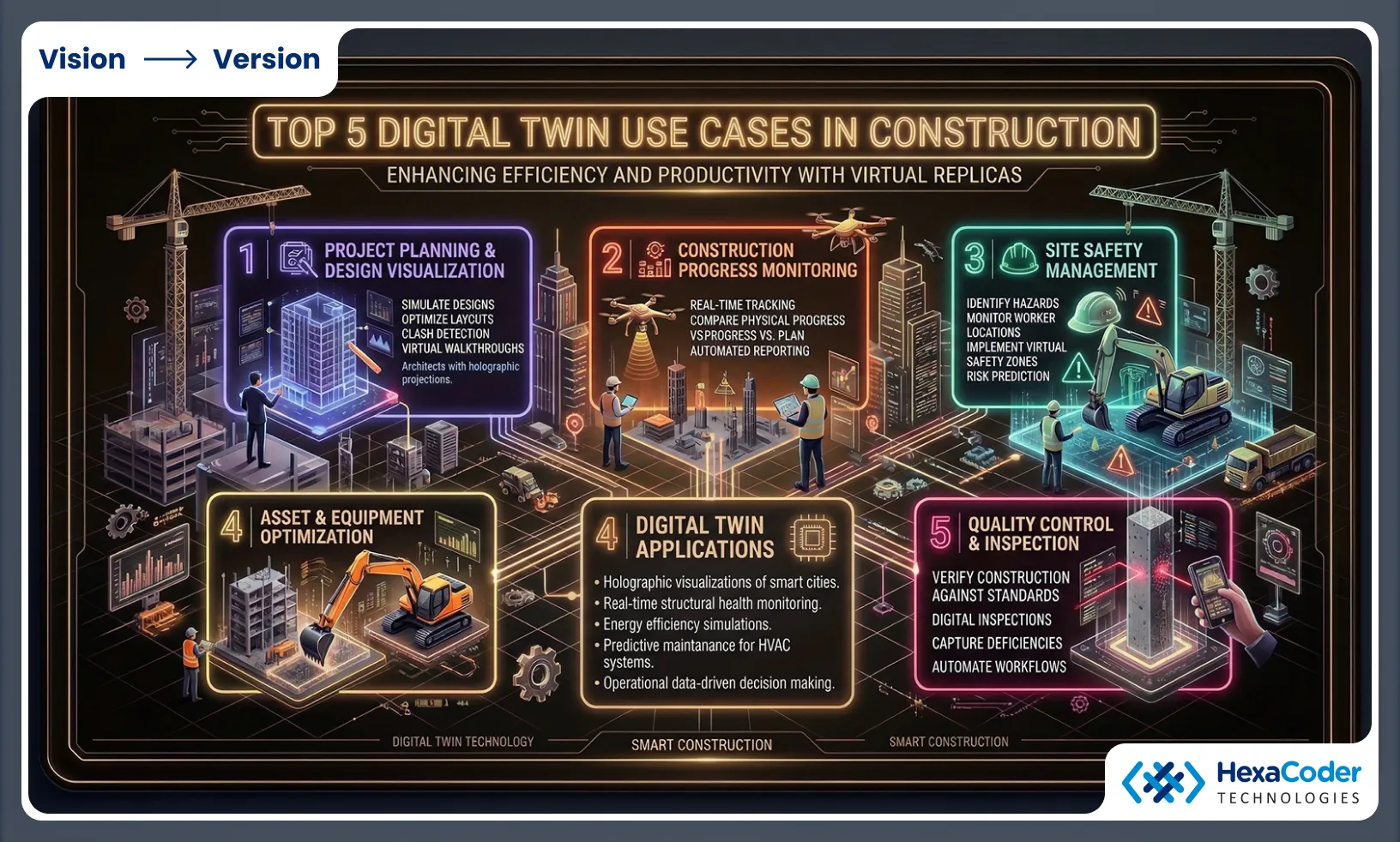
1. Design Optimization and Visualization
The construction industry faces its most expensive problem through design errors which lead to cost overruns. The combination of misaligned plans with spatial conflicts and unrecognized structural limits creates a situation which results in costly construction rework and project delays and worker frustration. The implementation of digital twins solves this problem by creating a digital twin which consists of complete design information and provides users with a real-time interactive digital replica of their project.
The digital twin enables architects and engineers to examine potential conflicts which might arise between their structural components and mechanical systems and electrical systems. The team can test design alterations which will show them how each change affects the total project outcome. The digital twin shows that an HVAC duct relocation will not create any conflicts with structural beams or plumbing systems because it displays their spatial relationship.
Digital twins provide users with the ability to experience complete visual representation of their environments. Stakeholders can conduct virtual walkthroughs of the building before construction begins, experiencing the layout, materials, lighting, and functionality. This platform helps teams to work together through better communication which leads to fewer errors and faster design approval processes.
Benefits:
- Reduced errors and rework.
- Faster approvals and better collaboration between stakeholders.
- Optimized building designs for functionality and aesthetics.
2. Construction Monitoring and Progress Tracking
Construction projects face major challenges because they need to meet two competing demands which are maintaining project timelines and managing construction expenses. Projects experience delays because of three main reasons which include resource shortages and unfavorable weather conditions and logistical problems. Managers can use digital twins to monitor operations in real time while tracking project development which gives them useful information for reducing risks.
Digital twins use drones and sensors and IoT-enabled equipment to track construction progress and measure labor efficiency and material consumption. Drones can execute daily building site scans to supply the digital twin with updated 3D models which help project managers track project progress and identify any schedule or plan changes. The machinery sensors provide usage data and performance information to detect equipment failures which allows teams to perform maintenance work before actual breakdowns happen.
Benefits:
- The system provides precise progress tracking which updates in real time.
- The system enables organizations to detect project delays and resource shortages at an early stage.
- The system establishes greater responsibility for contractors and subcontractors through improved visibility into their operations.
3. Predictive Maintenance and Asset Management
Construction sites require advanced machinery which includes cranes and forklifts and HVAC systems and pump devices. Work operations get stopped because of unanticipated machinery breakdowns which result in increased costs and create safety risks. Digital twins track equipment status through real-time machine monitoring which identifies potential failures before they occur.
The digital twin system receives sensor data which monitors vibrations and temperature variations and pressure changes and equipment operational patterns. The AI algorithms use this data to determine when maintenance will be needed and to plan scheduled maintenance work and to increase the lifespan of assets. Digital twins allow for building management because they enable monitoring of building systems which includes evaluating structural integrity and AV/AC performance and electrical system operations from the start of construction.
Benefits:
- It decreases the time which machinery remains unavailable for use.
- Proactive maintenance measures help to decrease maintenance expenses.
- The operational life of equipment and building assets gets extended.
4. Safety Management and Risk Mitigation
Construction work needs to prioritize safety because workplace accidents can create dangerous situations which result in personal injuries and worker deaths and governmental penalties and project delays. Digital twins improve safety through their ability to create virtual danger simulations and their ability to track real-time events.
Digital twins can create virtual models which enable operators to test machinery movement through construction sites while assessing danger levels which exist between workers and other machinery. Safety training programs use virtual reality (VR) and augmented reality (AR) technologies which enable employees to practice emergency response procedures in a safe environment. Emergency situations which simulate fires and structural collapses enable participants to test evacuation protocols and safety procedures.
Benefits:
- The number of workplace accidents decreases while organizations achieve better compliance with safety rules.
- Training results improve when students engage in training programs which include actual scenario practices.
- Organizations achieve greater ability to handle emergencies while they reduce overall operational risks.
5. Sustainability and Energy Optimization
The construction industry needs to adopt sustainable practices because environmental regulations and corporate responsibility and consumer expectations demand it. Digital twins enable companies to evaluate their energy consumption and material usage and environmental effects through their construction projects which start before actual building work begins.
Digital twins create energy-efficient building designs through their HVAC system simulations and their lighting and water management systems and their renewable energy system simulations. Through their material selection process construction planners can minimize waste production and they can measure environmental effects for every choice they make. Digital twins enable smart buildings to monitor their energy usage continuously which leads to automatic system adjustments and the building achieves certifications such as LEED or BREEAM.
The advantages include:
- The process creates fewer material waste.
- The process creates less harm to the environment.
- The building achieves operational energy efficiency through its sustainable energy system.
- The organization follows sustainability requirements which enable them to obtain certification.
Challenges and Considerations
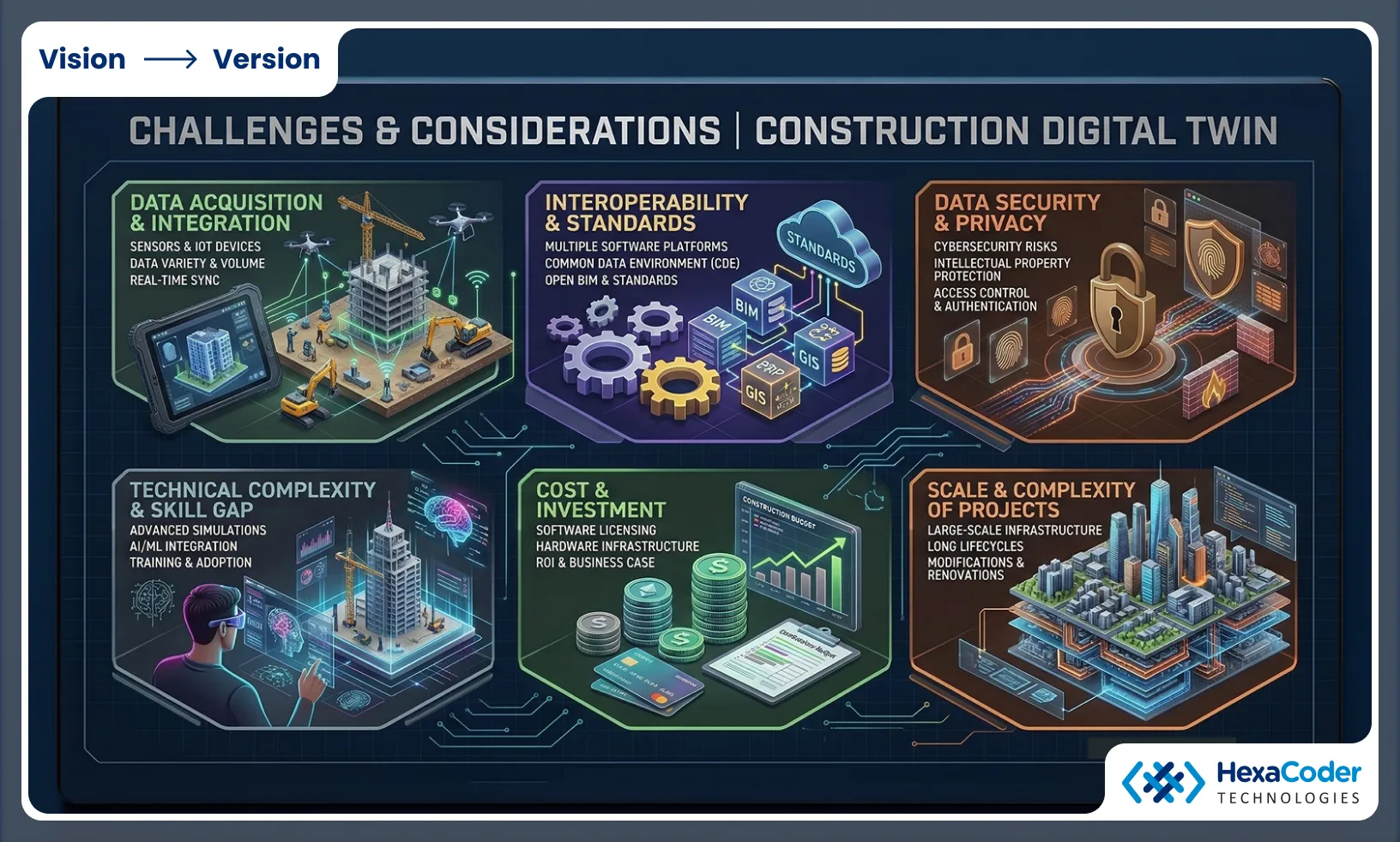
The construction industry faces difficulties with digital twin technology despite its potential benefits through digital twin technology.
Data Integration and Interoperability:
The process of connecting data from existing systems, Internet of Things sensors, Building Information Modeling systems, and cloud services proves to be an intricate task. Digital twin systems require proper software tool and device interoperability to function accurately.
High Initial Investment:
The expenses needed for sensors and drones and cloud platforms and trained staff members create a significant financial burden. Small and mid-sized construction firms require phased adoption because it helps them handle their expenses.
Cybersecurity Risks:
Digital twins depend on continuous real-time data and their operation through cloud systems which makes them susceptible to cyber attacks. Organizations need to establish strong security measures that include encryption and access control systems to protect their data.
Skill Requirements:
Personnel who manage and analyze digital twin data need to have specialized training that covers IoT and data analytics and AI and construction methods. The organization needs to provide continuous training because it helps staff members perform their duties effectively.
Change Management:
The implementation of digital twin technology requires organizations to transform their culture through new operational methods and team collaboration skills and their understanding of data-based decision-making processes.
The Future of Digital Twins in Construction: Smarter, AI-Driven Project Management
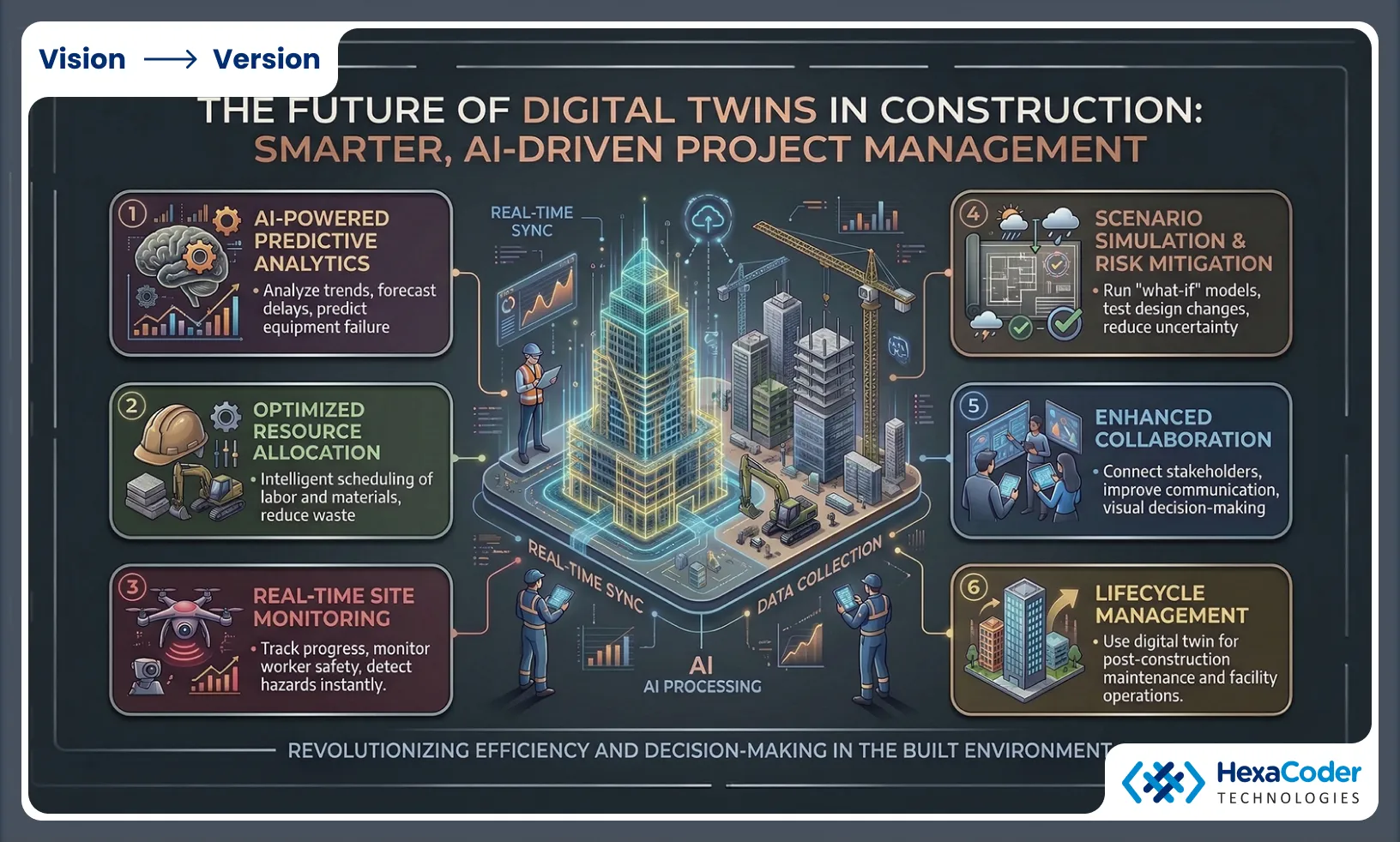
The upcoming digital twin technology will transform building processes through its provision of sophisticated intelligent systems which establish user interactions. The AI-driven simulations will track ongoing processes while producing precise project outcome forecasts. Digital twins forecast project delays which emerge from weather conditions and resource shortages and design conflicts while providing effective solutions to reduce expensive project interruptions. The construction project schedule will undergo automatic updates which will ensure optimal performance from all teams and subcontractors and equipment resources.
Digital twins present a dual advantage because they reduce resource usage while they monitor energy usage and material flow and workforce requirements during operational activities. Through construction scenario simulations, companies can determine the optimal methods for delivering materials and arranging construction sites and managing equipment. The system's predictive capabilities enable waste reduction and cost savings while supporting environmentally sustainable building practices. Digital twin technology will track the complete asset lifecycle by delivering continuous asset monitoring which starts from design and continues through construction and operational phases until maintenance and final decommissioning.
Digital twins will enhance collaborative efforts through their ability to provide more than just resource management advantages. Virtual project reviews and walkthroughs and scenario testing allow remote teams to work without needing to visit the actual site. Stakeholders will use a virtual space to view intricate designs and assess potential threats while approving modifications which reduce their need to conduct multiple physical site meetings. The use of artificial intelligence together with real-time data and advanced visualization technology will bring major progress to construction projects.
The Future of Digital Twins:
The future of digital twins will become more exciting through their ability to connect with autonomous construction equipment and robotics and smart city systems. Digital twins will function as the primary control system which manages onsite operations of robots and drones and other autonomous equipment as machinery becomes more automated. The digital twin system allows operators to monitor and control cranes and earthmovers and surveying equipment which results in better accuracy and reduced human errors and enhanced safety across the entire worksite.
Digital twins will provide smart cities with the tools needed for effective urban infrastructure management and infrastructure maintenance. Construction projects will no longer exist in isolation—they will be part of a digitally connected ecosystem that monitors roads, utilities, bridges, and public spaces in real time. Digital twins will help planners understand how new buildings impact traffic patterns and energy use and environmental effects which enables sustainable urban development that aligns with current infrastructure.
Organizations will adopt remote project management as their standard method. Project managers and architects and city officials will obtain an immersive construction site view which they can access from any location worldwide. Virtual stakeholder engagement enables teams to perform remote walkthroughs while inspecting progress and granting approval for modifications. The system delivers time and cost savings through decreased travel requirements while it enhances transparency and accountability and all aspects of project governance.
Digital twins have evolved into essential elements for contemporary construction projects because they are no longer seen as upcoming technologies. The system delivers real-time monitoring capabilities which enable predictive analytics while providing enhanced safety features and sustainability solutions and immersive visualization tools. Companies that implement this technology gain a market advantage while decreasing risks and enhancing their operational processes and delivering better project results. The top five use cases which construction companies should use to transform their operations include design optimization construction monitoring predictive maintenance safety management and sustainability practices.
Use the buttons above to share this article on various social platforms or copy the direct link.

Book a demo to learn how you can enhance your buying experience with AI
Start growing your business with us
Related posts



© Copyright 2026 Hexacoder Technologies. All rights reserved.