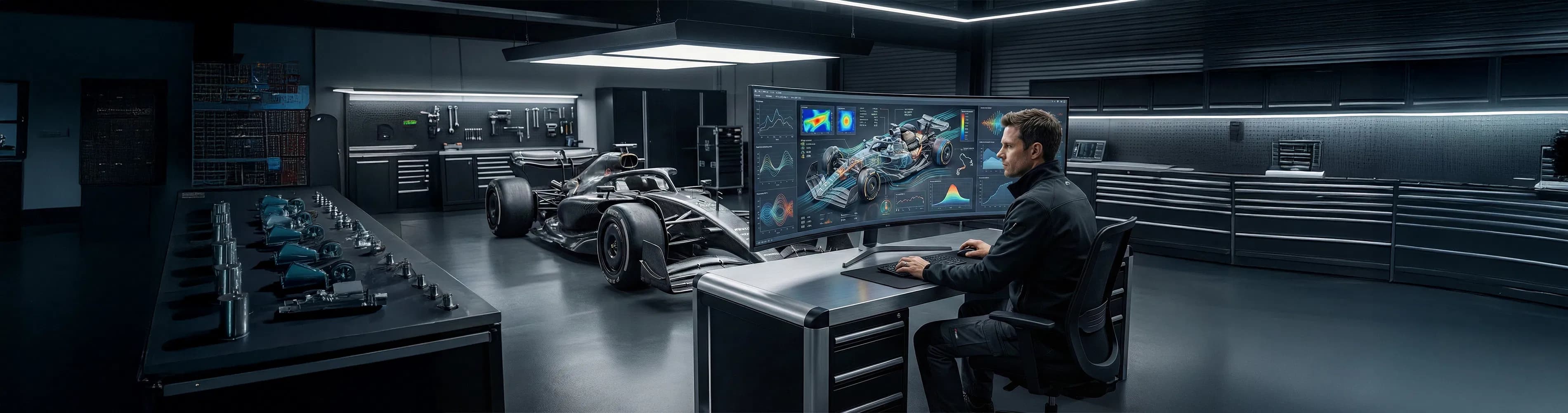

Top Advantages of 3D Bike Configurator for Manufacturers
The two-wheeler industry is changing by leaps and bounds. Consumer expectations are rising, variant models are increasing, and competition is no longer limited to local markets. Manufacturers today must manage the balance of customization, speed, precision, and cost efficiency while ensuring consistency in quality at scale. Traditional ways of product visualization and manual configuration processes could not meet these contemporary demands.
This is where 3D bike configurators change the balance of manufacturing operations. Originally developed as an advanced customer visualization tool, it soon evolved to become a strategic system whereby the links became connections among design, engineering, sales, and production activity. Bike makers with more models, components, and customization options are no longer able to do without 3D configurators but come to depend on them as they become a key enabler for better decisions, quicker workflows, and scalable growth.
This article will explore the top advantages of 3D bike configurators viewed from the perspective of manufacturers and why the great brands of the two-wheeler industry adopt this technology into their digital and operational ecosystems.
Reducing Configuration Errors Across Product Variants
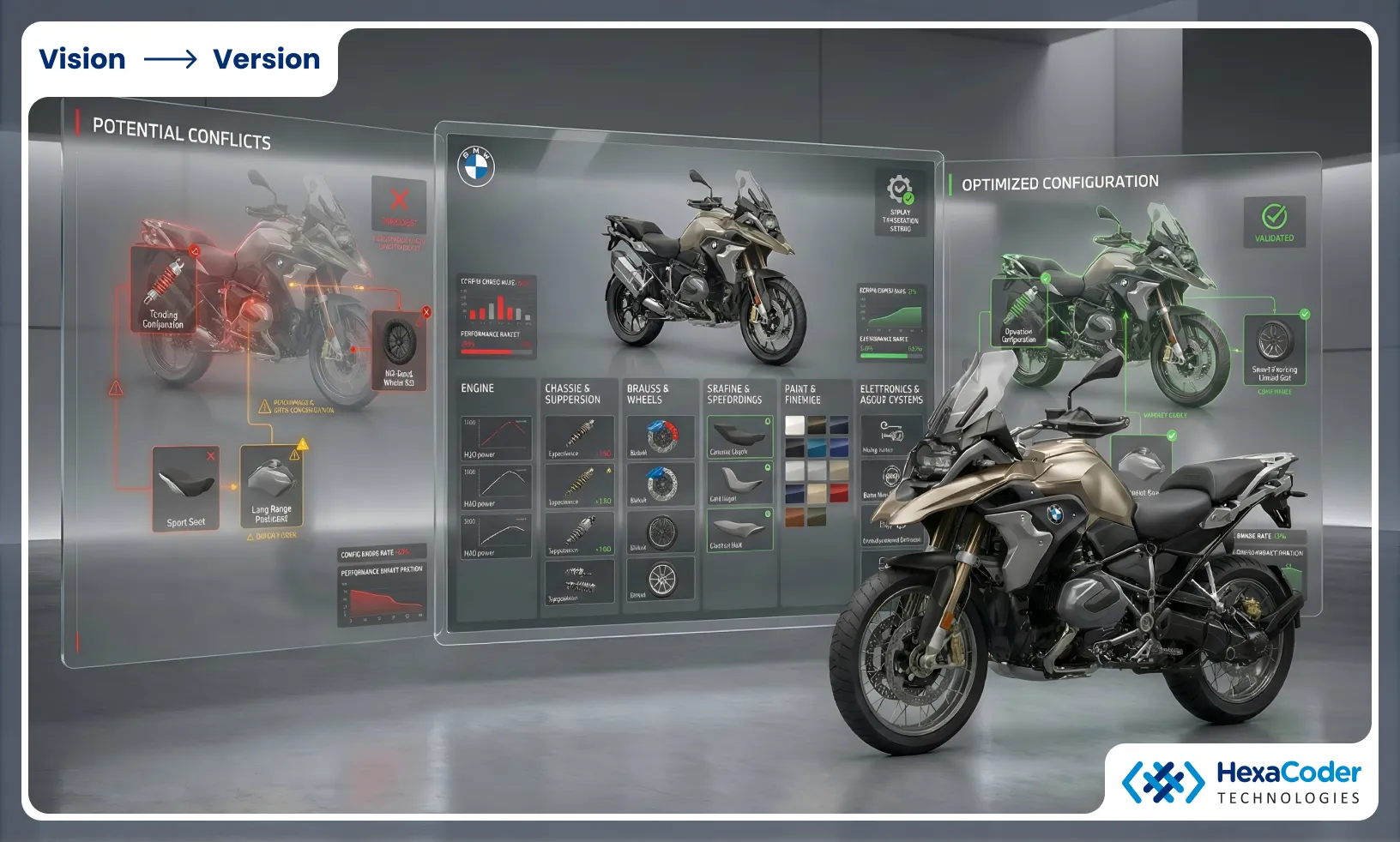
All components needed in bike manufacturing are organized within a highly complex matrix consisting of frames, engines, transmissions, suspensions, braking systems, wheels, colors, trims, and optional accessories. As soon as new variants increase, errors are more likely to happen because of the incapability of handling these combinations manually with the help of spreadsheets, static catalogs, or even other disconnected systems. It is very easy for incompatibility of mixes, wrong specifications, or outdated configurations to get by unnoticed; leading them to unfortunate results such as production delays, rework, excess costs, and dissatisfied customers.
What a 3D bike configurator does is to place specific engineering and manufacturing rules right into the process of configuration. It displays all combinations that are valid only and production-ready so that every selection is in accordance with design constraints as well as feasibility standards. As users change components, the three-dimensional image updates immediately, resulting in a clear and accurate representation of the end product while removing ambiguity between what's selected digitally and what's about to be produced on the shop floor.
It is indeed an impressive effect on the manufacturer's part. The engineering resources are not given to the work of checking and correcting incorrect configurations. They produce only valid, verified inputs to production. Thus, there will be less downstream errors leading to higher operational reliability, lesser cost corrections, and a consistent approach toward the life cycle of manufacturing-from order intake to final assembly.
Accelerating Design-to-Market Timelines
Speed is determining success in a highly competitive two-wheeler industry. Design and build plans, such as physical prototypes or static renders concerning the design to be submitted to approvals or simultaneous reviews, all consume time, resources, and effort; ultimately inefficient in trying out several modifications. As a result, innovation slowed down while manufacturers vex to respond faster to the market.
3D bike configurators speed up this process as they allow testing virtually before actual production takes place. Teams can see their designs as realistic 3D model simulations of new models, variations in components, colors, and finishes. This real-time approach allows input from stakeholders early in development. It will also significantly reduce the time associated with back-and-forth negotiation and shrink approval times.
Moving faster from concept to production does not have to be at the expense of accuracy. In fact, because it minimizes the requirement for physical prototypes, manufacturers can speed up their time from concept to production. Faster iteration cycles allow brands to introduce new variants more frequently, adjust designs based on trends, and outperform competition. Ultimately, 3D configurators help manufacturers convert ideas into market-ready products with greater speed and confidence.
One Form of Scalable Customization Without Operational Complexity
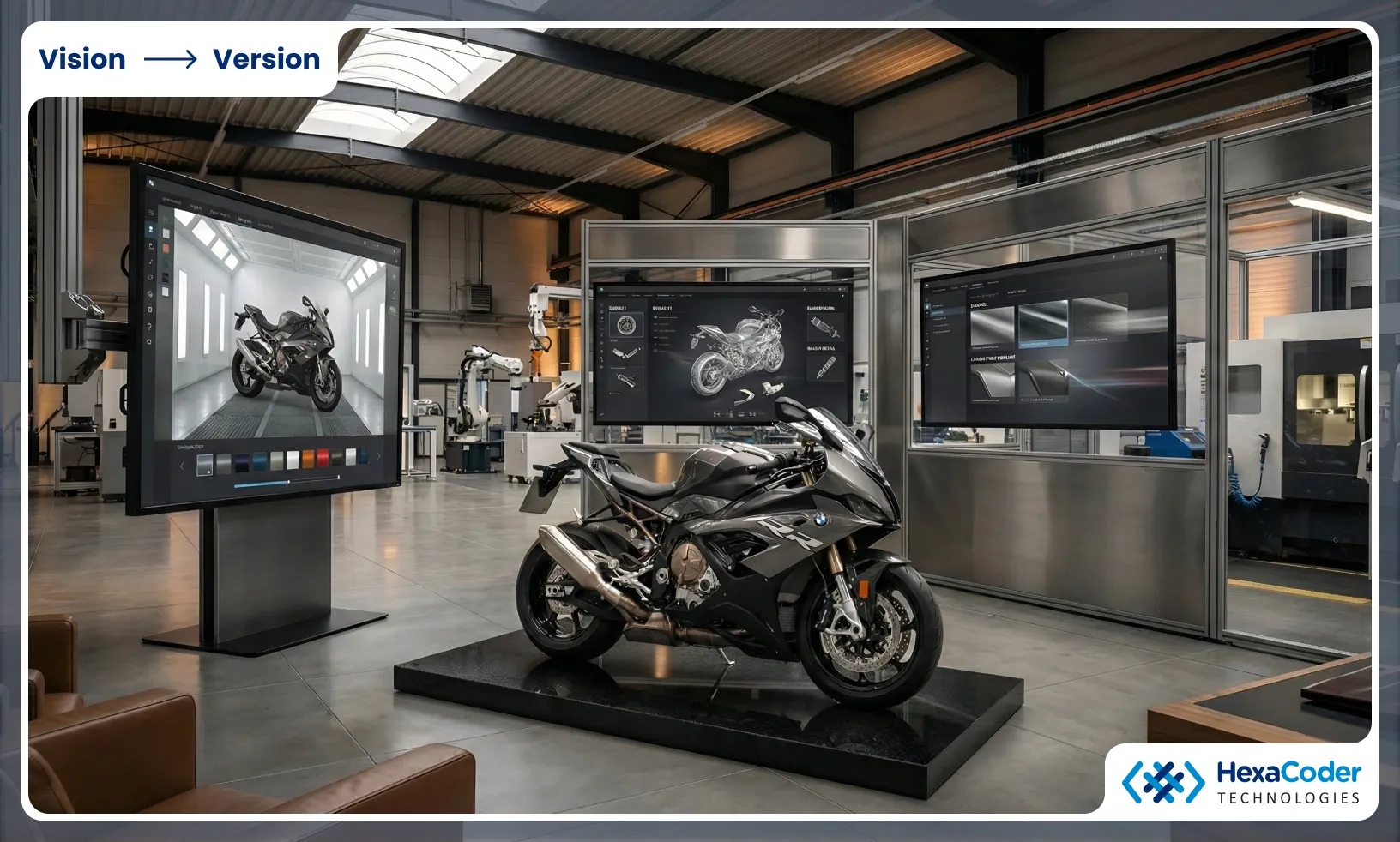
Customization as a given becomes more of a norm than an exception. In terms of demand, customers are no longer satisfied with premium features; they want choices in which colors, finishes, accessories, and performance components are part of the package. However, the challenge for manufacturers is that extensive customization in the traditional sense adds to operational complexity, inventory pressure, and production risk. A few physical variants in the extreme can unhinge supply chains and ruin their manufacturing efficiency.
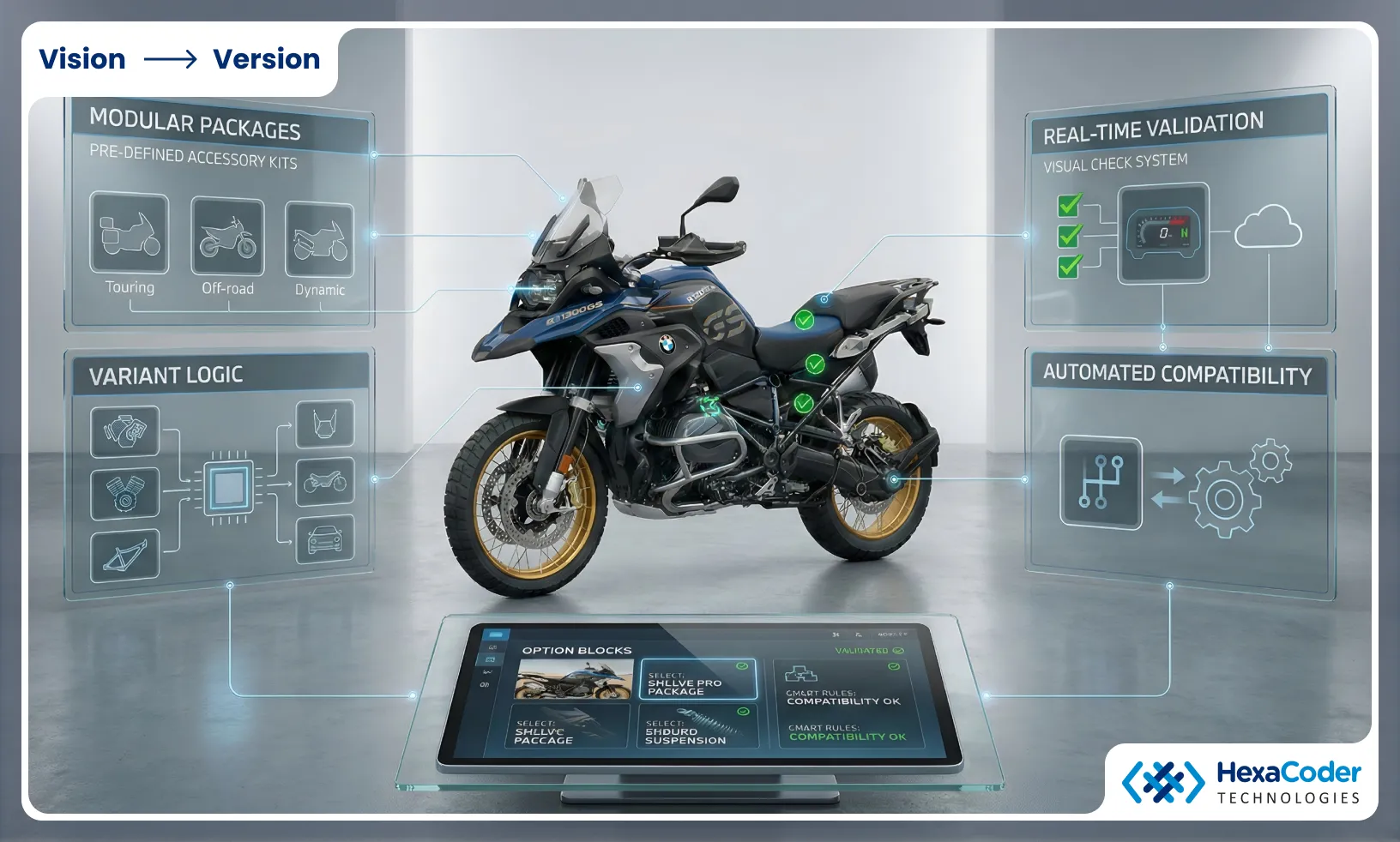
A 3D bike configurator allows manufacturers access to mass customization while controlling operations digitally. Instead of stocking every possible variant, a manufacturer can display a number of potential configurable options to the customer over the use of a digital interface. Behind the scenes, any such selection is accountable for adherence to specific rules in producer-ensured constructs for leading edge. Each configuration is automatically validated and translated into structured data for production systems.
This concept saves a company from exponentially expanding its inventory or complexity as it increases product portfolios. Customization hence becomes predictable, scalable, and within the framework of production capabilities. Instead of being a logistical complication, customization turns into a strategic advantage-in that brands can meet diverse customer tastes while realizing efficiency, cost control, and production stability.
Improved Communication Among Engineering, Sales, and Production
Cross-functional misalignment continues to plague currency manufacturing organizations. For example, while sales teams work towards closing deals, engineering teams are concerned mostly with the feasibility and compliance of the product conceived, while execution by the production team is dictated more by the resources they have available. When such teams adopt different tools or even interpretations, they are set up for miscommunication resulting in errors, delays, and internal friction.
A 3D bike configurator serves as the company's single source of truth for all these functions. Sales, Engineering, and Production all work on the same digital model that is bound by the same configuration rules and specifications: When a configuration is picked, it can be immediately understood and validated across functions, no need for clarifying manually or resubmitting for approvals.
Engineering changes are synchronized instantly within the configurator so that only feasible solutions are sold to the sales team. All build instructions available to production teams are completely clear, accurate build instructions derived directly from validated configurations. This clarity, at the same time, promotes coordination and reduces approval cycles with reduced reliance on manual communication. For the manufacturer, improved operations fewer internal bottlenecks and a significantly aligned and efficient organization capable of scaling gracefully without much operational chaos.
The path to manufacturing efficiency eventually leads through accuracy. An error as small as an incorrect specification or wrong choice of components or assembly instructions can badly throw production schedules out, cause loss of material wastage, and increase operational costs. Traditional workflows still heavily lie on manual documentation and lastly, interpretation across teams and last-minute clarifications, which introduce avoidable risks. Maintaining uniformity becomes a bigger challenge as variants increase in the product offerings.
In conjunction with producing structured, production-ready configuration data at the source, a 3D bike configurator increases the accuracy. Each configured bike has a precise digital definition from the bill of components to technical specifications and build parameters. This is how much of it may flow directly into production planning and manufacturing execution systems, thus minimizing manual entries. The assembly teams receive validated instructions clearly in line with engineering constraints thereby eliminating ambiguity on the shop floor.
As time goes by, the accumulation of these improvements piles up: Fewer errors end up leading to less rework, smoother workflows, and lower rework rates. It will yield more predictable production cycles and improved throughput without loss of operational strain. By closing the gap of alignment between digital configuration and physical execution, manufacturers get much closer to the principles of lean manufacturing. The configurator might evolve from being simply a visualization tool into becoming a backbone system such that it contributes directly to operational excellence and long-term efficiencies.
Supporting Data-Driven Decisions on Products and Portfolios
These digitally enabled 3D bike configurators do more than visualize; they are powerful data engines. Each of their customer interactions produces insights into actual preferences and which models, colors, accessories, and performance upgrades have more traction in the marketplace. In contrast with traditional sales reports, but not unlike them in production, this data gets captured much sooner in the buying journey, which leaves manufacturers with a more forward-looking view of demand.
Using the pattern analyzed from the berated end-assemblers, manufacturers will discover what configuration options incite engagement and which are fallen short of really being used. From this intelligence, it enables better-informed product planning, inventory allocation, and future model development decisions. Emerging trends can be addressed proactively instead of relying on assumptions or delayed market feedback.
Over time, this data-centric model will improve the alignment of portfolios to meet customer expectations. Less complexity will exist within the product offerings while giving customers more choices and leveraging resources more effectively. For the companies in competitive sectors, well-placed insights will be one strategic advantage. All decisions would thus cease to be reactive but rather data-driven on real interaction data with much quicker adaptation and better market responsiveness throughout the product's lifecycle.
Reducing Returns, Rework, or Post-Sale Problems
Returns and post-sale adjustments constitute a large part of hidden costs in manufacturing. Many occurrences come from gaps between what the customer expected and what was finally delivered. Specifications unclear to customers, channels miscommunication, or static images often lead to many unhappy customers, reworks, and even warranty claims it puts strains on operations and brand reputation.
A 3D bike configurator closes the gap by giving full visual and sound technical clarity pre-manufacturing. The customer, dealer, and the internal teams interact with one another on the same, real-time accurate representation of the final bike. All components, colors, and accessories are visually and technically clear and validated and as such, production outcomes are aligned with expectations.
This common understanding reflects a remarkably significant reduction in post-delivery disputes. Fewer bikes need rework while the return rates fall, given that customers proportionately receive exactly what they specified in their configurations. Huge cost impacts thus translate into lower logistics costs, warranty costs, and improved quality metrics for manufacturers. More significantly, customer trust builds with time. Accurate visualization becomes preventive against downstream issues and reaffirms confidence in the product and the brand.
Strengthening Dealer and Distribution Networks
Obviously, dealer networks are an essential part in the way bikes are shown, explained, and sold. In most cases, though, their level of communication with customers regarding the growing complexity of product configurations is lacking; brochures, spec sheets, or even the limited space within showrooms will never be able to effectively communicate the differences among these increasing numbers of configurations.
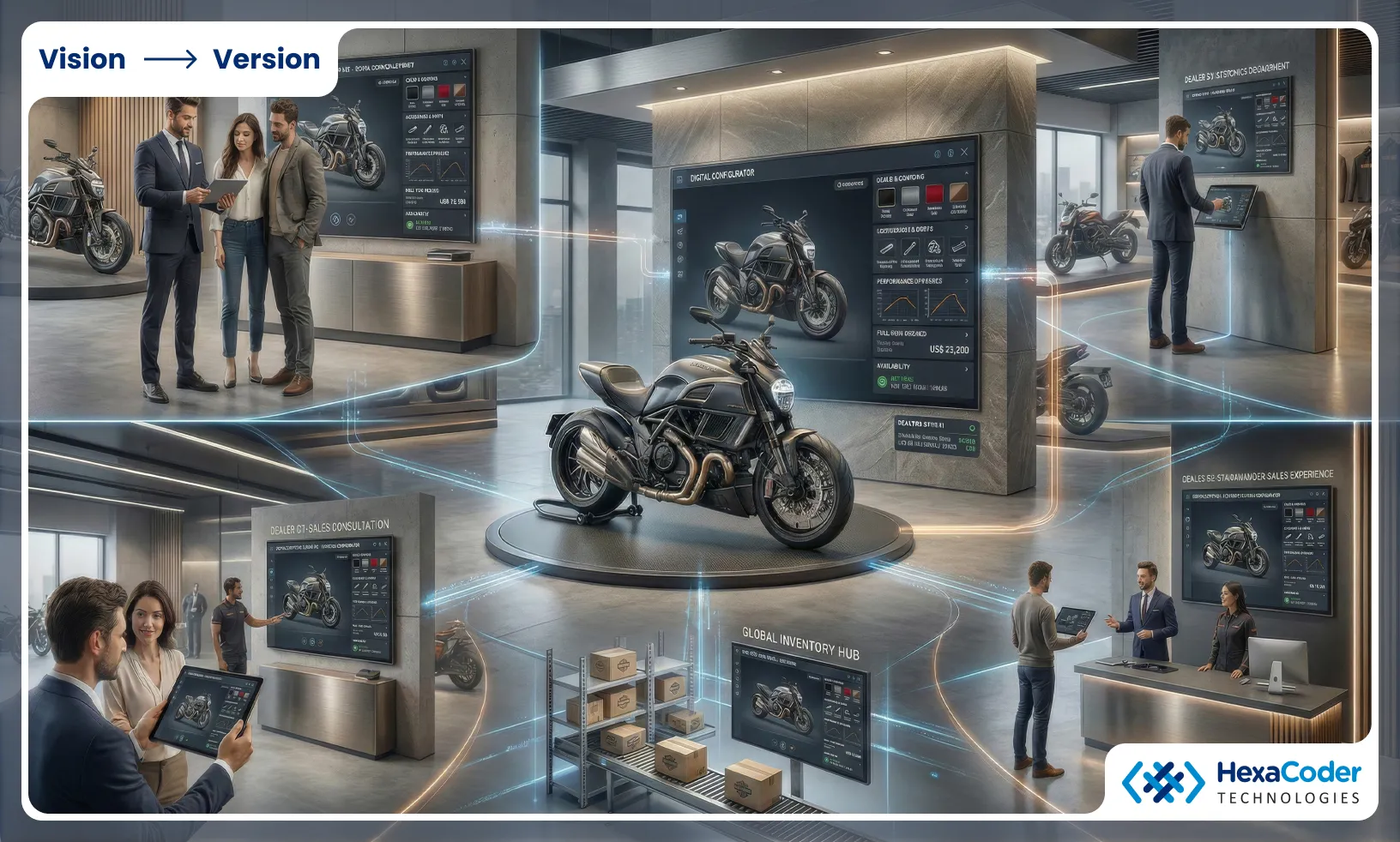
A 3D bike configurator helps dealers with an intuitive, interactive tool that unravels the complexity for both dealer and customer in the presentation. It allows dealers to show options in real time, explain to customers the differences in components and take customers through personal builds without any restrictions concerning the physical stock. Customers understand better, and dealers get a big boost in confidence as they proceed with the sale.
And it does not end with just sales enablement for the manufacturers. Consistency in brand representation is ensured across regions and markets. Configurations and pricing logic are enforced digitally, thereby minimizing any risk of erroneous promises or unsupported variants. Stronger dealer enablement implies higher-quality conversations during selling, reduced order modifications, and overall channel performance enhancement. Basically, the configurator would be a strategic asset that strengthens partnerships while maintaining brand control.
Seamless Integration with Digital Manufacturing Systems- Modernization
Today, an interconnected bunch of digital systems such as ERP, PLM, CPQ, and MES platforms can develop an ecosystem for modern manufacturing. The disintegrated tool will lead to data silos, manual handover, and lag, all of which undermine efficiency. This is where a 3D bike configurator comes into play-it provides its full-fledged value when it gets integrated into a much wider digital infrastructure.
Once the bike is configured, the structured data immediately flows into pricing engines, bill-of-materials systems, and production planning tools. This eliminates redundant data entry and speeds up order processing. Engineering changes, pricing rules, and component availability remain synchronized across systems, thus, friction between departments becomes less.
Such integration is needed for manufacturers either scaling their operations or applying Industry 4.0 practices. The configurator is thus transformed from being a front-end experience into a central part of a connected manufacturing workflow. This allows for faster executions, increases transparency, and makes scalability easier. Instead of remaining isolated, the configurator becomes an integral part of a unified digital backbone enabling smarter, more agile manufacturing operations.
Improving Brand Perception and Market Positioning
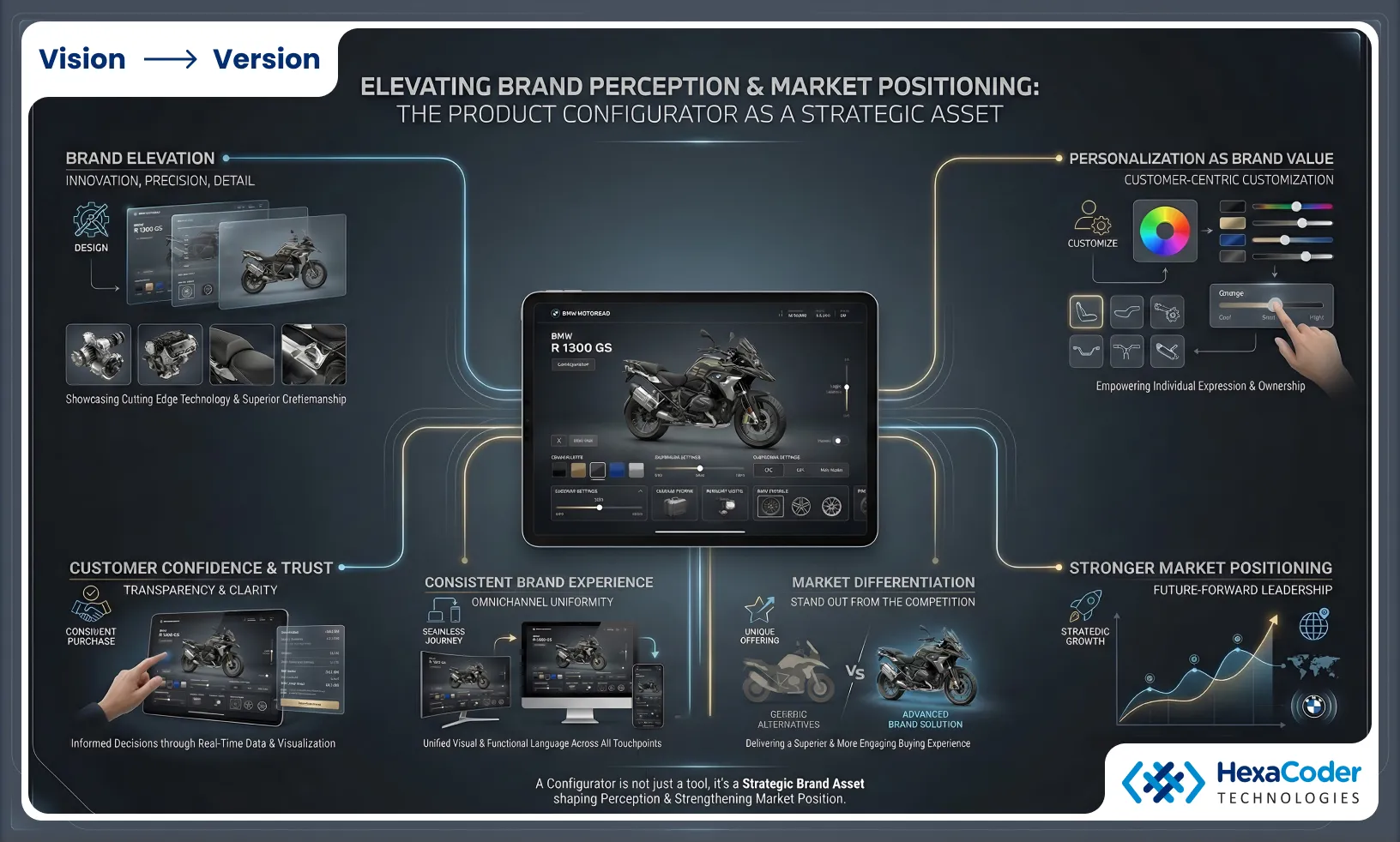
These very operational advantages of using 3D bike configurators are so pronounced, but they exert their influence toward brand perception just as well. Forward-thinking, transparent, and customer-oriented: those are the images most commonly attributed to manufacturers who invest in such advanced visualization and configuration tools. In a market where product differentiation is increasingly difficult, the digital experience becomes the key brand signal.
A good example of confidence in a product is the 3D bike configurator. Offering customers and dealers the opportunity to inspect every little detail, option, and variation openly reduces all ambiguities and creates trust. Such transparency enhances credibility, such as in the case of high-involvement purchases where buyers want to be reassured before they commit. Such perception is not only towards end customers but also to dealers, distributors, and business partners, who deem such manufacturers easier to deal with, more trustworthy, and more capable in scaling.
For an investor and stakeholder, having advanced digital capabilities represents maturity and long-term vision within the organization. They show that the manufacturer focuses not just on immediate sales but also on building systems in place for growth, efficiency, and innovation. In an increasingly competitive two-wheeler market, a strong digital configuration experience helps place the manufacturer as a modern, technology-driven brand facing away from competitors still relying on traditional sales tools.
Manufacturing Operations Future-proofing
The two-wheeler industry is drastically transforming with electric mobility, smart components, regulatory changes, and shifting consumer expectations. Space is becoming increasingly modular in terms of connectivity or customizability; configuration methods popular in traditional time do not keep pace with these changes. Manual processes, static catalogs, and disconnected systems can't continue to exist in these environments.
3D bike configurators provide manufacturers with a future-ready digital base. They are inherently scalable and evolve alongside product complexity. Over time, configurators can integrate with digital twins to reflect real-time production status, inventory availability, and performance data. AI-driven recommendation engines can guide customers and dealers toward optimal configurations, while AR-based visualization can enhance decision-making across sales and service channels.
Early on, they employ configuration systems, avoiding after-the-event technology adoption, which would almost always mean patching systems that are outdated and not of much relevance to one's business processes. Instead, they would develop flexible digital infrastructures that support continuous innovation. Such a proactive position reduces transformation costs over the long term and prepares for new technological advances.
This is the difference between moving from a reactionary adaptation that 3D configurators can enable and beginning a proactive adaptation making an evolutionary change. They build scalability into systems that grow with the business, ensuring resilience and competitiveness in an industry of continuous change.
Conclusion
Modern 3D bike configurators do not serve only as schematic visualization tools for marketing or sales purposes. Instead, these systems are now part of strategic systems that a manufacturer can use to enhance and then strongly leverage precision, efficiency, collaboration, and decision-making benefits comprehensively throughout the value chain.
These measurable values will include reductions in configuration errors and quicker development cycles-integration with digital manufacturing systems that allow for scalable customization. Also, it can generate insights that will inform product planning more intelligently and, in terms of market positioning, strengthen the brand further.
As competition grows increasingly intense and product complexity increases, those who keep using static processes will find it very difficult to follow the swift pace of change. Investing, for example, in 3D bike configurators attaches to the value of visualization when actually this investment is an intelligent one towards making it a more resilient future manufacturing base.