
Experience competition constitutes the battlefield where brands will not only battle over prices or quality of products that they sell. Clarity, control, and confidence are modern customers' expectations before purchase decisions. The resultant effect of all this contemporary transformation in buyer behavior is that brands have been pushed to rethink how to present products online. Still images, simple videos, and long descriptions are struggling to meet modern expectations. 3D product configurators have become the strongest weapon brands can use to active product experiences from the passive browsing into a virtual reality.
When attached to the concept of a 3D product configurator, that means it is more than just a visual upgrade. It's also a strategic business tool making an abbey within customers' perception of how value is created and decisions are made alongside trust in a brand. Conclusively, 3D configurations are there to alter customer engagement, enhance conversion, and lead to measurable business results within any industry today such as eCommerce, Manufacturing, Automotive, Real Estate, and even Industrial Products.
Nowhere in this blog is there to tease out in more detail why brands are investing their efforts in 3D product configurators, the ever-changing perspectives they create in customers towards products, or the reason they are fast becoming a neologism of digital strategies.
What Are 3D Product Configurators?
A 3D product configurator is a complex digital interface creation that allows customizing products in real-time by means of in-depth interactive three-dimensional models, which can be displayed by customers. Unlike an ordinary online product display which generally relies on static imagery or limited video, a configurator lets the user rotate for free, zoom up into the smallest features, as well as configure the color, material, size, components, and features of the product. Every change will take effect instantly, letting customers see the final product clearly and correctly before purchase.
This fundamentally changes the interaction between customers and products lying under different levels. Rather than imagining how fantastic it would behave and how good it would look to the users, they can now see and intuitively experience it. It's like having the experience of being in a store. Customers can view products at different angles and in combination with other products or options before making a decision. Consequently, this reduces uncertainty owing to physical and digital sales channels. Sure and in control with their choice, consumers have sometimes less negative views of what they are purchasing. Thus, the implementation of 3D product configurators into various brands is in line with the shifting requirements of today's consumers.
The Limitations of Traditional Product Presentation
.webp)
Brands have relied on static images, short videos, and write-up specifications to present their products online for the last several years, the aforementioned were at their time somewhat acceptable methods just because of the early stages of eCommerce normality now every customer does expect more transparency, accuracy, and control. A static image does not deliver dimensionality, or size, or texture, and appears real-world to the user, eventually unsure about how the product will actually look or feel. Product videos can be much better but not relating to individual preferences because they do show only a fixed version of the product.
This lack of flexibility hampers the buying process. They would, instead, see vision variations, thus creating schematics that increase doubt and slow decision-making. Cart abandonment, delay in the purchase process, or sometimes just blind entry followed by dissatisfaction are the inevitable outcomes. All these gaps can directly impact conversion rates and perception in a highly competitive digital soil. People go after such types of brands that offer more vivid, deeper, and even interactive experiences. Methods of traditionally presenting a product may still be used as support content; however, they are no longer enough as the real abandonments of online product engagement.
Why Brands Invest in 3D Product Configurators
One of the main determinants of which brands invest in 3D product configurators is the fact that it turns out to give quite high improvement rates in customer engagement. Users spend time exploring products much more in interactive experiences-can lead them to deeper involvement and thus a stronger emotional association. When customers are allowed to actively configure a product instead of passively observing, they become engaged decision-makers, which improves brand recall and quality of experience.
But direct influence is the case of how configurators affect conversion rates. Because of their ability to eliminate doubt, they will usually find customers more inclined to buy what they are sure to buy. When doubts fade away regarding the appearance, functionality, and suitability of a product, the customer gets quicker and more confident to decide to make a purchase. Added to that, braiding down the product returns is one of the drastic things many brands want to affect by using 3D configurators, considering that returns cost a lot. 3D configurators tend to minimize differences between expectation and reality, thanks to detailed rendering of colors, dimensions, materials, and configurations.
Another important factor is trust. Transparent and interactive product discovery gives the brand confidence about what they are selling. The theory holds credibility, especially in the context of big-ticket or complex products, where assurance plays a significant role in making purchase decisions.
Personalization Creates Competitive Advantage
It has become a condition sine qua non of modern digital experience. Customers prefer personalized goods over generic one-size-fits-all offerings. 3D product configurators allow brands to offer unique experiences on a massive scale while they do not bring additional operational complexity. Customers can change visual and functional features of the product through a single portal interfaced with logic-about-compatibility-and-realtime rendering handling by the system.
Digital personalization has a lot of value for customers and brands as well. They can design products according to their specific requirements and tastes, thus providing them better control and satisfaction over what they want. Configurators help brands with the elimination of the need to physically create and handle a plethora of differences. A complete digital model could very well cover the entire range of products under one roof.
Brands which offer such relevant customizations may create differentiation in oversaturated markets and thereby increase customer retention. Personalization via 3D configurators is not just a value add to the brand experience, but is also a strategic advantage in aligning the product offers from the company to changing consumer expectation without operational costs.
Adoption of 3D Configurators across Industries
.webp)
Markets as varied as e-commerce, construction, and automotive are leveraging 3D product configurators. Usually, brands offer configurators on their pages so that online consumers can view furniture, accessories, electronics, and lifestyle items from every angle before committing to the purchase.
Adoption by the automotive industry has been a long tradition of configuration technology, whereby users can build their cars digitally first before coming to the showroom. In general, the expectation of the consumer has already been created early in the journey with this technology and leads customers to the showroom, where they will see the physical car. In real estate and construction, on the contrary, users can visit constructed buildings in the virtual world and explore spaces, finishes, and materials without visiting the project site.
Acrossindustries, the common benefit is clear communication. By turning complex choices into visual experiences, 3D configurators help brands educate customers, streamline decision-making, and superior digital experiences.
Impact on the Buying Journey Traditional buying journeys online assume much. There's an expected try-himself imagination from the customers on how it now will come fitted into a space or, whether or not, it will meet what of course needs. This assumption-based nature creates hesitations and slows down the decisions. With 3D product configurators, this experience is changed where interaction replaces imagination. Customers become more active participants in the buying process rather than passively viewing purposes.
Friction is eliminated in their journeys by letting customers view and modify goods at their own tempos. Therefore, customers need not waste their valuable time seeking confirmation, comparing external references, or asking the sales team a few simple questions. In its place, they advance with clarity and confidence. Not only does this type of journey improve customer satisfaction, but it also builds trust. When they are informed and in control, customers are more likely to complete purchases and develop long-term loyalty toward the brand.
Current Digital Ecosystems Integration
.webp)
Modern 3D product configurators are built to function part of a larger digital ecosystem. They integrate all seamless functionalities with eCommerce platforms, content management systems, pricing engines, inventory databases, and enterprise resource planning solutions. Thus, what customers see during configuration reflects real-time price information, availability, and production rules regarding fulfillment, with none existing anomalies between visualization and fulfillment.
Such integrations turn configurations into end-to-end sales enablers. Once customizations have been made for a product, then configurations can be fed into internal systems automatically thereby triggering order processing and reducing manual interaction. As a result, this reduces errors and improves sales cycle times while enhancing operational efficiency. What this means to brands is having a more connected digital infrastructure where customer experience is aligned with backend operations leading to fast-paced execution and better scalability.
Performance Benefits
3D product configurators may be good at providing visual experiences but also at providing meaningful SEO and performance benefits. Because of immersive experiences, users are considered to stay longer on the site, look through a myriad of variations, and interact with content. These two behaviors lead to longer time-on-site and lower bounce rates—good signals for search engines. Such signals may uplift the organic visibility of the sites from time to time, as well as the search performance.
Performance optimization therefore becomes crucial in deriving all the aforementioned benefits. Well-developed configurators are, in fact, optimized for fast loading, smooth interactions, and cross-device compatibility. When visual richness is balanced with performance efficiency, brands avoid sacrificing functionality for appearances. The result is a seamless experience that satisfies both users and search engines, strengthening digital presence without compromising speed or accessibility.
Costing Versus Long-Term Value for Money
The expense is greater than that associated with conventional product pages with respect to the expense of the creation of a 3D product configurator. But judging an investment based solely on its unequivocal upfront expense deprives one of the long-term value. Configurators increase conversion rates, minimize product returns, speed up sales cycles, and boost customer confidence. These benefits multiply over time and generate a strong ROI.
Instead of being a one-time process, the 3D configurators are an asset digitally scalable. With time, as the product lines are expanded and customers' expectations are on the rise, the configurator can grow with these changes, with or even without light redesigns. The very amount of long-term flexibility associated with such an investment makes it strategic for sustainable growth, rather than being a more short-term enhancement simply for visuals.
Why Development Expertise Counts in 3D Configurator Development
The success of a 3D product configurator lies in the way it is developed and implemented, both under the guidance of an expert project manager. Poorly executed configurators, which are either slow to load, bewildering in their interface, or untrue in their representations, can create an unpleasant user experience that reflects back onto the brand. In consequence, brands prioritize working with seasoned partners since their expertise goes beyond technical execution; it embodies an understanding of user behavior.
Experienced teams focus on usability, performance optimization, realistic rendering, and seamless cross-device functionality. Their focus is beyond the creation of stunning visuals; they ensure effective integration of configurators into the digital ecosystem while achieving tangible business goals. With the right expertise, a 3D configurator becomes a reliable, high-performing tool that enhances customer experience and drives measurable results.
The Future of 3D Product Configurators
As web technologies evolve, 3D product configurators will find themselves at the forefront of immersion, intelligence, and deep integration into organizations. Real-time rendering, cloud computing, and browser-based 3D frameworks are currently providing a pathway toward seamless and realistic interactions across devices. AI is now expected to take personalization within configurator experience to the next level. Intelligent systems will then begin to analyze user behavior, preferences, and historical interactions to suggest configurations that best fit their unique needs; thereby alleviating some decision fatigue and maximizing conversion efficiency.
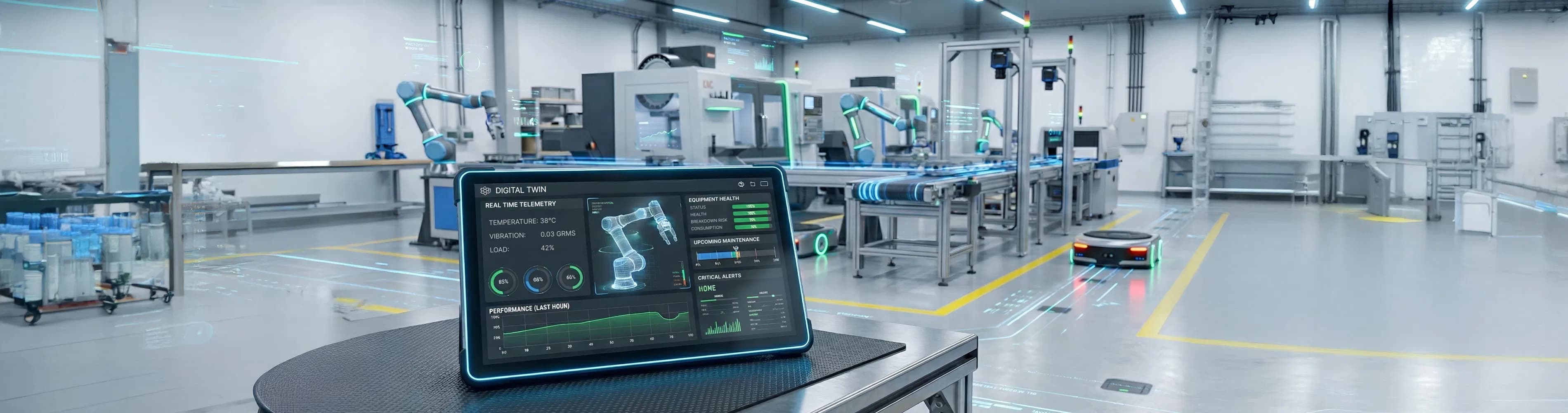
Moreover, augmented reality will elevate the usefulness of 3D configurators to a whole new level, allowing customers to see products in real environments; this means trying where to situate their furniture in their living room or plotting industrial equipment on an actual site. Thus, AR will furnish that final bridge between digital exploration and real physical context. The integration of digital twin technology will further enable configurators to match real-time production, inventory, and operational data, assuring correctness, feasibility, and quick execution. In trailblazing this technology, brands will set themselves apart as forward-thinking innovators in areas where recent experience and transparency will increasingly affect consumer buying decisions.
Final Words
3D configurators for products have changed the paradigm with which brands present and sell products in the digital arena: Instead of being restricted to the paradigm of static audiovisual presentations and one-way communication, product configurators are dynamic and allow customers to fully partake in a plethora of interactive experiences that offer the utmost clarity and agency. Configurators build confidence all throughout the buying journey, allowing users to engage, customize, and comprehend products instantaneously. This confidence translates directly into more engaged, converted, and forgiving customers.
Beyond setting a particular performance benchmark for today, configurators have a long-term strategic value. They endorse personalization practically for everyone, shorten the increasingly murky sales processes, and actually enable brand loyalty in this ever-competitive digital marketplace. As customers' expectations change, transparency and interactivity will be non-negotiable points of separation. With this foresight, brands that enable customers to experience products before buying have shown their customer-centricity; hence the reason why investing in, and through, 3D product configurators is much more than just implementing new technology. It is about putting a guarantee under experience, nurturing customer relationship-building, and achieving sustainable growth within a rapidly changing digital landscape.