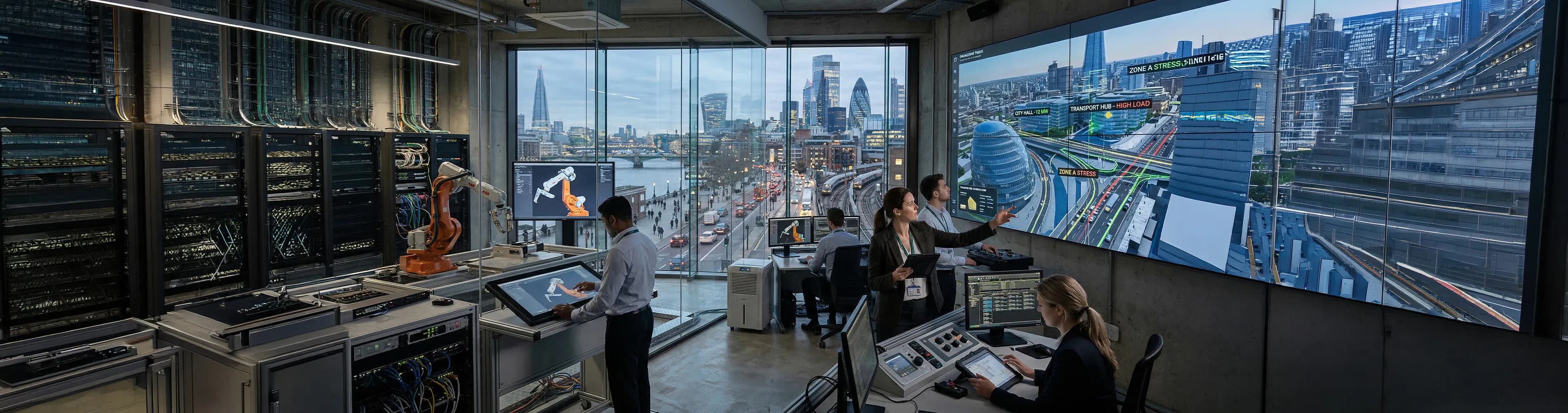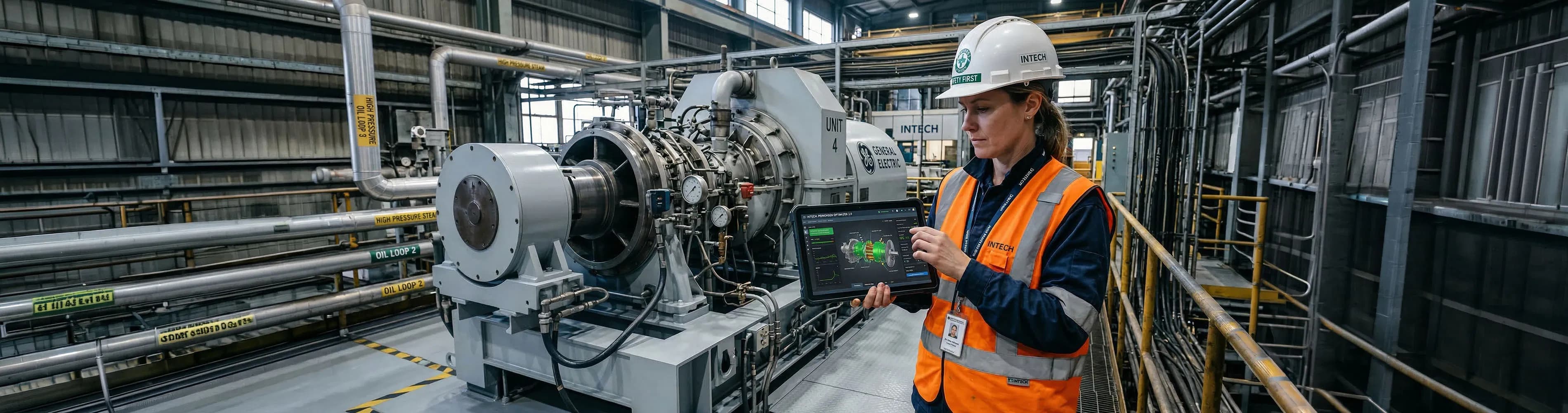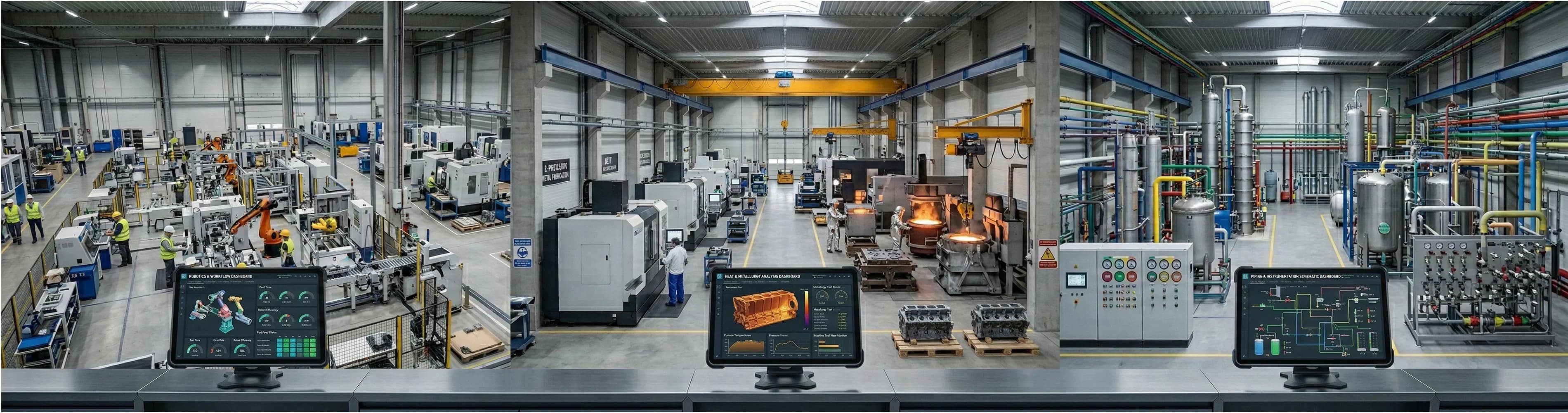

People should visualize a factory floor or construction site where they obtain complete knowledge about possible future problems which will arise. People witness complete functionality of all machines and beams and pipelines through their virtual twin which provides continuous alerts and upcoming failures and operational solutions before any problems occur. Digital twins possess technological potential which establishes their position as future technological development which emerges before your eyes.
Digital twins exist as advanced technological tools which exceed their basic appearance. The system functions as a brain which creates a mirror which reflects actual reality. The system transforms unprocessed information from sensors and devices and operational systems into predictive capabilities and knowledge and system management abilities. The twin system shows machine operators about faults which system will indicate when production reaches its stopping point. The twin system creates a new energy plan which continues until blackout occurs and lights go out. The system operates with continuous accuracy which creates an unsettling experience because of its extensive knowledge base.
Digital twins serve as essential tools which support operational needs across manufacturing operations and energy production and construction work and intelligent city development. Digital twins create operational efficiency gaps which lead to hazardous situations. Projects which lack digital twins result in financial losses because they decrease operational efficiency and safety measures and profit generation. Companies using twins are not just smarterthey're faster leaner almost impossible to catch by surprise. Contact our expert team for digital twin solutions.
The software companies create these living systems which represent the core of their operational magic. They create this new environment which transforms chaotic situations into clear understanding and uncertain situations into accurate results which turn dangerous situations into controllable outcomes. The digital twin revolution operates through two types of companies which bring together established industry leaders and dynamic startups who create new market standards.
The article examines leading software companies which develop digital twin technology into usable systems that companies need for their operations. The study will examine their unique features because their platforms create business transformation through their real-time simulation capabilities. The audience will understand digital twins as more than tools because they represent a new method for observing and forecasting and managing entire world.
The Evolution of Digital Twin Technology: From Concept to Reality
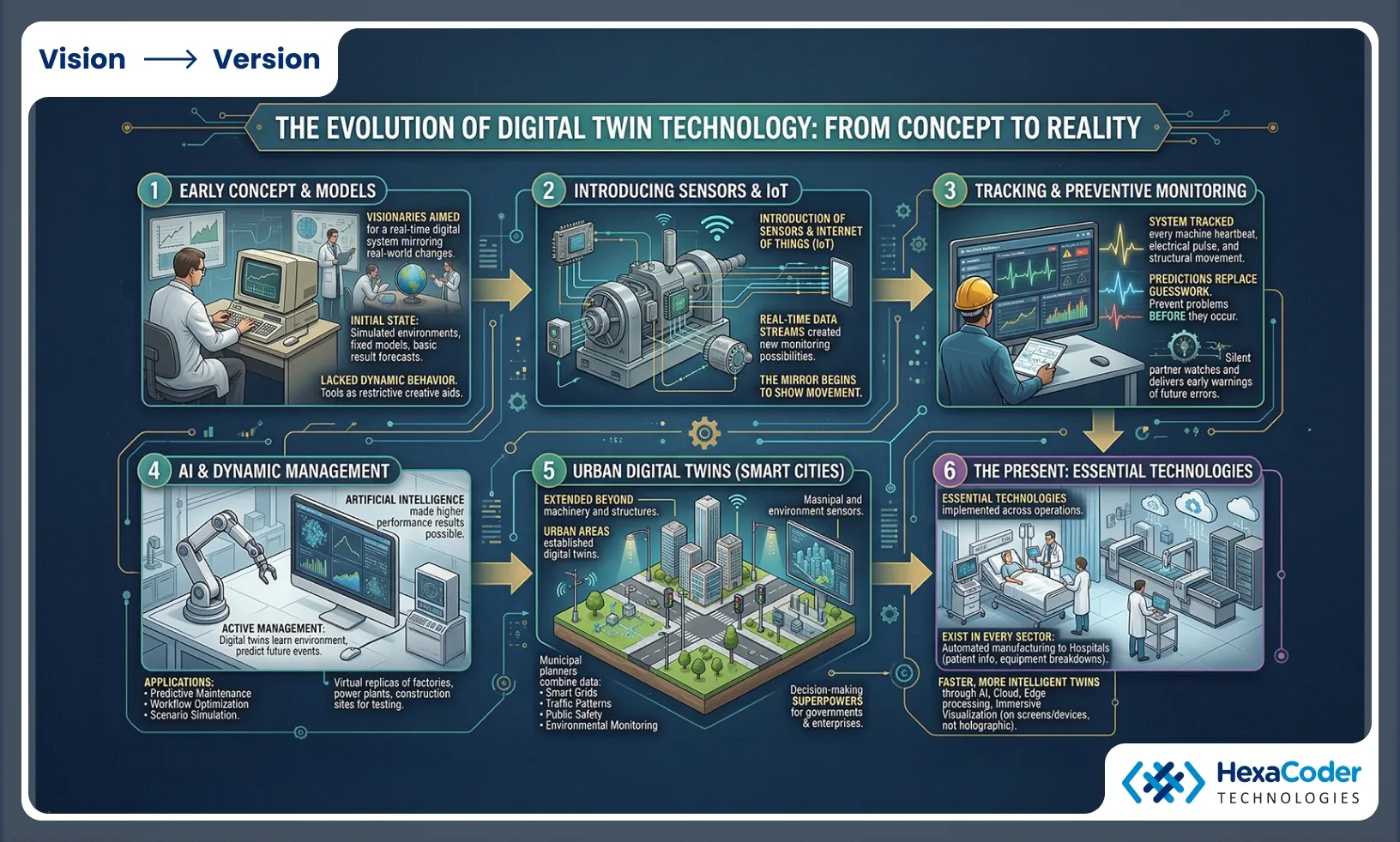
Digital twins emerged through development process which took multiple years. The concept started with scientists who wanted to build a digital system that would reflect actual world changes in real-time. The initial state contained simulated environments that used fixed models to deliver basic result forecasts but failed to exhibit any dynamic behavior. The tools functioned as creative aids which provided assistance to users but restricted their ability to think freely.
The introduction of sensors and Internet of Things devices together with streams of real-time data created new possibilities for monitoring systems. The mirror began to show movement.
The system tracked every machine heartbeat together with every electrical pulse and every structural movement. Predictions started to replace guesswork. The system changed from dealing with problems after they occurred to preventing problems before they started. The digital twin started acting like a silent partner, watching system while analyzing it, and delivering early warnings about potential future errors.
Artificial intelligence made it possible to achieve higher performance results. The digital twins gained active management capabilities since they began to learn about their environment and predict future events. Organizations could now implement predictive maintenance and workflow optimization and scenario simulation as standard operational components. Businesses could create digital replicas of entire factories and power plants and construction sites which would enable them to conduct virtual testing while maintaining continuous operational workflow.
The evolution extended beyond technological advancements in machinery and architectural structures. Urban areas established their own digital twins. Municipal planners created extensive digital city models which combined data from smart grids and traffic patterns and public safety systems and environmental monitoring equipment. Governments and enterprises started realizing that these twins weren't just toolsthey were decision-making superpowers.
The current state of digital twins has developed into essential technologies that businesses implement throughout their operational processes. Digital twins exist in every sector starting from automated manufacturing facilities that operate their production lines to hospitals that monitor patient information and anticipate equipment breakdowns. The companies that develop digital twins continue to advance their technology through AI and cloud computing and edge processing and immersive visualization to produce more intelligent and faster digital twins that respond to human behavior patterns. The development of virtual replicas which operate in real time through intelligent systems shows which companies take the lead in their industries. The companies that go beyond software sales work to create a new industry standard which simplifies complex problems and enables them to achieve what was previously deemed unachievable.
Key Criteria for Evaluating Digital Twin Software Companies
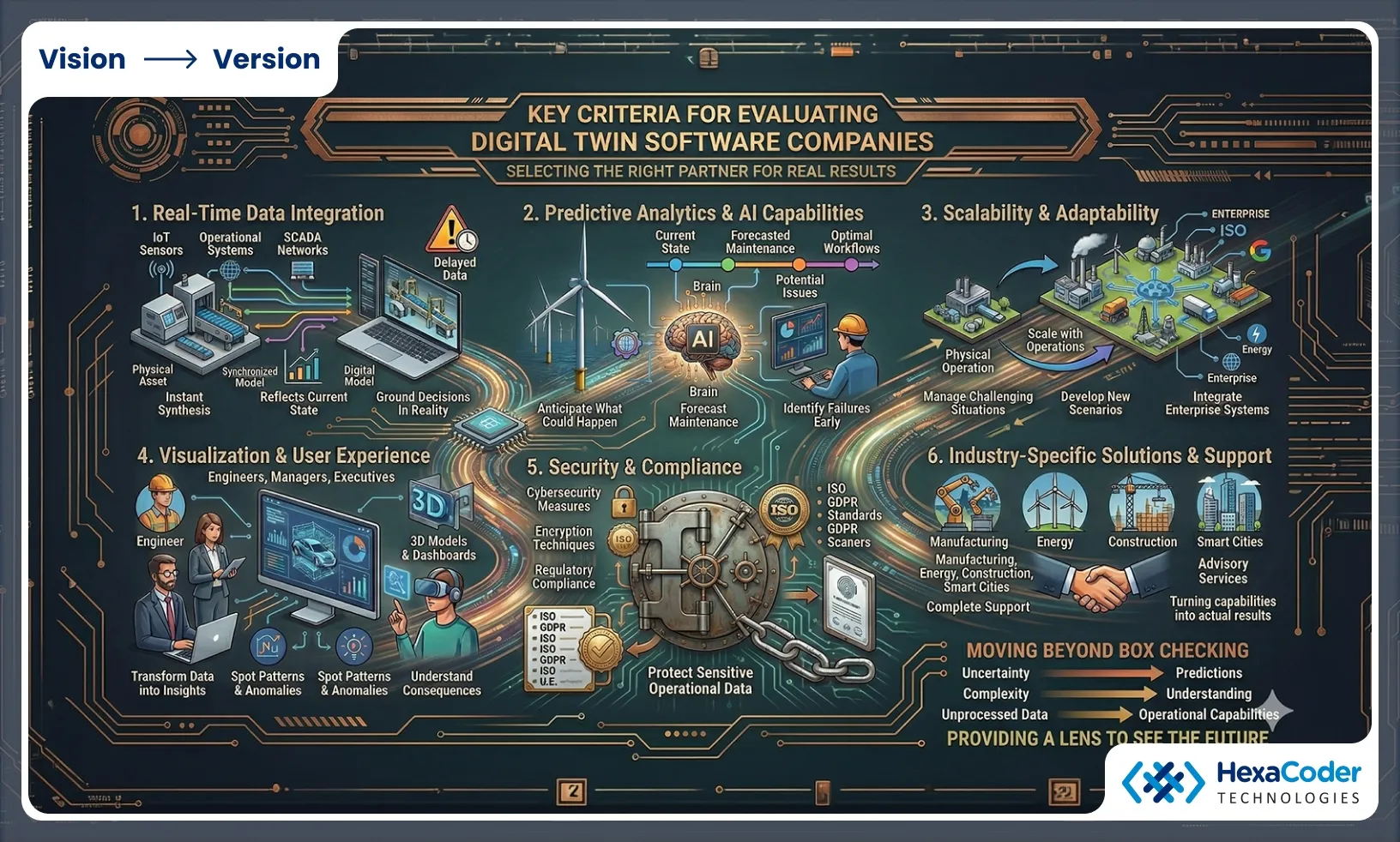
Digital twin software solutions differ according to their development standards. Some products claim to deliver exceptional results but actually provide a dull and unresponsive virtual experience. The other products function at such a high level of difficulty that only trained engineers possess the ability to understand them. The process of selecting the correct platform entails more than evaluating demonstration content
The process requires you to identify software solutions which solve your particular problems while generating accurate predictions and permitting you to manage actual phenomena. The following elements define the distinction between successful organizations and their unsuccessful counterparts.
1. Real-Time Data Integration
A digital twin is only as good as the data it consumes. The best platforms pull from multiple sourcesIoT sensors operational systems SCADA networksand synthesize that information instantly. The twin should reflect the current state of the physical asset with precision, so every decision you make is grounded in reality. Your twin becomes an expensive paperweight when you receive delayed data or your data sources do not function properly.
2. Predictive Analytics and AI Capabilities
Watching is goodPredicting is better. Top-tier platforms don't just reflect what's happeningthey anticipate what could happen. Digital twins use AI and machine learning to forecast upcoming maintenance requirements while they create optimal workflows through process simulation of multiple operational scenarios. The predictive capacity enables organizations to identify potential system failures before they occur.
3. Scalability and Adaptability
Industries aren't static. A strong digital twin platform must scale with your operations. The system must manage challenging situations which involve various assets while developing new operational scenarios and working with different enterprise systems. If it cannot expand alongside your organization, then it will face operational challenges throughout its existence.
4. Visualization and User Experience
A twin is only useful if people can understand it. The combination of 3D models and dashboards and immersive AR and VR interfaces provides users with powerful visualization tools which transform data into usable insights. Engineers and managers and executives require immediate access to critical information which allows them to recognize patterns and identify anomalies and comprehend consequences. The absence of clarity transforms everything into chaotic disorder while the absence of power makes everything useless.
5. Security and Compliance
Digital twins often hold sensitive operational data. The leading platforms of industry focus on implementing cybersecurity measures and encryption techniques and meeting regulatory standards. Your twin should function as a resource for you instead of creating security issues. Businesses face operational and legal and reputational dangers when platforms fail to maintain their environment security.
6. Industry-Specific Solutions and Support
The leading digital twin software companies provide customized solutions because they understand that different businesses have different needs. They understand the unique challenges of manufacturing, energy, construction, or smart infrastructure. The company provides customized solutions along with complete support and advisory services which assist organizations in turning twin's capabilities into actual results.
The process of evaluating digital twin software requires more than simple box checking. Organizations need partners who can provide them with solutions which transform uncertainty into future predictions and complex situations into understandable information and unprocessed data into operational capabilities. Companies that excel in these areas don't just provide softwarethey provide a lens to see the future before it arrives.
Top Digital Twin Software Companies
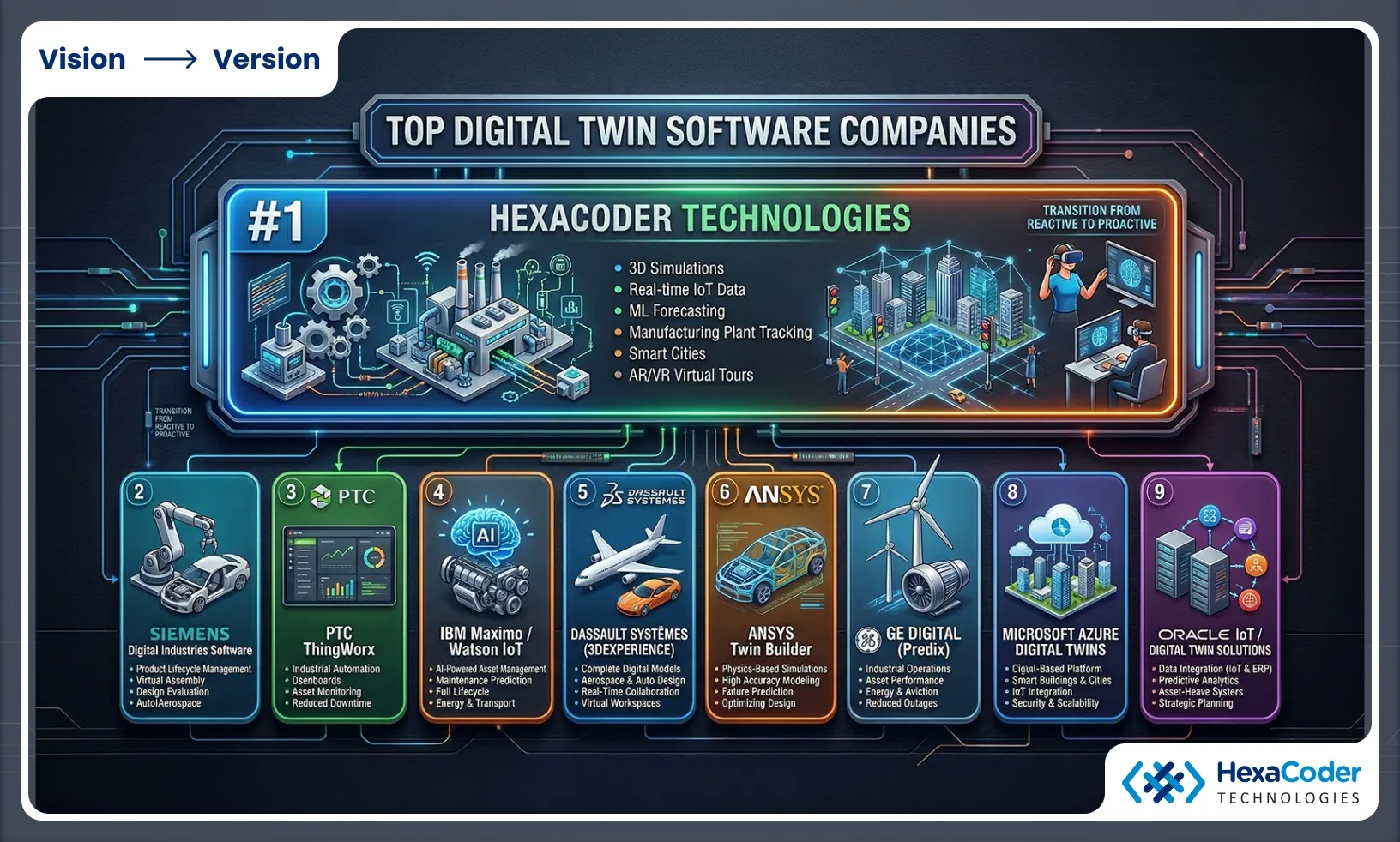
1. Hexacoder Technologies
The software of Hexacoder serves as the first digital twin system which creates new ways for industries to see their operations and determine future patterns while improving their performance. Hexacoder stands out because it unifies three elements of its platform which includes accurate 3D simulations and live IoT data tracking and machine learning-based forecasting tools. The Hexacoder system enables manufacturing plant operators to track all equipment while predicting maintenance requirements and coordinating production activities which they can implement during ongoing operations. The system tracks asset efficiency and predicts energy needs while detecting operational flaws that would result in high expenses. The system provides essential modeling tools to help urban planners create smart cities and infrastructure through real-time traffic flow and utility and public safety system data. The user experience and accessibility elements of Hexacoder extend beyond its technical functions. The system creates user-friendly interfaces through which engineers and managers and executives can understand complex industrial processes at various levels of expertise who need to navigate extensive data.
The AR and VR features of the system enable teams to conduct virtual plant and building explorations which display systems in continuous development thus transforming both remote inspections and training activities. Hexacoder serves clients from multinational companies and government bodies and advanced technology enterprises which demonstrates its credibility throughout different business sectors. The combination of predictive insight and operational control together with immersive visualization capabilities makes Hexacoder the top digital twin software which enables organizations to transition from responding to events towards making proactive decisions that rely on data.
2. Siemens Digital Industries Software
Siemens has maintained its position as an industrial technology leader for many years while its digital twin products demonstrate the company's extensive industry experience. The software from Siemens Digital Industries Software enables users to create digital twins which combine product lifecycle management and Internet of Things and advanced analytics technologies for precise future predictions. The solutions developed by Siemens enable manufacturers to enhance their production processes while minimizing operational interruptions and improving their workflow efficiency. Engineers can create virtual assembly simulations which enable them to evaluate design changes and forecast equipment breakdowns before they build actual systems. Siemens digital twins help automotive and aerospace industries decrease expensive mistakes while they speed up product delivery to market. Siemens maintains its market leadership through its extensive global operations which deliver dependable enterprise solutions that meet large-scale business needs and continuous technological progress.
3. PTC ThingWorx
PTC developed its ThingWorx platform to serve as a foundation for digital twin applications which rely on Internet of Things technology. ThingWorx combines real-time data with forecasting capabilities to help organizations create operational strategies which reduce equipment downtime while enhancing operational efficiency and equipment efficiency.
ThingWorx functions effectively for both industrial automation and logistics purposes. The system provides operators with user-friendly dashboards which enable them to monitor intricate systems while testing possible alterations and working together with other teams. ThingWorx offers organizations with the capability to monitor their assets from remote locations while managing their smart devices and connected services in various industries outside industrial use.
4. IBM Maximo / Watson IoT
IBM Maximo together with Watson IoT provides users with AI-based capabilities which enhance their digital twin operations. Maximo offers asset management capabilities which enable organizations to forecast maintenance needs and improve their operational processes and manage their assets throughout their entire lifecycle in multiple sectors including energy and manufacturing and transportation.
5. Dassault Systèmes (3DEXPERIENCE)
Dassault Systèmes established a distinct market position in digital twin technology through its 3DEXPERIENCE platform which enables users to generate complete digital models of products and processes through its 3D modeling and simulation and data analysis capabilities.
Dassault's twin technology enables engineers in aerospace automotive and industrial design fields to evaluate materials and enhance operational efficiency while testing intricate assembly processes without constructing any physical prototypes. This approach achieves cost reduction and development time efficiency while delivering superior product outcomes. The platform enables worldwide teams to work together through its ability to create shared virtual workspaces which allow designers and project managers and clients to interact in actual time.
6. Ansys Twin Builder
Ansys Twin Builder implements digital twin technology to create engineering solutions which use physics-based simulations for their operations. The system demonstrates its capabilities by creating precise virtual models of extremely intricate systems which simulate their actual behavior through high-accuracy physics modeling.
Ansys provides simulation capabilities which allow aerospace automotive and industrial machinery industries to replicate actual operational settings and evaluate potential product failures while optimizing their product design processes before market introduction. The system predicts outcomes with high precision which decreases potential risks while decreasing resource usage and accelerating product development efforts. Ansys Twin Builder provides businesses with dependable performance for their needs which require accurate results.
7. GE Digital (Predix)
Predix platform from GE Digital serves industrial operations through its digital twin technology which enables monitoring and asset performance prediction and optimization functions. Predix system enables businesses to achieve operational improvements through its ability to gather important information about energy turbines and aviation engines which helps them reduce operational outages.
The platform provides operators with real-time monitoring capabilities which enable them to identify equipment failures before they happen.
8. Microsoft Azure Digital Twins
Microsoft Azure Digital Twins provides a cloud-based solution which enables organizations to create and administer digital twin technology from a centralized digital platform. The system enables businesses to create complex environmental models which include smart buildings and complete urban areas through its integration of Internet of Things technology and spatial intelligence and cloud computing capabilities.
The system shows exceptional performance because it can expand its operations and connect different systems together. The security of cloud-based system enables organizations to connect various data sources while performing simulations and obtaining real-time insights. Azure Digital Twins functions as an advanced tool which assists authorities and businesses in their smart city development and facility operations and their implementation of extensive Internet of Things systems enables organizations to run operations sustainably and efficiently.
9. Oracle IoT / Digital Twin Solutions
Oracle develops digital twin products which enable enterprises to connect their IoT sensors and ERP systems and cloud-based analytics solutions through enterprise-grade data integration. The creation of accurate virtual models of their operational processes and assets empowers organizations to forecast equipment breakdowns and boost operational efficiency and develop reliable strategic planning.
The solutions from Oracle provide superior performance in asset-heavy sectors because these industries depend on predictive analytics and operational data to sustain equipment functionality and productivity. Oracle enables businesses to convert their unprocessed information into practical future predictions which will improve their business operations while decreasing potential hazards through its combination of powerful business integration and artificial intelligence-based modeling.
Digital Twin Applications Across Industries
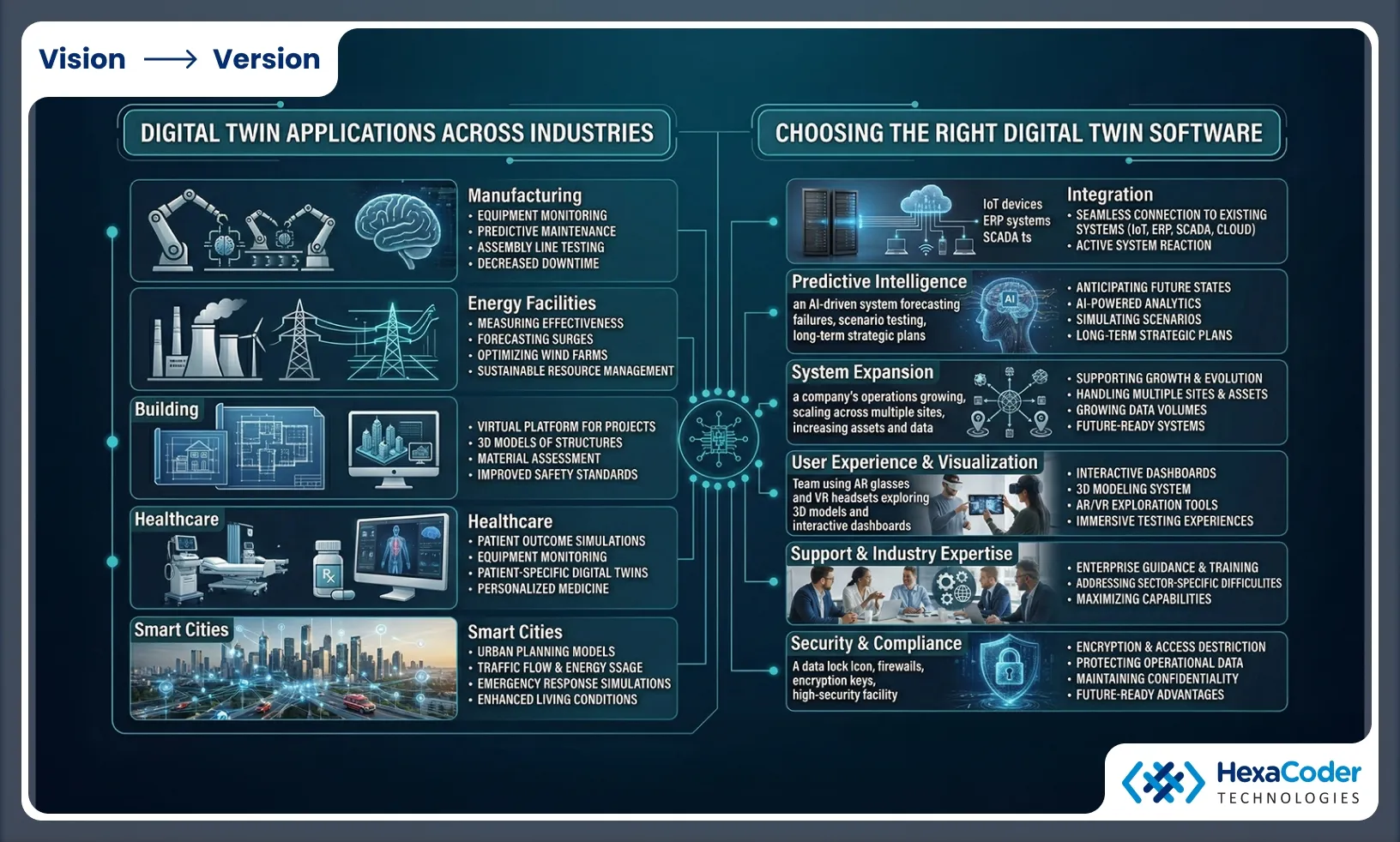
Digital twins have moved beyond theoretical concepts to become fundamental forces which now transform business operations in every region worldwide. Organizations gain access to previously impossible insights because their ability to duplicate present reality through real-time updates enables them to create digital twins which function as their operational systems.
Manufacturing:
Digital twins serve manufacturing industries as the digital equivalent of a second human brain which controls their production operations. The system observes all of its equipment operating status to identify wastefulness while it forecasts equipment breakdowns before occurrences take place. The software allows manufacturers to test assembly line enhancements while they create more efficient production methods which lead to decreased downtime throughout their entire production system. Digital twin factories achieve higher operational speeds with enhanced safety features which drive their production output while lowering operational expenses.
Energy Facilities:
Digital twins provide tremendous benefits to power stations and electricity grids and renewable energy facilities. The system measures operational effectiveness while it forecasts equipment breakdowns and it enhances power distribution efficiency. The grid operators use the system to forecast power surges and system failures while wind farms use it to adjust turbine operations for peak performance and utility companies use it to support sustainable resources management. Digital twins convert unprocessed information into usable business insights which enable companies to prevent expensive mistakes and environmental damage.
Building:
Building projects commonly experience delays and budget excesses and environmental dangers. Digital twins provide engineers and architects and project managers with a complete virtual platform for their project execution. The team can create complete 3D models of buildings and bridges and road networks which they will test for their full operational capacity before starting construction. The team uses simulation technology to assess materials while showing potential structural failure points and building their operational schedule. The outcome leads to projects which achieve better safety standards while achieving quicker results at reduced expenses.
Healthcare
Digital twin technology is being adopted by hospitals and medical equipment manufacturers to create patient outcome simulations which help them improve operational efficiency. The system provides equipment monitoring capabilities which enable organizations to perform predictive maintenance activities that result in decreased downtime and enhanced patient protection. Some companies are even creating patient-specific digital twins, allowing doctors to simulate treatments and predict responses, which has the potential to transform personalized medicine.
Smart Cities
Digital twins are used by urban planners to create models that depict how traffic flows and how energy is used and how public safety systems function. The system enables cities to predict traffic jams while they optimize energy consumption and create emergency response simulations. Digital twins enable governments to gather data for their decision-making process which helps them enhance the living conditions of their citizens while decreasing expenses and protecting the environment.
Digital twins establish a link between data and operational execution which enables organizations to manage complex systems as easy-to-understand systems that they can control and develop. The system provides organizations with descriptive information about existing conditions while predicting future developments, which enables them to make proactive decisions instead of responding to unpredictable events.
Choosing the Right Digital Twin Software
The process of choosing a digital twin platform requires more than selecting the most visually appealing software solution. The process requires businesses to select a partner who can transform their unprocessed data into usable business intelligence, simplify their intricate systems, and scale with their company growth. The wrong choice can mean wasted time, money, and missed opportunities. The right choice? The operation enhancements combined with efficiency improvements create a competitive advantage which makes your business appear unbeatable.
The first consideration is integration. A digital twin platform must connect seamlessly with existing systemsIoT devices, ERP, SCADA networks, and cloud analytics. The twin requires this connection because it must observe actual conditions while accessing real-world information. The twin operates as an active system which reacts to changes because of the integration process that eliminates its static nature.
The next component needs to focus on predictive intelligence. The twin should not merely display current states; it must anticipate what's coming. AI-powered analytic platforms use advanced simulation to create various scenarios while predicting upcoming failures and suggesting solutions to avoid future issues. This process enables organizations to switch from searching for solutions to immediate problems toward developing their long-term strategic plans.
The second essential element requires evaluation of system expansion capabilities. Your operations will evolve, assets will multiply, and industries will shift. A twin that cannot scale with complexity will quickly become a constraint rather than a tool. The system needs to support operations across multiple sites while handling various resource types and growing data volumes without experiencing performance issues.
User experience and visualization matter too. Stakeholders do not have the necessary skills to understand advanced algorithms which makes these algorithms fail to operate correctly. The platform enables teams to achieve quick insight discovery through its 3D modeling system which includes interactive dashboards and AR/VR exploration tools. The virtual reality facilities enable decision-makers to develop products which allow their staff members to test their products through immersive experiences.
People should realize that both support functions and industry expertise hold critical importance despite their common neglect. Software companies offer more than platform sales because they deliver enterprise guidance and training services which help clients maximize their digital twin capabilities. Businesses with extensive industry experience know how to address particular difficulties faced by manufacturing and energy and construction industries through their practical solutions.
The final consideration involves security and compliance requirements. Digital twins maintain operational data which contains confidential information and usually operates at high volumes. Your platform system offers security through its encryption features and access restriction mechanisms which ensure your data and business activities remain protected at all times.
The process of selecting digital twin software requires organizations to consider both their partner relationships and their growth opportunities. The top platforms convert complicated information into straightforward solutions which enable organizations to achieve upcoming operational goals through self-evolving systems that provide future-ready advantages.
The Future of Digital Twin Technology
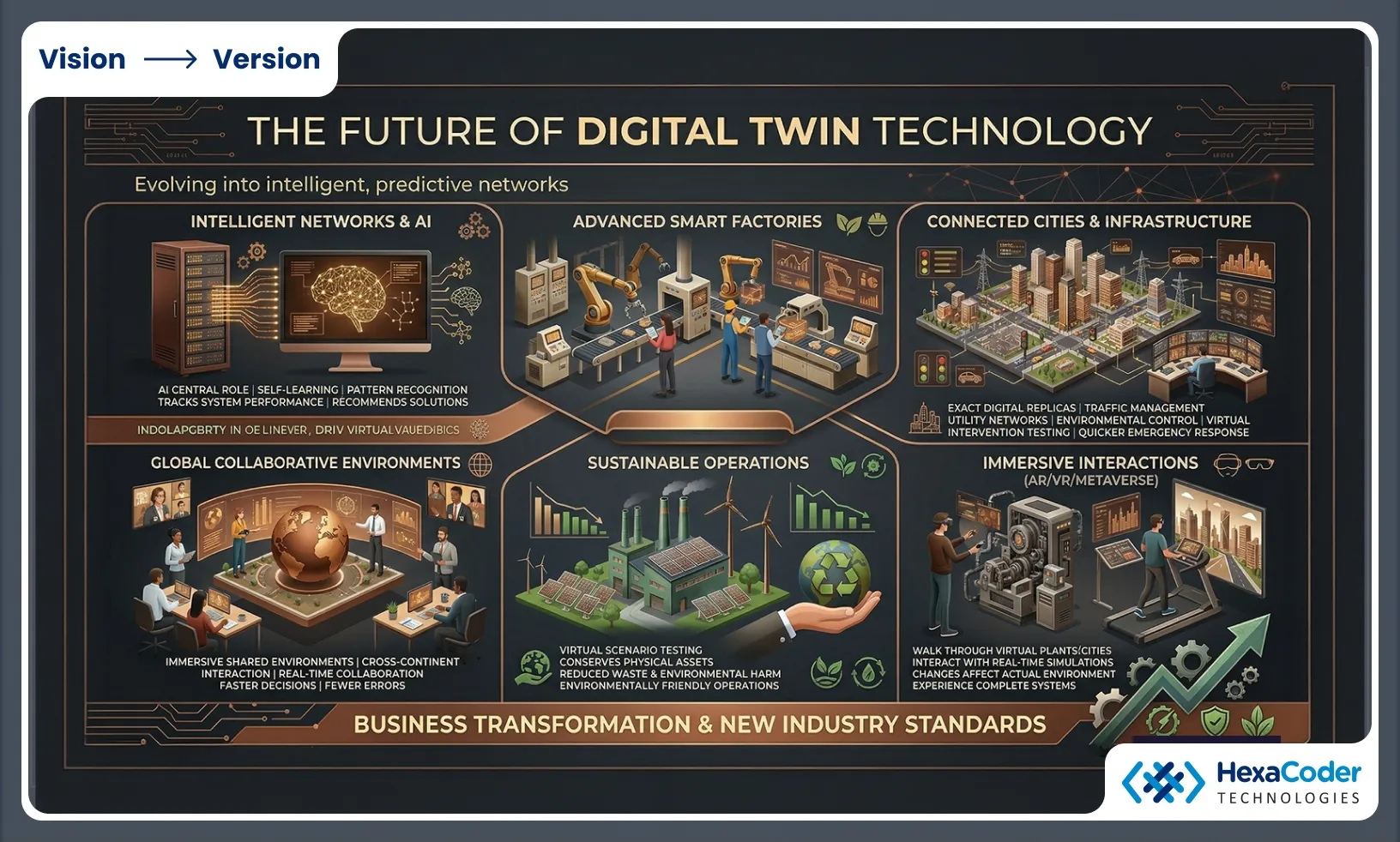
The digital twin concept has just begun to develop. The initial purpose of simulating single machines and single systems has expanded into a new goal. The complete development of digital twins will create intelligent networks that provide predictive capabilities across all industrial and urban operations. Artificial intelligence will play a central role in this evolution. Future digital twins will learn by themselves to recognize patterns and track system performance while recommending better solutions that humans need extra time to develop. The factory represents a future where machines work together with their virtual twins to create automated workflow improvements that maximize energy savings and production efficiency while safeguarding employee safety. Digital twins will become more effective through the growth of edge computing and IoT technologies. Twins will process real-time data which will come from sensors and devices and infrastructure elements to handle operations at extremely high capacities. Digital twins will create exact digital replicas of entire cities which will include traffic patterns and utility networks and environmental control systems. The system will enable planners to virtually test their interventions before they implement them in actual situations. The system will help cities to achieve better traffic management systems and energy savings and quicker emergency response times.
The way we work will change because collaboration will require new methods of working. Digital twins will create immersive, shared environments where stakeholders across continents can interact with the same virtual model. Engineers, designers, managers, and clients will collaborate in real time, making faster decisions with fewer errors. The world now enables international teams to work on projects through frontier technology which increases their execution speed and accuracy.
Sustainability is another driver. Digital twins enable organizations to conduct scenario tests while they preserve physical assets, which results in reduced waste and energy consumption and environmental harm. Digital twins will become vital resources for businesses that need to achieve environmentally friendly operations while maintaining operational efficiency because of increasing regulatory demands and customer demands for sustainable business practices.
The combination of digital twins with augmented reality (AR) and virtual reality (VR) and metaverse will create new ways for people to interact with information. Users can walk through a virtual plant or city to interact with real-time simulations while making changes that affect the actual environment. The immersive method will enable users to experience complete systems as physical objects that they can see and grasp and manage in an unprecedented way.
Digital twins will advance through multiple software platforms according to their future development path. Organizations that implement these new technologies will achieve higher efficiency levels because their operations will become more effective which will lead to business transformation and development of new industry standards that enhance operational efficiency and safety measures and sustainable practices.
Why Digital Twin Software Matters
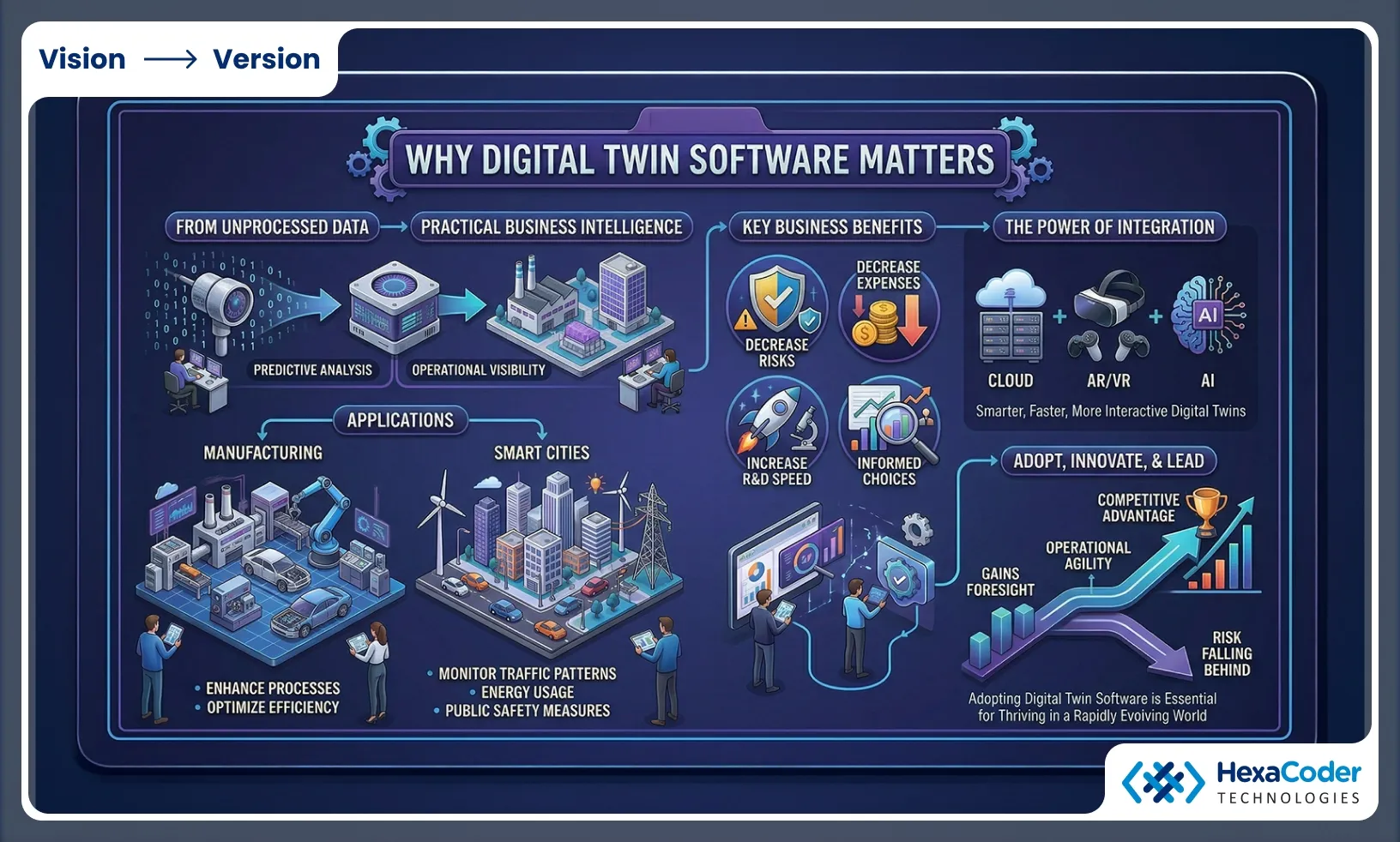
Digital twin software has become a fundamental component for current industrial operations and urban development and business performance monitoring systems. The system transforms unprocessed information into practical business intelligence which enables organizations to optimize their operational processes through predictive analysis and operational visibility.
Digital twins demonstrate their value through their ability to enhance manufacturing processes and enable smart cities to monitor traffic patterns and energy usage and public safety measures. The solution helps organizations decrease risks while decreasing expenses and increasing research development speed and decision-makers ability to make informed choices. The combination of AI and AR/VR and cloud technologies has created new possibilities which all startups and established companies use to develop smarter and faster and more interactive digital twins.
The message is clear: adopting digital twin software is no longer optionalit is essential. Businesses that embrace this technology gain foresight, operational agility, and a competitive advantage against their competitors. The advantage that will define the next era of industry. Those that wait risk falling behind as competitors harness the twin's predictive, collaborative, and transformative power.
In the end, digital twins don't just reflect realitythey amplify it, improve it, and make the invisible visible. For organizations seeking to thrive in a rapidly evolving, hyper-connected world, the choice is simple: adopt, innovate, and leader watch others shape the future while you remain a spectator.