
Introduction
The energy sector stands as one of the most vital sectors that drive the worldwide economy because it generates electricity needed for residential areas and industrial facilities and transportation systems and vital public services. Energy companies must deliver continuous power to customers while they work to reduce their operational expenses and ensure the safety of their workers and protect the environment. Energy assets require substantial financial investments because they need advanced technology to operate their equipment which includes fossil fuel power plants and offshore oil rigs and wind farms and solar arrays and electrical grids. All operational downtime and inefficient operations and unsafe conditions give rise to dangerous effects which extend beyond financial damage to create environmental harm and social repercussions.
The current energy sector experiences transformation through various technological advancements. Organizations face operational challenges which stem from their need to implement renewable energy sources and smart grids and energy storage systems and their need to comply with growing environmental regulations. Energy companies must manage diverse assets spread across wide geographies, often under extreme environmental conditions. The traditional methods of monitoring which include manual inspections and static reports and basic SCADA systems have become inadequate to help organizations achieve peak performance and prevent equipment breakdowns.
Digital twin technology serves as the solution needed for this situation. Digital twins create virtual replicas of physical assets and operational systems which enable operators to monitor their real-time activities while testing various scenarios and making exact data-based decisions. Energy companies use digital twins to connect their physical assets with their digital systems which allows them to enhance operational efficiency while meeting their present requirements and future business goals. Our energy sector solutions are comprehensive. Contact our expert team for more details.
Energy companies are increasingly implementing digital twin technology because they face demanding operational requirements and modern technological advancements provide them with new opportunities. The energy sector uses digital twin technology because it enables companies to achieve better operational results while enhancing safety and creating new solutions for their entire industry.
1. Optimizing Operational Efficiency
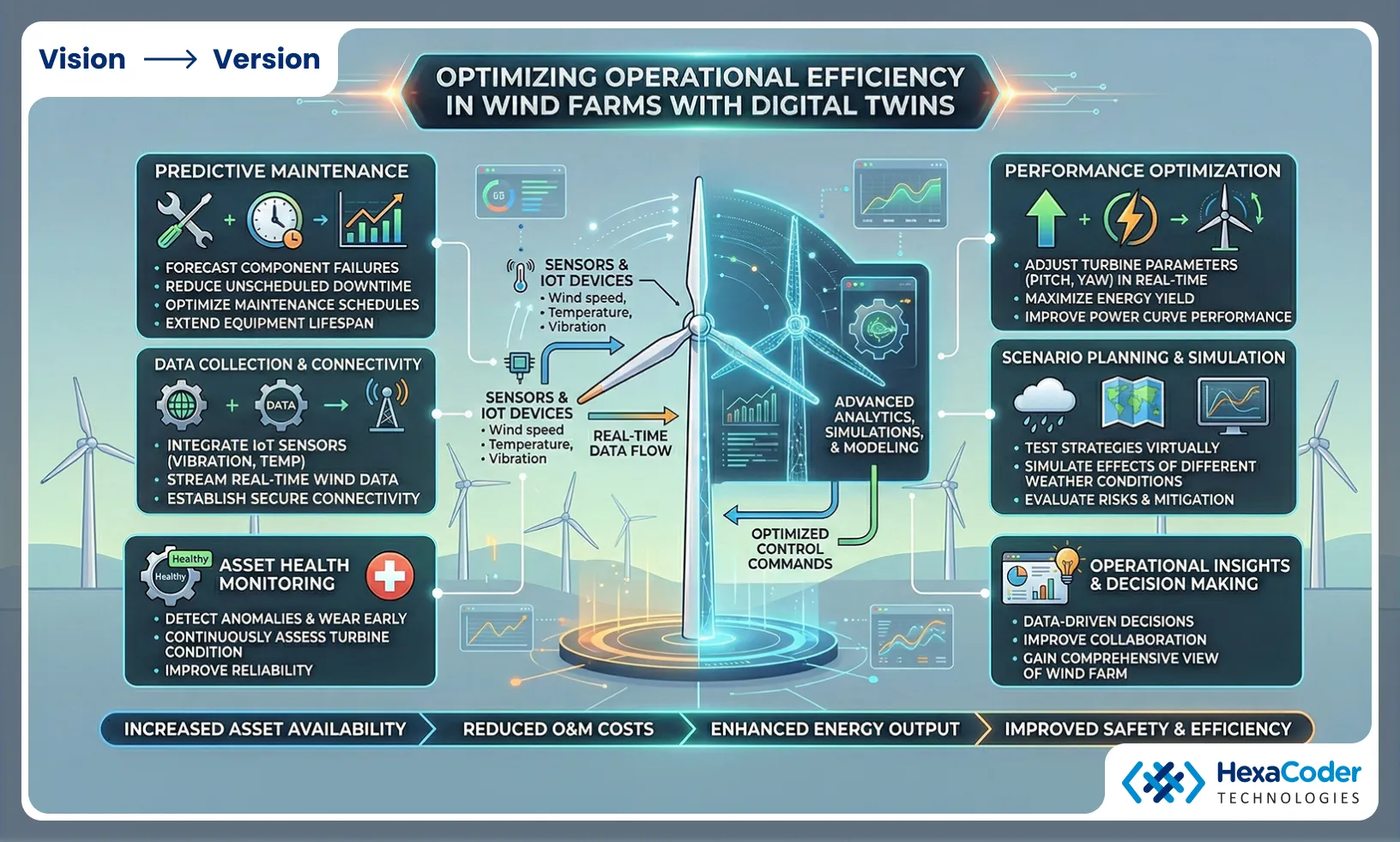
Digital twins create a virtual replica of physical assets which enables energy companies to conduct real-time operations monitoring and to test multiple scenarios without affecting their actual operations. The power plant operators can observe turbine and boiler and generator operation patterns which change when different load conditions are applied. They can identify operational problems and test different work methods before making changes that will boost their entire work performance.
Digital twins enable renewable energy companies to predict how solar panels will function and how wind turbines will perform when environmental conditions change. Companies use simulations of sunlight strength and wind velocity and temperature changes to create better energy output predictions which enable them to enhance their energy production operations. Predictive maintenance enables renewable energy facilities and traditional power generation facilities to achieve their maximum operational output while reducing operational waste.
2. Predictive Maintenance and Equipment Reliability
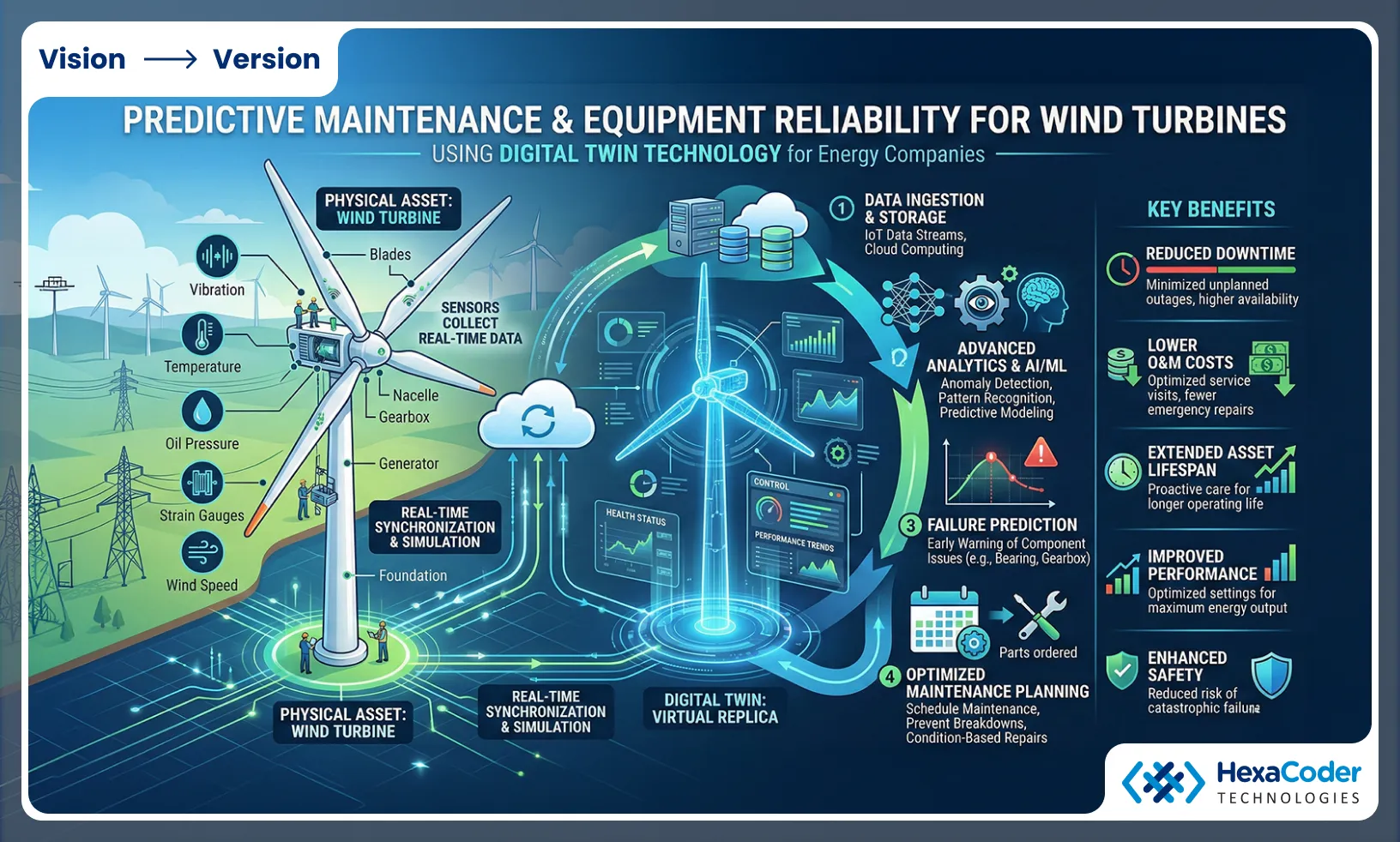
The energy sector operates with high-value assets that hold critical importance and which staff members need to access at locations throughout their operational territory. Equipment breakdowns lead to expensive service interruptions which result in environmental damage and dangerous situations. Digital twins provide predictive maintenance through their monitoring system which operates with sensor data and uses advanced machine learning algorithms to identify equipment faults. The digital twin system uses sensor data to monitor equipment through its vibration and temperature and pressure measurements while it tracks early signs of system wear which may lead to breakdowns.
The operators can organize their maintenance activities in advance by substituting broken parts with new ones and fixing other damaged items. The method decreases unplanned downtime which affects operations while it also boosts the operational duration of essential machinery like transformers and turbines and generators and pipelines. Predictive maintenance identifies workplace dangers before they escalate into critical situations which helps organizations protect their workers and their essential infrastructure.
3. Enhancing Decision-Making and Risk Management
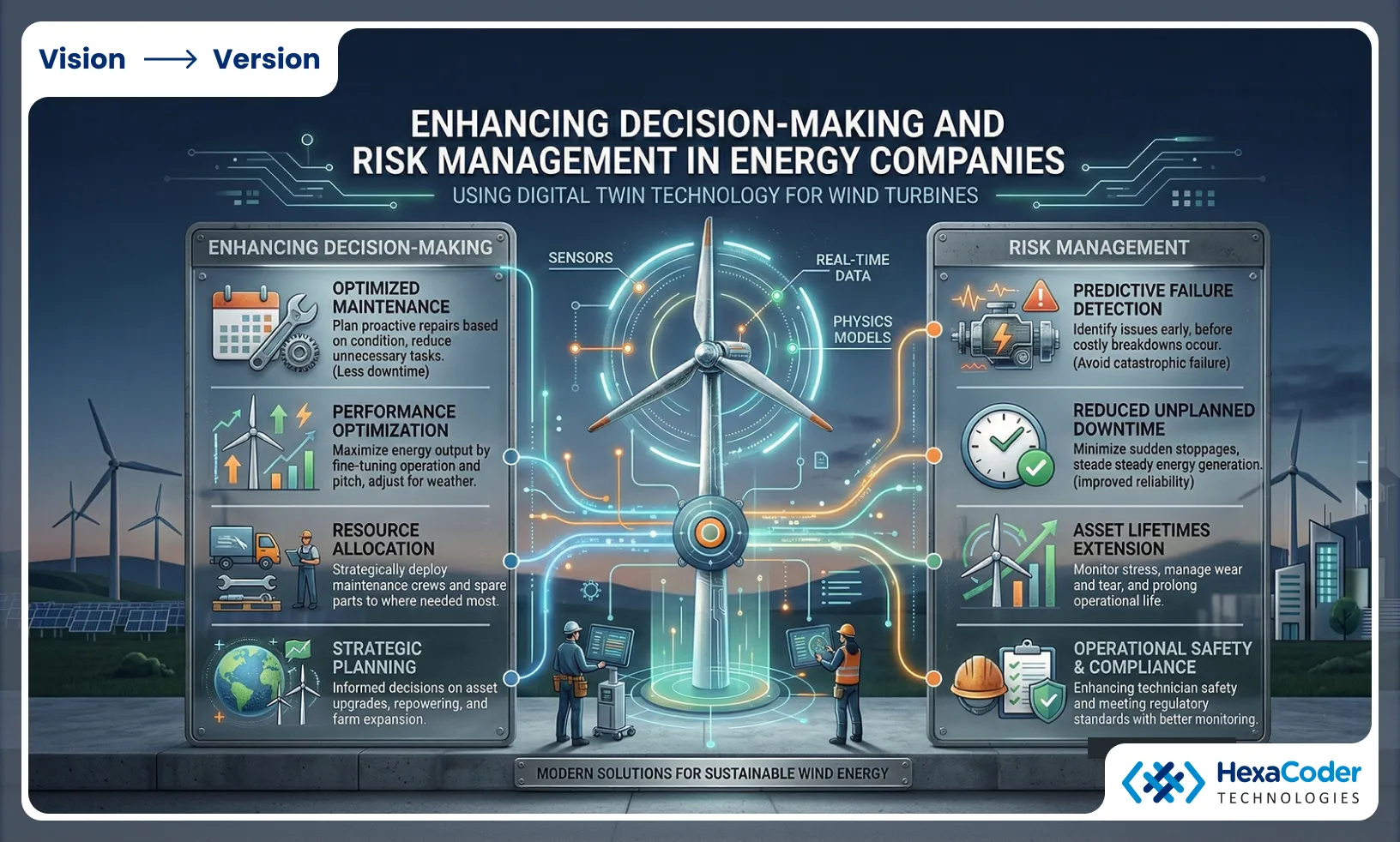
Energy operations experience continuous changes because of market demands that change and regulatory requirements which evolve and environmental conditions that vary. Digital twins enable companies to improve decision-making through their ability to create virtual models for testing different operational situations. Operators can examine the effects of load variations and maintenance timings and emergency situations on their systems without any actual danger to their operations.
Grid operators use simulation tools to create peak energy demand scenarios and develop renewable energy integration models and forecast system failure risks. Oil and gas companies use simulation tools to model their pipelines through extreme conditions by testing pipeline pressures and valve operations and chemical reactions. The simulations help operators manage uncertainty by developing backup plans which maintain system reliability and meet regulatory requirements.
4. Supporting Sustainability Initiatives
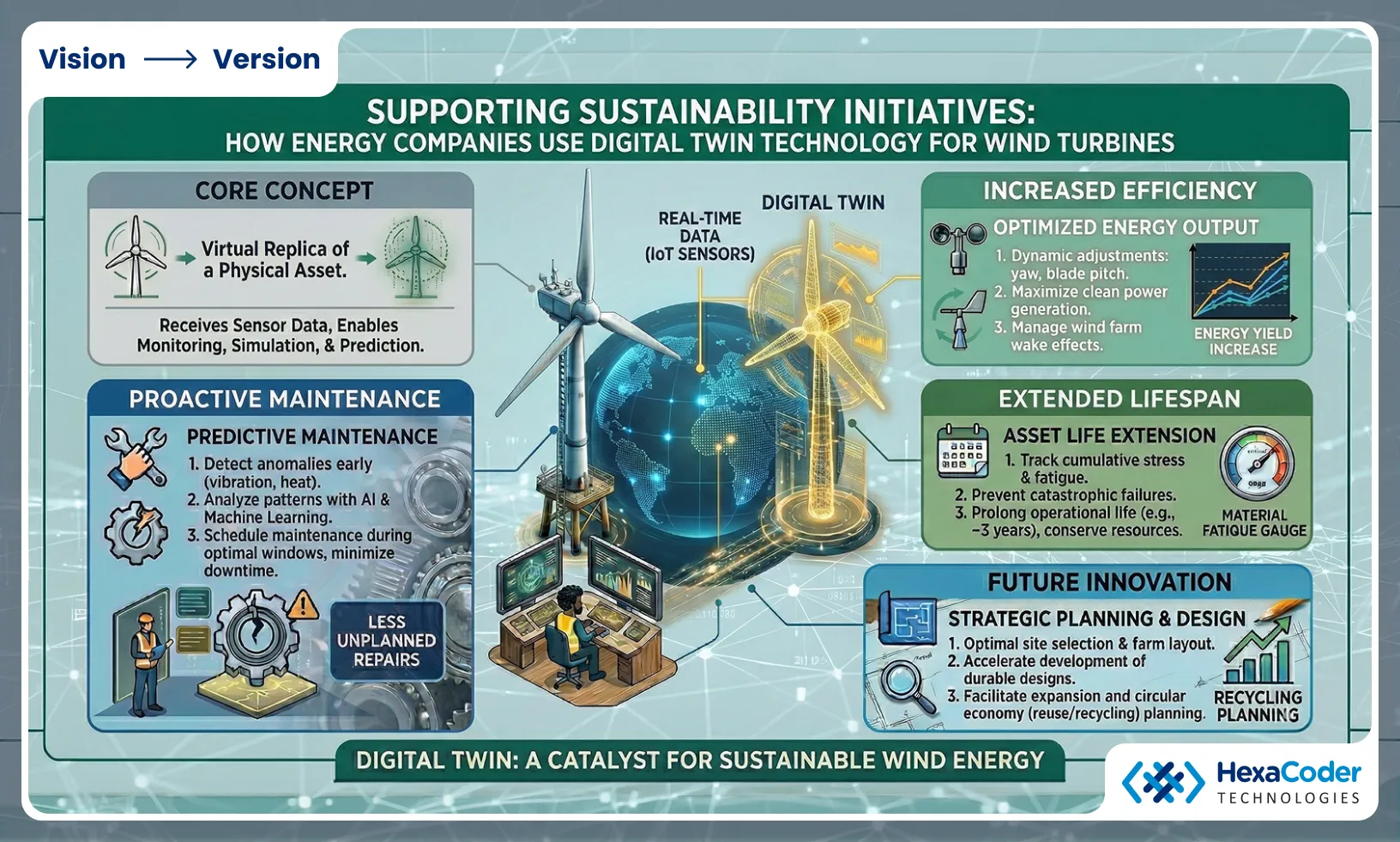
Sustainability has become a main focus of energy businesses. Companies face mounting demands to diminish emissions while enhancing resource efficiency and adopting renewable energy technologies. Digital twins serve as an essential component for organizations to accomplish their objectives.
Digital twins track energy consumption and resource usage and emissions data in real-time which helps organizations find operational inefficiencies and develop energy-saving solutions. Renewable energy companies use modeling to simulate wind and solar energy production which enhances their ability to integrate with the grid and decreases their dependence on fossil fuels. Digital twins enable businesses to conduct scenario analysis which assesses environmental impacts from operational modifications while ensuring adherence to environmental regulations and supporting their sustainability goals.
5. Driving Innovation and Asset Design
Digital twins are currently changing how companies create and design their assets. Energy companies use virtual prototypes to build digital models of their turbines, solar power systems, pipelines, and various other infrastructure components for conducting safe testing of their new design concepts. Simulation enables engineers to design their projects for maximum energy efficiency and material endurance and safe operation before they start actual building work.
Simulation allows testing of offshore wind farms under severe weather conditions to assess their structural performance, while refineries conduct virtual testing of their chemical process changes. This method decreases development time and lowers expenses while proving that new systems operate safely and effectively.
6. Enhancing Grid Management and Energy Distribution
Digital twins help electric utilities handle their increasingly complicated grid systems. Modern grids use renewable energy sources together with energy storage systems and smart meters, which create challenges for load balancing and distribution operations. Digital twins deliver an interactive real-time grid model that enables operators to track energy movements and identify system faults and distribution optimization.
Energy companies use demand prediction and failure assessment capabilities to avoid blackouts while enhancing system reliability and operational efficiency for energy distribution. This situation holds particular significance for areas with high levels of renewable energy usage because weather changes can lead to sudden shifts in energy production.
7. Improving Safety and Regulatory Compliance
The energy sector requires its operations to prioritize safety above all other concerns. All chemical refinery processes and power plant high-voltage equipment operations and high-pressure pipeline systems face considerable danger. Through digital twin technology, companies can test emergency situations which include equipment breakdowns and fires and hazardous material spills to detect system weaknesses and improve their emergency response procedures.
Digital twin monitoring systems help organizations meet their regulatory compliance requirements. Organizations can provide evidence of their compliance with environmental and safety and quality standards through their ongoing operational parameter monitoring which generates precise documentation. The practice decreases compliance risks while establishing trust with stakeholders.
Applications Across the Energy Industry
Multiple subsectors within the energy industry now use digital twin technology for their operations.
- Power Generation: Real-time monitoring of turbines, boilers, and generators in fossil fuel, nuclear, and renewable plants.
- Oil and Gas: The oil and gas industry uses predictive maintenance to ensure drilling rigs and pipelines and refineries operate efficiently.
- Renewable Energy: Modeling wind, solar, and hydroelectric systems for optimal performance and grid integration.
- Energy Storage: Energy storage systems allow operators to track battery performance and manage charging and discharging activities and predict future battery capacity.
- Grid Management: Interactive modeling of energy distribution networks, load balancing, and outage prevention.
Through digital twin systems, energy companies can achieve both their daily operational needs and their long-term strategic objectives which makes these systems vital for their work.
How Digital Twins Transform Energy Operations
Energy companies are transforming their asset management and operational procedures through the usage of digital twin technology. The conventional monitoring systems which depend on fixed information and scheduled evaluations do not match digital twins which deliver continuous real-time system monitoring that helps businesses to forecast problems and enhance their operations and execute their business strategies based on reliable information. The system uses Internet of Things (IoT) sensors together with sophisticated data analysis and simulation technology to produce an interactive digital model which represents power plants and renewable energy facilities and energy grids and pipelines.
The virtual platform enables operators to conduct ongoing equipment monitoring which helps them to identify equipment problems at early stages to prevent major failures and to evaluate operational modifications through a safe testing environment. A wind farm operator can use the system to test how different wind conditions will impact turbine performance while also evaluating how blade angle adjustments will increase energy output. The utility company uses digital twin technology to create a grid simulation that predicts system performance at peak demand times when power shortages and outages are most likely to occur.
The advantages of this approach extend beyond the realm of operational performance. Digital twins enable predictive maintenance, which reduces downtime and extends asset life. They provide support for energy optimization, which enables companies to decrease waste and cutting operational expenses while improving their environmental performance. They provide safety enhancements by creating dangerous situation simulations which staff members use to learn emergency response protocols without facing real-world dangers.
Digital twins support organizations in making strategic choices. Through the combination of past records and current data and forecasting techniques companies can develop long-term financial strategies and assess how well renewable energy resources will be incorporated into their operations and determine the most efficient ways to manage energy supply and demand. The complete perspective helps organizations comply with regulations while minimizing their business risks.
Benefits of Digital Twin Technology in Energy
Digital twins deliver measurable benefits across the energy sector through their capacity to improve operational efficiency and decrease downtime and enhance safety and support better decision-making and their ability to cut operational expenses and their implementation of sustainable practices and their virtual prototyping system which allows for faster design testing.
Challenges and Considerations
Top 5 Challenges of Digital Twin Implementation in Energy
Energy facilities frequently use mixed systems that combine their existing legacy systems and new equipment and their remote assets. The process of creating a unified digital twin from these sources requires three steps which include establishing data standards and testing sensor data and maintaining continuous system updates. The presence of inaccurate or incomplete data makes simulation processes difficult because they require extensive technical resources to achieve proper integration.
High Initial Investment
The implementation of a digital twin requires financial resources to acquire sensors and software platforms and cloud infrastructure and ongoing system support. The initial costs present a major financial burden to smaller operators but their operations will benefit from enhanced efficiency and reliability and safety over time.
Real-Time Processing and Network Demands
Digital twins depend on their ability to process continuous data streams which transmit high-volume information from multiple assets. The system needs robust network capabilities together with high-performance computing to operate without any delays or service disruptions. The system experiences operational disturbances because any delays that occur during data processing lead to slower operational insights and diminished effectiveness of predictive maintenance.
Cybersecurity and Data Protection
The process of connecting critical infrastructure systems with digital twins leads to higher risks of cyber attacks. Organizations must use encryption and secure access protocols and continuous monitoring systems to safeguard their sensitive operational data. Organizations must verify their cybersecurity practices to safeguard both their systems and their personnel.
Skill Gaps and Personnel Requirements
Digital twin systems need personnel who have advanced skills to manage their operations and analyze complex simulations and make data-driven choices and apply their findings to daily work. The full capabilities of advanced systems will remain untapped until organizations develop training programs and adoption frameworks.
The Future of Digital Twins in Energy
Digital twin technology will undergo major growth and technological advancement in its application to the energy sector. Energy systems require companies to adopt AI-based simulation methods together with advanced predictive analytics and cloud-based Internet of Things solutions to achieve operational effectiveness and cost savings and sustainable development. The next generation of digital twins will use artificial intelligence to create digital replicas that operate in real time by simulating possible outcomes and testing different operational methods and delivering real time operational guidance.
The operation of smart grids will increasingly require the implementation of digital twin technology. Virtual grid models will enable operators to test load distribution and identify potential bottleneck points while developing solutions to prevent any grid failures. The capability to predict outcomes will improve grid dependability while enabling dynamic pricing and energy trading and environmentally friendly energy consumption methods.
Digital twins will become essential for autonomous energy management systems which represent their next development stage. The systems use real-time operational data for their continuous learning process to create automated systems which handle production scheduling and energy distribution and storage system management without needing human operators to intervene.
The development of advanced digital twin platforms will provide operators and engineers with the ability to interact with virtual models through augmented reality (AR) and virtual reality (VR) technologies. The three areas of training and emergency response simulations and remote operations will experience improvements which create safer and more effective methods for handling complex energy systems. Digital twins will establish themselves as essential building blocks for upcoming energy systems because they will enhance operational intelligence through their support of renewable energy sources which create a sustainable and dependable energy infrastructure.