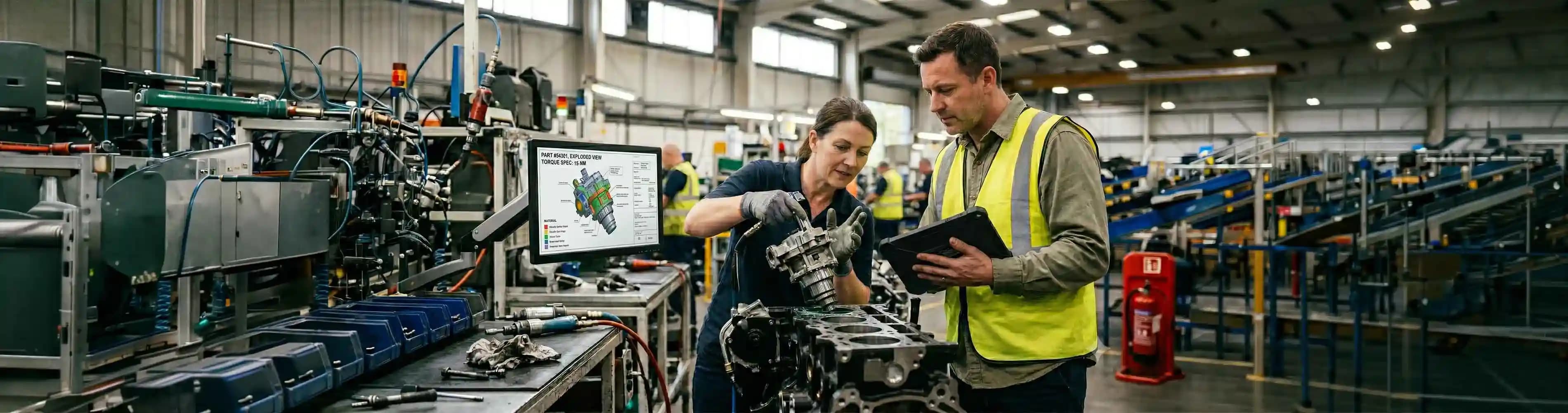

A surgeon stares at the chest x-ray of his patient, identifying the exact location of a tumor in the depths of his lungs. This is an operation that has never been performed before or, at least, on this particular anatomy. If he makes the slightest mistake, he will end up cutting a major blood vessel. His hands are steady, but his thoughts are fast-paced. He has been studying the images for half an hour now, but the images are two-dimensional. The body of his patient is three-dimensional, alive, unpredictable.
And then he enters a program that changes everything. He puts on a headgear and suddenly finds himself inside his patient's body. He can rotate the tumor, study it from all angles. He can simulate the same movements he will perform the following day. He can identify the blood vessels, their locations relative to the tumor. He rehearses the entire procedure five times in a virtual environment, each rehearsal helping him refine his strategy. When he steps into the operating room, he is no longer nervous. He has done this before.
This is not the future of medicine. It is the present, and it uses digital twin technology which is revolutionizing the way doctors take care of their patients and plan surgeries.
The Healthcare Crisis That Digital Twins Actually Solve
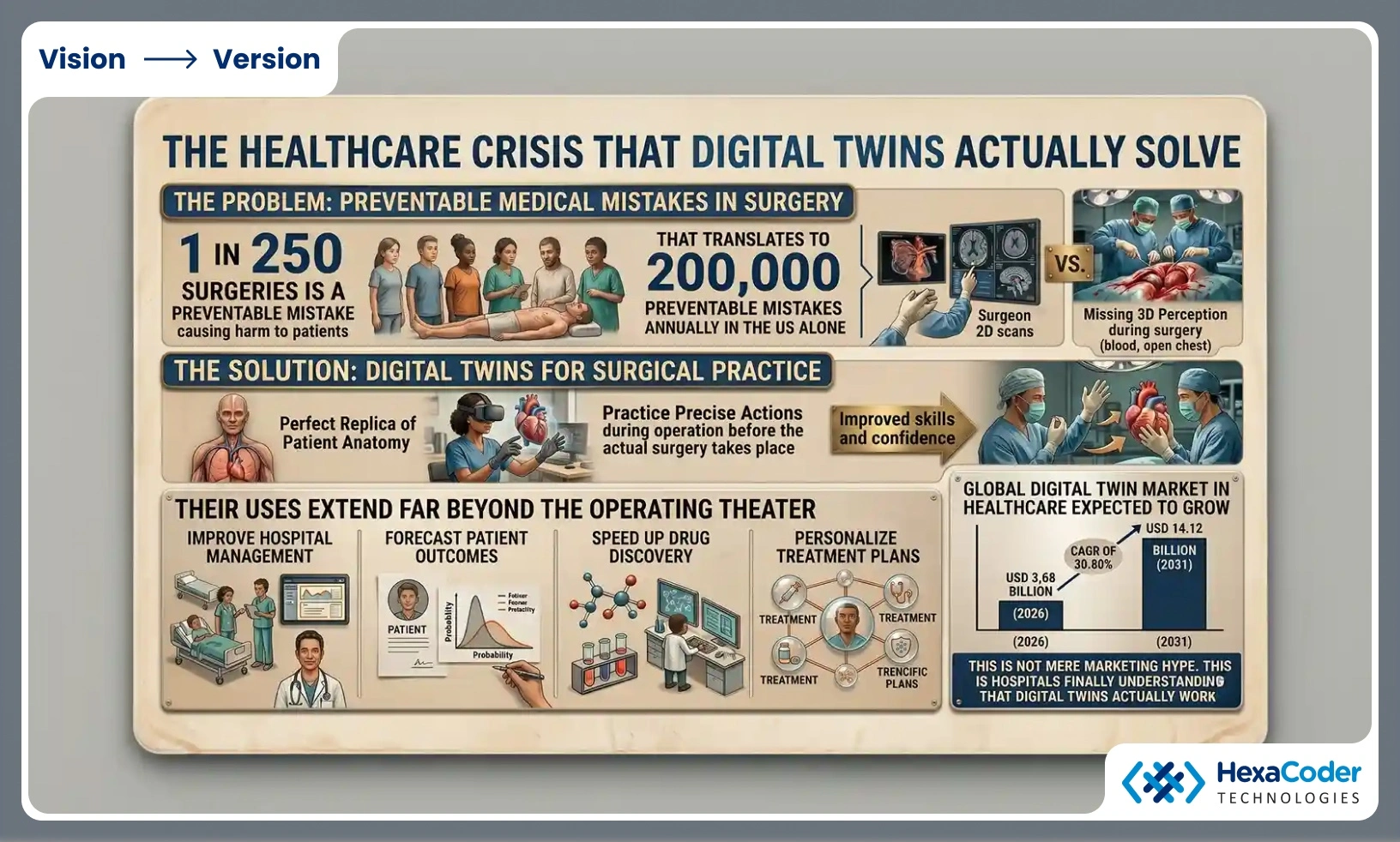
The following statistic should be noted in discussions of healthcare issues: one out of every 250 surgeries is a preventable medical mistake that causes harm to patients. This is not an insignificant issue. It translates into 200,000 preventable mistakes annually in the United States alone. Most of them have a common cause: performing operations on body parts that were known to the surgeon only from images rather than from three-dimensional perception. They know all the scans and measures, but never practiced the precise actions during operation when the chest is opened and the blood flows.
Digital twins help to eliminate this issue because they allow doctors to train on a perfect replica of the anatomy of their patients before the actual surgery takes place.
However, their uses extend far beyond the operating theater. Now, digital twins are being utilized to improve hospital management, forecast patient outcomes, speed up drug discovery, and even personalize treatment plans all of which was unimaginable just five years ago. The global digital twin market in the healthcare industry is expected to grow from USD 3.68 billion in 2026 to USD 14.12 billion by 2031 at a CAGR of 30.86 percent. This is not mere marketing hype. This is hospitals finally understanding that digital twins actually work.
What Digital Twins Actually Are (And Why They're Not Just Pretty Visualizations)
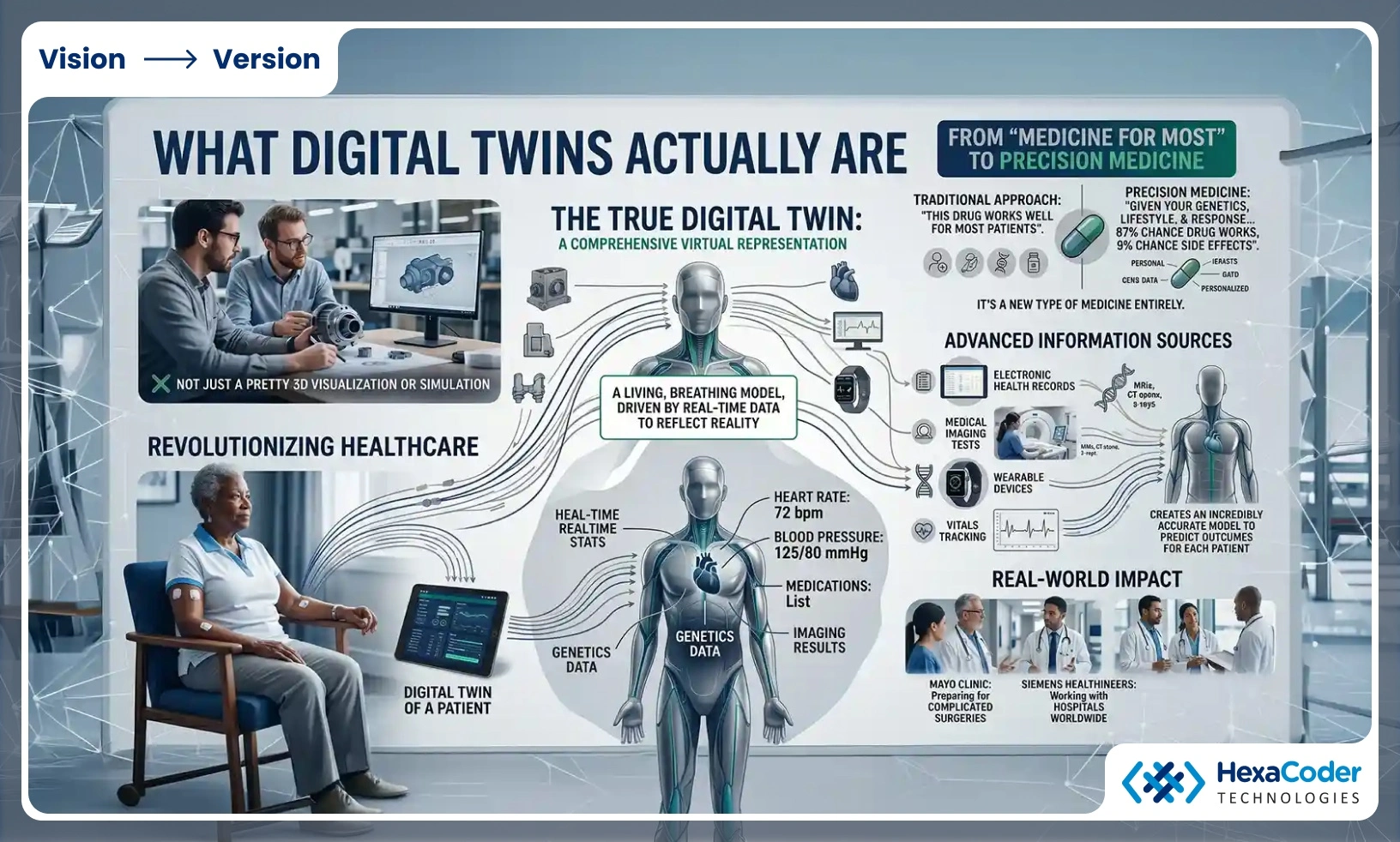
The phrase 'digital twin' seems to be used interchangeably for many things, like 3D visualizations, simulations, data models and more. The truth of the matter is that the definition of a digital twin is much more precise than that. In essence, a digital twin is a complete virtual representation of an asset, system or even person, which is driven by real-time data and reflects reality.
When we speak about healthcare, the concept of a digital twin is much more complex than having a pretty picture of a patient's body. Digital twin in healthcare refers to a living and breathing model of a patient, which receives real-time data about his/her health condition, including heart rate, blood pressure, medications taken, genetic data, imaging results, and response to any treatments in the past.
Consider what that means. Rather than 'this drug works well for most patients,' one can say 'given your particular genetic makeup, your heart function, your response to medications previously, and your lifestyle, there is an 87 percent chance that this drug will work for you and a 9 percent chance of these side effects.' This is not medicine anymore; it is precision medicine. It is such a precise method of medical intervention that it seems to be a new type of medicine entirely.
The information sources that support these digital twins are becoming more and more advanced. Electronic health records, medical imaging tests (MRIs, CT scans, X-rays), genetics test results, wearable devices, vitals tracking all of this comes together to create an incredibly accurate model of predicting outcomes for each patient individually. This is the reason Mayo Clinic relies on digital twins when preparing patients for complicated surgeries, Siemens Healthineers works with hospitals all around the world to introduce these models, and even FDA considers digital twin simulations as sufficient proof for medical devices approval.
How Hospitals Are Actually Using Digital Twins Right Now
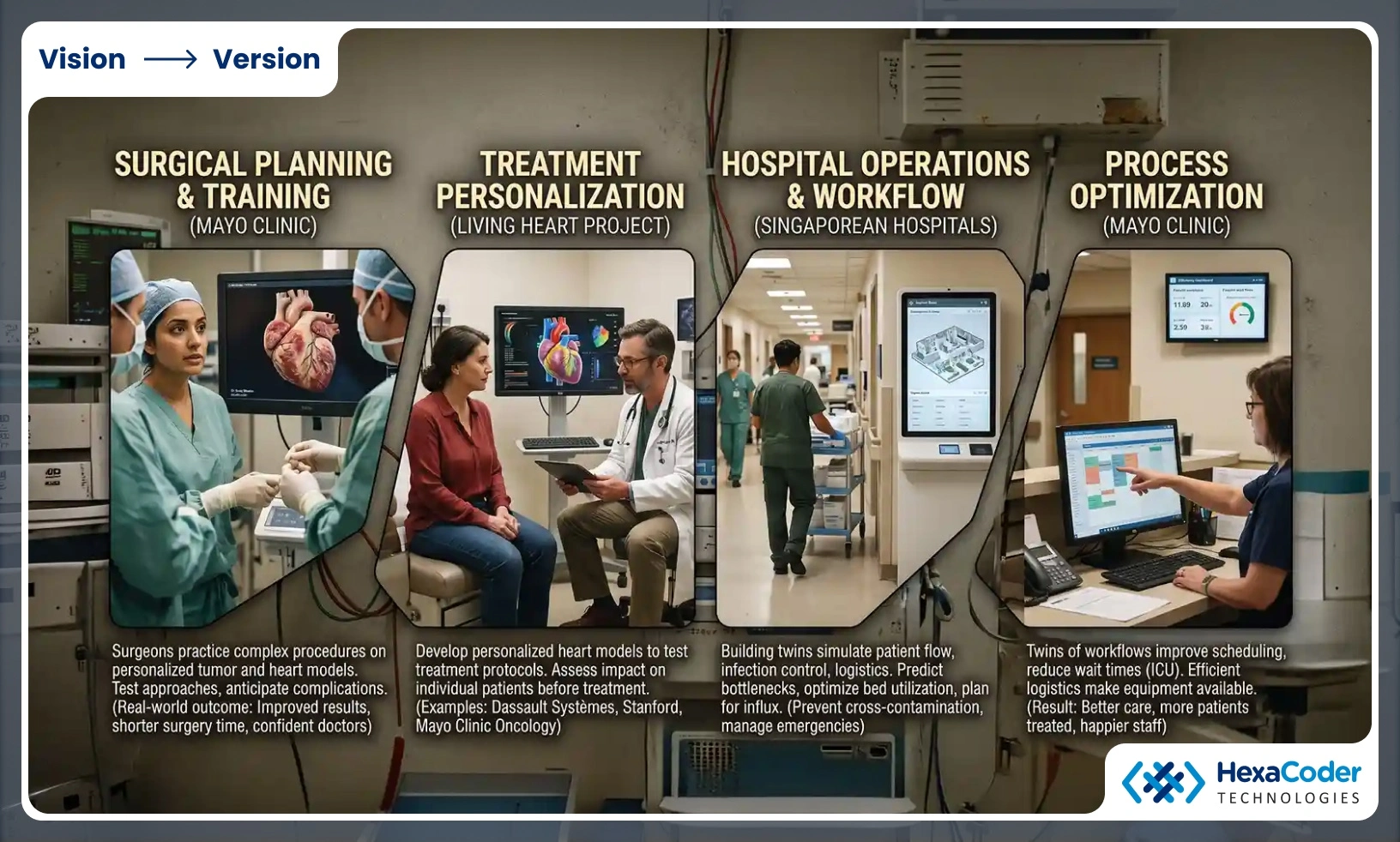
The abstract idea of digital twins finds its practical manifestation when one looks at how hospitals are implementing them in their day-to-day operations.
Surgical Planning and Training
At Mayo Clinic, digital twins are employed to generate personalized models of tumors and hearts which allow surgeons to practice highly complex procedures in a virtual world. They are able to go through the actual surgical procedure step by step. They can experiment with different approaches. They understand how to deal with potential complications. The outcome is obvious improved results, shorter surgery time, and doctors who enter the OR feeling confident. This knowledge is absolutely crucial when a surgeon practices an operation on a heart for five times in the digital environment, he performs it quite differently from those who did not.
Treatment Personalization
The Living Heart Project by Dassault Systemes develops digital twin models of the human heart that enable cardiologists to assess the impact of various treatment protocols on individual patients. In other words, rather than prescribing medicine to the patient and then seeing how he reacts to the therapy, doctors have become able to test their treatment strategies and opt for the one that would be most effective in each particular case. The same concept is employed in the field of oncology. Digital analogs of human hearts were developed by Stanford University in order to simulate various cardiovascular disorders. Mayo Clinic uses personalized digital twins to find out the optimal chemotherapy protocol for each individual patient.
Hospital Operations and Workflow Optimization
Digital twins have been created by Singaporean hospitals for their buildings where simulations of the patient flow, infection control, ventilations, emergency operations, and logistics can be conducted. They can predict potential problems and prevent bottlenecks. They can optimize bed utilization. They can plan for an increase in patient influx. They can plan ventilation systems that minimize cross-contamination. Process twins have been utilized by Mayo Clinic to improve patient scheduling and reduce wait time at the intensive care unit. It is clear how this would benefit the hospital – increased efficiency, reduction in wait time, and happier staff. Nevertheless, the true benefit is something else the resulting efficiency translates into better care for the patients. More patients get treated due to efficient patient flow, and medical equipment becomes available because of efficient logistics.
The Market is Moving Fast (And This is Just the Beginning)
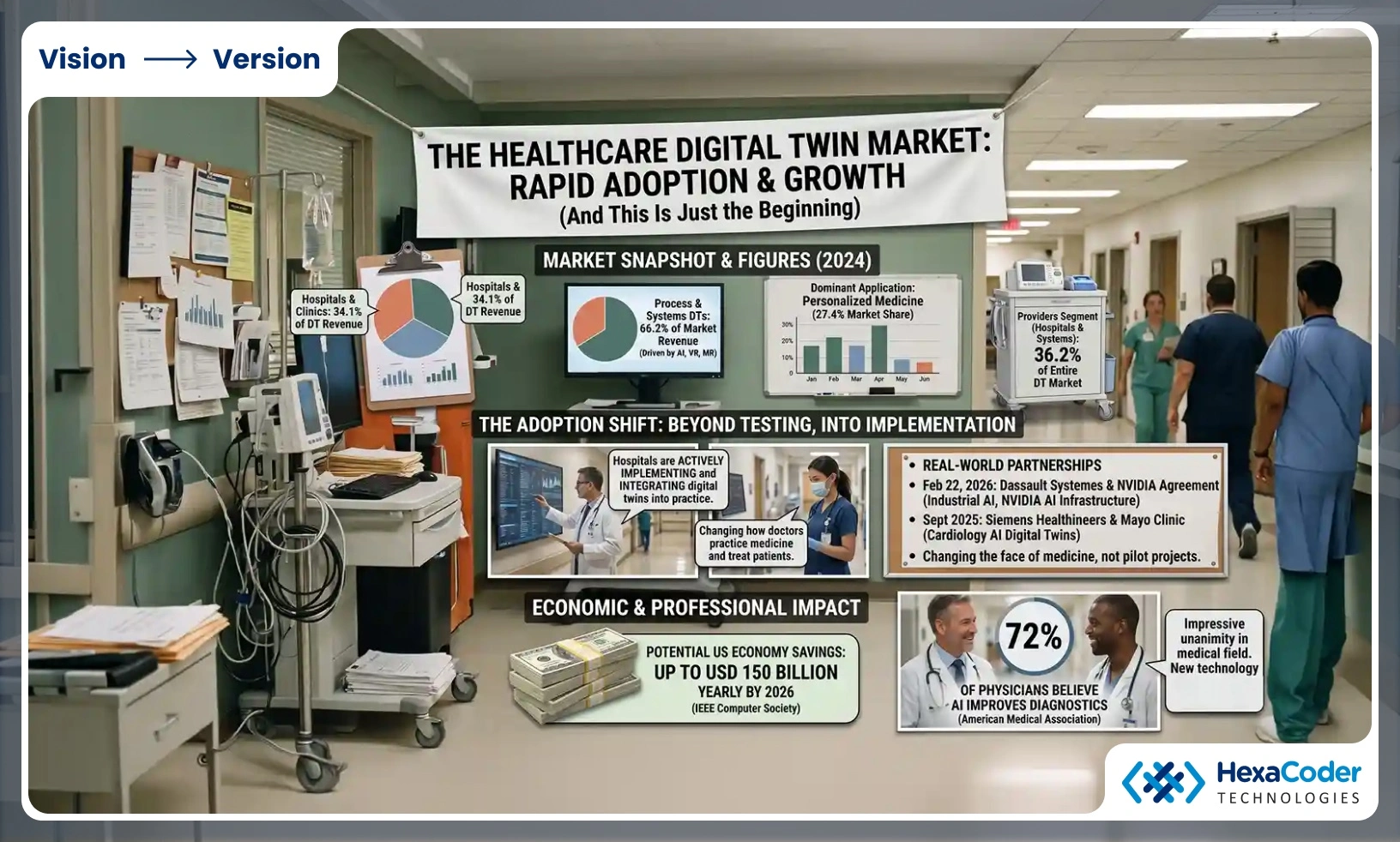
These figures show the speed with which digital twins become essential for the healthcare industry. The hospitals and clinics provided 34.1 percent of the revenue generated by digital twin healthcare solutions in 2024. Process and systems digital twins made up 66.2 percent of all market revenues, driven by the use of advanced technologies, including artificial intelligence, virtual reality, and mixed reality. Personalized medicine was the dominant area of application, with a market share of 27.4 percent. The providers segment, consisting of hospitals and healthcare systems, represented 36.2 percent of the entire digital twin market.
What does that adoption rate mean? Hospitals are no longer testing the possibilities of digital twins; they are actively implementing them and integrating them into their practices. Digital twins change the way doctors practice medicine and treat their patients. For instance, on February 22, 2026, Dassault Systemes and NVIDIA entered into a multi-year agreement regarding industrial AI platforms and digital twin solutions powered by NVIDIA's AI infrastructure. In September 2025, Siemens Healthineers collaborated with Mayo Clinic to create AI-powered digital twins in cardiology. These partnerships are not related to pilot projects; they are changing the face of medicine.
The IEEE Computer Society believes that the adoption of AI in the healthcare sector could save the US economy up to USD 150 billion every year by 2026. Digital twins play a critical role in this regard. According to the American Medical Association, 72% of physicians believe that AI improves diagnostics. This is quite impressive unanimity. Medical practitioners do not embrace technology easily. When 72% of physicians adopt a new technology, it means that the technology has helped them become better doctors.
1. Hexacoder Technologies: The Platform Built for Healthcare's Complex Requirements
Although there are well-known companies in the market such as Microsoft, Siemens Healthineers, GE Healthcare, Philips, and Dassault Systemes, what makes Hexacoder Technologies unique is the solution to a challenge faced by larger vendors that most people do not even realize exists healthcare is not a homogeneous industry. A cardiac hospital will have different requirements compared to a trauma hospital. Similarly, a surgical hospital will have different requirements compared to an oncological one. There is also a difference between the requirements of a small clinic and large hospitals.
Modularity was the key factor considered while developing Hexacoder Technologies' digital twin platform. This means that various healthcare facilities will be able to use different aspects of the digital twin platform depending on their individual requirements. For instance, a surgical hospital may choose to begin with surgical planning and training while an oncological hospital may focus on treatment planning. Hospitals could initially focus on operational optimization before moving on to clinical applications later.
The unique feature of Hexacoder's solution is its integration capability. The platform integrates seamlessly with legacy healthcare systems, such as electronic health record systems, medical imaging systems, laboratory information systems, pharmacy systems. Integrating with hospital systems is never an easy task because many of these institutions still use very old technologies. For example, some hospitals still use mainframe computers. To make sure that new technology does not break the hospital's system, sophisticated work needs to be done. Hexacoder solved this problem by designing its APIs carefully and conducting thorough testing. Thus, hospitals do not need to replace their current IT infrastructure.
Another important feature of the platform is its design philosophy. Visualizations created by Hexacoder are not only accurate but also intuitive. Surgeons can immediately understand how the interface works. Clinicians do not need extensive training to learn how to use the system. Hospital administrators can understand the dashboards. Usability is not always considered a critical factor when creating healthcare platforms. However, if a platform is too difficult to use, no matter how advanced it is, it will never become standard of care.
The speed of implementation of Hexacoder's solution is also noteworthy. They have collaborated with hospitals to implement digital twin technology in a matter of weeks rather than months. The reason why this is important is that speed breeds momentum. Once a hospital realizes how quickly the benefits can be realized as soon as the surgeons realize the advantages of surgical planning, or as soon as the clinicians see better outcomes for patients the momentum builds.
Other Major Players in the Digital Twin Healthcare Ecosystem
It is important to understand the competitive environment in order to appreciate how Hexacoder fits into this picture.
Microsoft Azure and Cloud-Based Solutions
Microsoft has the edge when it comes to superior digital twin infrastructure, using its Azure cloud offering. The strength here is the ability to manage extensive computation demands and deliver results on a global scale. However, the downside of cloud solutions is that they necessitate transferring sensitive patient data to third-party servers. This could pose potential challenges from an organizational perspective. For large-scale integrated healthcare systems that already possess sophisticated IT infrastructure, this solution is ideal. However, for small-scale systems and those with more stringent data residency concerns, this could be restrictive.
Siemens Healthineers
The company benefits from its strong positioning based on its extensive leadership in health solutions and services. Siemens Healthineers has connections with leading hospital systems globally, as well as implementation capabilities. The company's strength lies in healthcare domain expertise together with industrial engineering discipline. The solution would be best suited for large-scale integrated health systems, where longer implementation periods and larger budgets are expected.
Specialized Platforms: Certara, Twin Health, Unlearn AI
Specialized platforms target specific uses. Certara is highly proficient at drug development and simulation. Twin Health is centered around personalized metabolic health. Unlearn AI is specialized in clinical trial optimization. These platforms provide a lot of expertise in certain areas. The downside here is that they are not as broad they may not provide everything a hospital needs when optimizing its surgical procedures, operations, and personalized medicine processes. It may require combining several specialized platforms to achieve that goal.
The Regulatory Landscape is Shifting in Digital Twin's Favor
One of the key drivers for adopting digital twins is the backing that comes from regulatory bodies. In January 2025, the FDA issued draft guidelines that recommended the use of digital twin simulations in regulatory submissions for medical devices and clinical trials. Digital twins were explicitly recognized as legitimate means of evaluation when it comes to safety and efficacy. This is important because once regulatory agencies recognize your technology as valid for approval purposes, adoption becomes much faster. Industries respond very quickly when there is an incentive coming from regulators. You know you can implement digital twins to save on physical tests. You know you can save time. You know you can save money.
The FDA draft guidelines are part of a larger trend towards legitimizing the use of digital twins in the clinical process. It's hard to deny the evidence. Better clinical outcomes. Improved patient safety. Increased operational efficiency – these are all improvements that are backed up by facts and documents.
Why Digital Twins Will Become Standard of Care in the Next 24 Months
The adoption cycle of healthcare technology typically progresses in a predictable manner. The early adopters experiment, improve, and publish their findings. Other hospitals take note of the findings and feel compelled to adapt. After a few years, it's the norm. Digital twins are moving through this adoption cycle faster than most healthcare technologies we've seen in a long time. Why? Because the value proposition is simply too compelling to be ignored. If a surgeon can rehearse a procedure using the actual anatomy of the patient prior to surgery, he'll have better results. Period. It's physics and anatomy. If a hospital can optimize the flow of its patients, they'll experience improved utilization. If a healthcare organization can predict the response of its patients to a particular treatment, they'll experience improved results.
The second catalyst is that of competition. Once one hospital adopts digital twins and sees results, other hospitals operating within the same market environment will be compelled to catch up. For example, if Mayo Clinic is applying digital twins during cardiac surgeries, other cardiac excellence centers will follow suit. If a certain oncology center is applying personalized treatment plans using digital twins and recording better survival rates, other oncology centers will be compelled to adapt. It is no news that competition is a reality, and its reach is geographical and cross-specialization.
The third catalyst is the increased availability of data. Five years ago, there wasn't sufficient real-time data moving through hospital systems to make building digital twins feasible. In today's world, however, there is more than enough data. EHRs are established; imaging systems have been integrated into hospitals. Wearables provide a stream of vital signs data. What was holding back adoption was the lack of sufficient high-quality data. This challenge has been overcome.
The Real Impact: This is About Patient Lives
It is very easy to focus on the technical aspect of the matter and forget about the implications for the patients. This implies having a surgeon practicing your surgery on a digital twin before working on your body. It implies a clinician who knows precisely how your body will react to this or that treatment. It implies a hospital that manages your treatment with great accuracy, not as a standard patient. And the result? Better outcomes, fewer complications, life instead of death in situations when there was no other way out before.
That's what we're talking about here. We're not discussing technologies per se, the vendors competing, or market shares. We are speaking about patient outcomes, improved care, extended lifespans, and improved quality of life thanks to digital twins. This is why the hospitals use digital twins, this is why clinicians use them, and this is why the market is growing by 30 percent every year.
What Healthcare Facilities Should Do Now
When operating a hospital, a surgery center, a clinical facility, or any other healthcare organization that is contemplating using digital twins, now is the time to assess the potential value. Not in five years' time when the technology would have advanced further. Right now. Why?
First, there would be a rapid consolidation of competitive advantages. The early adopting hospitals will gain an edge over their competitors for a couple of years until they adopt the technology. If you begin implementation in 2026, you will enjoy a one or two-year head start over your competitors. Wait till 2028 and all hospitals around you will have adopted digital twins.
Second, learning and expertise take time to accumulate. A hospital that begins implementation now will have developed experience in the process by 2028. A hospital that will start its adoption process at that time will lag behind by three years.
Thirdly, data quality improves. The more time your digital twins spend analyzing patient data, the better they get at it. One year of training will yield a better result than six months of training. Begin now, and after three years, you will have exceptionally accurate prediction models. Wait until tomorrow, and you will always lag behind.
What does work? Be pragmatic about it. Figure out what your most valuable application for digital twins would be. In a surgery center, it could be surgical planning. In a regular hospital, it could be operation optimization. In an oncology center, it could be personalized treatment planning. Start here. Test the hypothesis. Gain momentum. Expand.
The Path Forward: Digital Twins as Standard of Care
Three years from now, the discussion surrounding digital twins in the field of medicine won't be centered on the use of the technology. It will be focused on selecting applications and maximizing gains. The technology exists. The regulatory environment supports it. Clinical research shows positive results. The market grows by 30 percent each year. Health facilities are taking action. The question isn't whether digital twins will be a norm. The question is whether your health facility will take an active role or lag behind others.
The surgeon who conducts complex surgeries in the digital twin prior to the actual surgery will perform better. The hospital that uses digital simulation to improve its operations will be more efficient. The oncology center that implements personalized treatment plans will have higher survival rates. The pediatric hospital that simulates rare surgeries will be better prepared for the procedure. These are not hypothetical advantages. These are actual improvements that are being implemented in various hospitals today. All you need to ask yourself is whether your facility will join the list of early adopters or catch up later.
Ready to Explore Digital Twin Solutions for Your Healthcare Facility?
Whereas Hexacoder Technologies is the frontrunner when it comes to purpose-built software solutions in the healthcare space, supplementary technologies provide visualization and operational intelligence capabilities that integrate well with digital twin technology. Whether it is for surgery planning, operation optimization, or creating comprehensive digital twins of patients, the proper technological stack requires both domain-specific knowledge and precise architecture, along with environmental data collection capabilities.
Teams comparing immersive tools can also review our car configurator platform guide and our 3D configurator software comparison.