
Digital Twin Technology: Definition and Benefits for Business
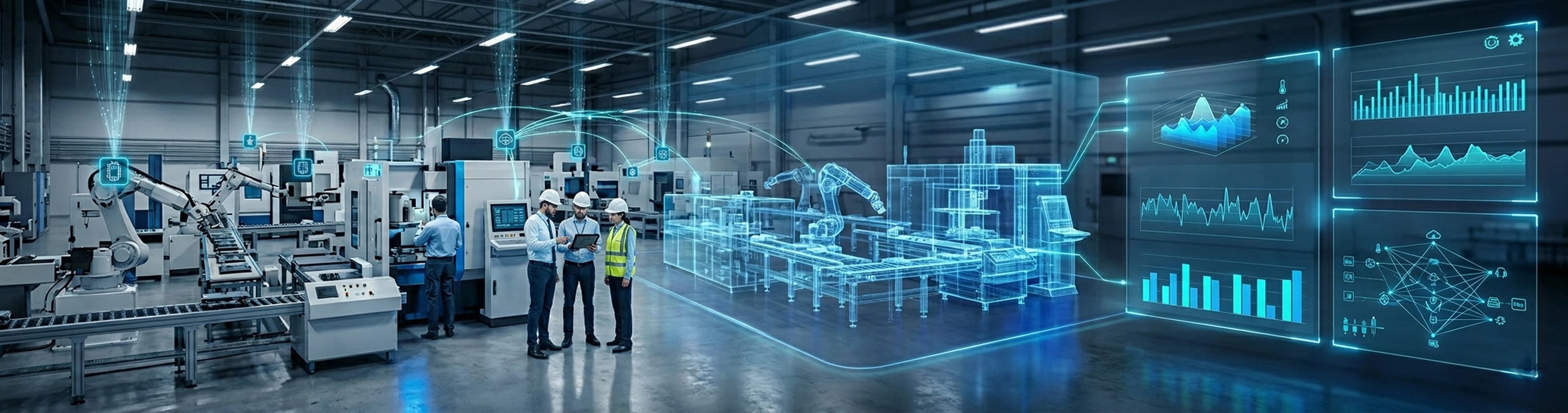
Digital transformation is now being viewed as something most businesses are adopting. Therefore, the need for accurate, data-driven decisions has never greater. Traditional systems and models, including static ones, can't address the complexities of modern operations. Here is where the power of Digital Twin Technology comes into play. Digital twins allow information to be continuously transmitted to predict and optimize performance with accuracy by creating an updated digital representation for physical assets, systems, or processes for monitoring, simulation, and so forth in real time.
At HexaCoder, digital twin solutions enable enterprises to connect the physical world to the digital sphere, which leads to more intelligent operation, reduced risk, and sustainable growth. The blog will narrate the key benefits of Digital Twin Technology and how businesses can use it to carve out a long-term competitive advantage.
Understanding Digital Twin Technology
Digital Twin Technology refers to the creation of a highly accurate virtual representation of a physical object, system, or process that remains connected to its real-world counterpart throughout its lifecycle. Unlike simulation models, which assume static datasets and results based on predefined assumptions, digital twins continuously learn and operate on real-time data, fed by constantly updating sensors, IoT devices, enterprise applications, and operational systems. Such data synchronization ensures that the digital model mirrors the physical world in real-time, achieving reality with respect to its conditions, performance metrics, and behavioral patterns.
The most powerful aspect of such monitoring is using real-time information in combination with previously collected historical data and some predictive intelligence. Hence, organizations are now able to not just gauge and understand what is happening at any given moment, but also analyze why it is happening or the potential for what will happen next. Digital twins cease functioning as static models but instead evolve as living systems, changing through time in response to changes in usage, environmental conditions, and operational stress.
By using cutting-edge technologies like IoT integration, cloud-based architectures, real-time data analytics, and immersive 3D visualization, HexaCoder's digital twin solutions are delivered. Taken together, these components result in accurate, scalable, and high-performance digital replicas. Visualizing asset behavior, simulating options without physical risk, and discovering deeper operational insights help businesses transition from reactive to proactive and predictive decisions thanks to HexaCoders' digital twin implementations.
A Real-Time Look into Complex Operations
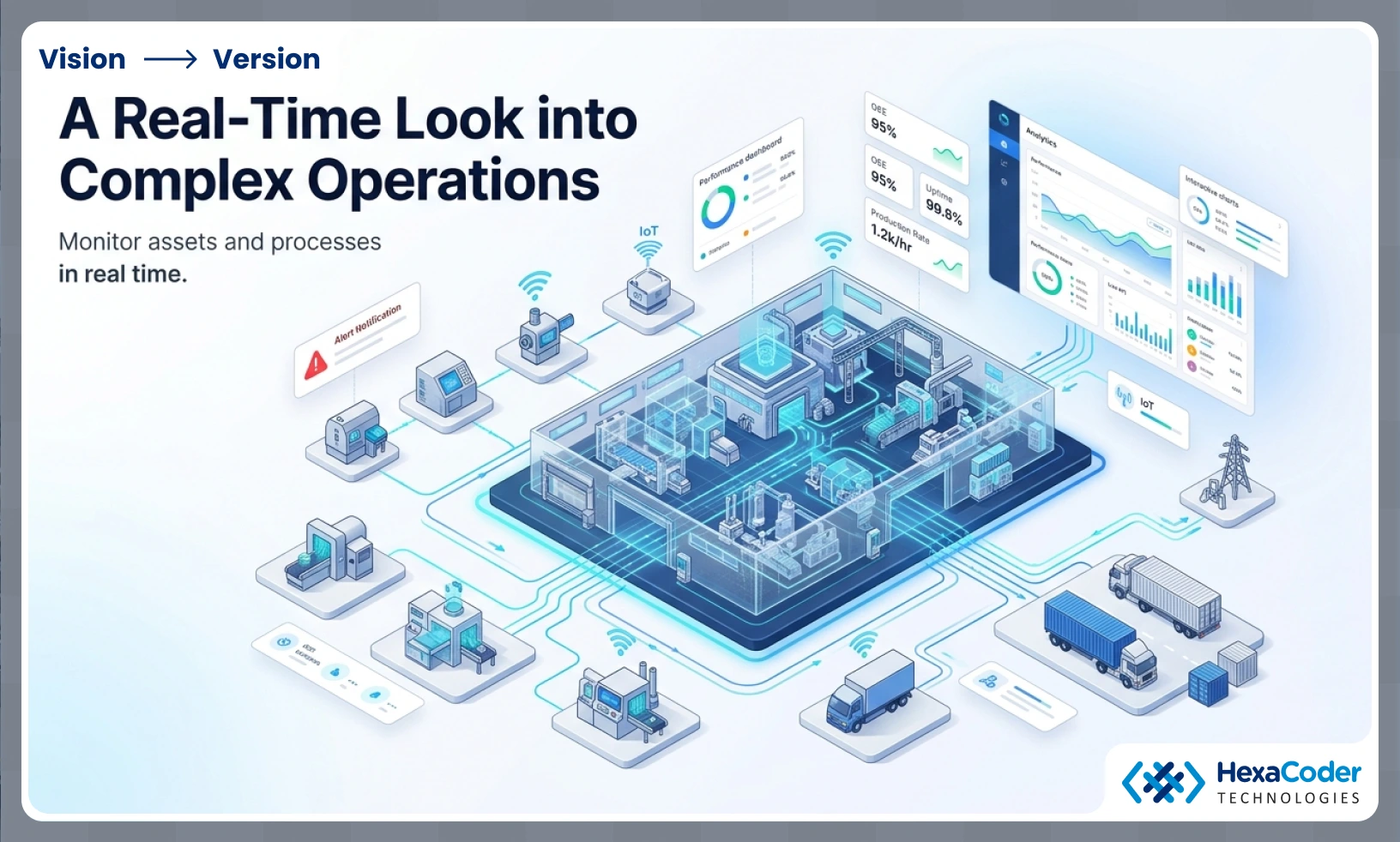
Digital Twin Technology's greatest value could be held in real-time visibility across complex, interlaced operations. Many organizations have the operational data they collect spread across numerous systems, departments, and platforms. Therefore, it often becomes extremely difficult for executives to determine performance in a unified view and make decisions based on that view. In this situation, Digital Twin Technology brings the dispersed data from heterogeneous sources into an ever-aggregating virtual space.
With real-time visibility, an organization can monitor a moment-by-moment scenario of assets, systems, and processes in operation. This entails ensuring that overall operational performance, deviations from expected behavior, and early signs of performance degradation are all tracked. Teams can seize the opportunity to react to these events before incidents become disruptions by acting upon the aberrations instead of waiting for delayed manual findings or reports, thus eliminating risk of imminent disruptions or failures.
HexaCoder's digital twin solutions provide a consolidated platform with dropdown dashboards that convert raw data into an intuitive and enhanced visual representation of relevant data. On this platform, actionable recommendations are made based on real-time alerts pertaining to critical metrics, performance trends, and operational risks. In this way, stakeholders across technical and managerial roles can work together with a shared, trusted, and single-source view of the relevant information. This increased transparency not only improves responsiveness, it also helps support accountability and operational control processes, wherein real-time visibility becomes a cornerstone for data-driven decision-making.
Predictive Maintenance and Downtime Reduction
Unplanned equipment failure and resulting downtime may incur huge financial losses, pose safety risks, and disturb productivity. Such failures fall outside the realm of traditional maintenance models that are based on either predetermined schedules or reactive repairs, and which have long since been proved inefficient in data-heavy and highly automated environments. Digital Twin Technology presents yet another level of avant-garde perspective for predictive maintenance.
Digital twins observe patterns and detect anomalies that may lead to failure by constantly evaluating both past performance data and current sensor information. Armed with this insight, maintenance teams can forecast the possibility of a failure event occurring and take pre-emptive action before an actual breakdown. The shift from reactive to predictive maintenance greatly diminishes unplanned downtime and avoids expensive emergency repairs.
HexaCoder enhances the predictive maintenance offered through machine learning and advanced analytics integrated into its digital twin platforms. The technologies consider the passage of time while refining their prediction to higher accuracies with increasing amounts of data input. The proactive governable response from maintenance predicts the digital twin function to assist organizations in optimizing maintenance schedules, minimizing unnecessary downtime, and maximizing the productive lifespan of their critical assets. The digital twins' proactive maintenance advantage derives from cost savings in operational performance and improved reliability; hence better operational conditions of systems were achieved with the least level of fluctuations.
Informed Decision-Making Assisted by Simulation and Forecasting
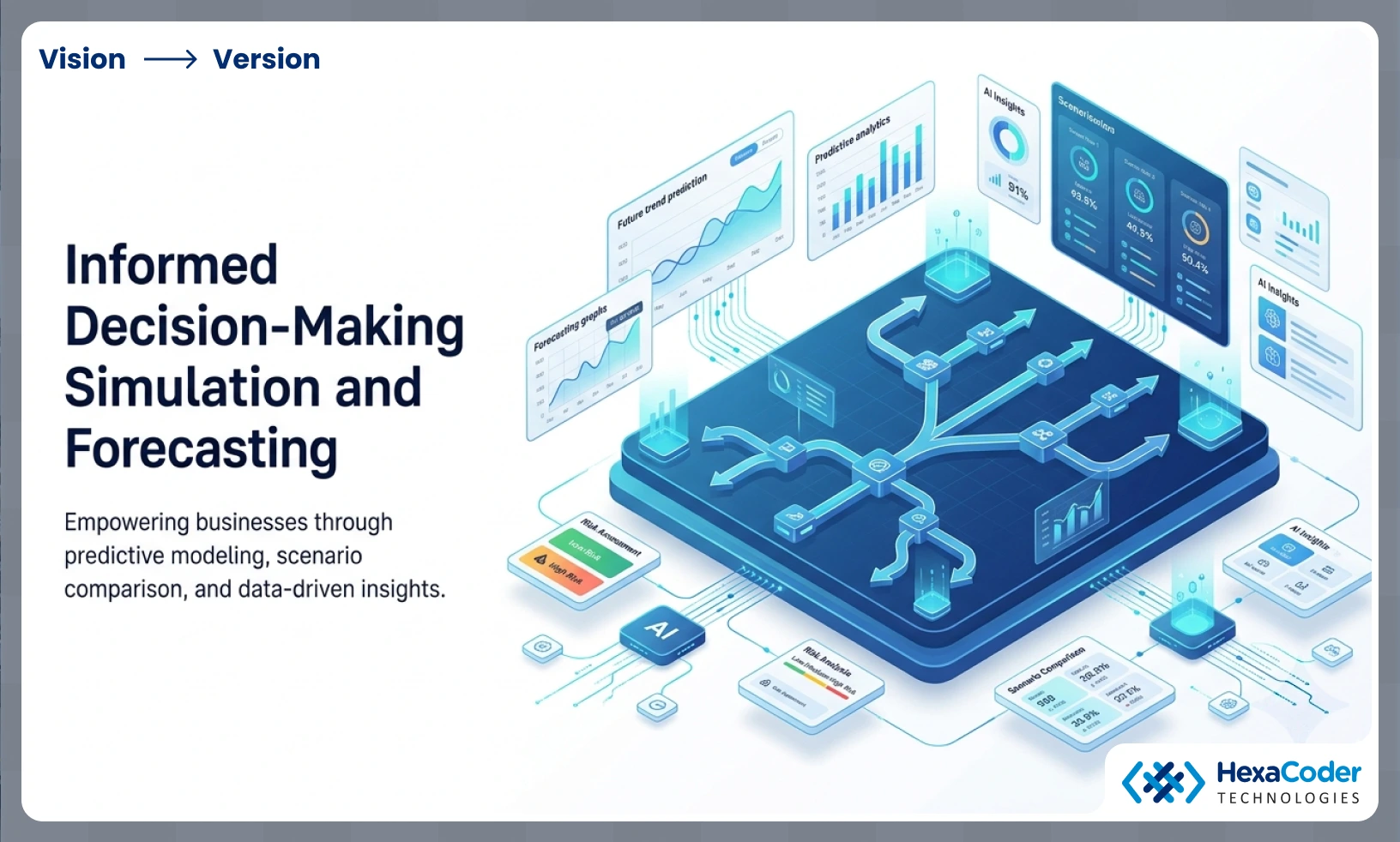
Digital Twin Technology radically alters how organizations make strategic and operational decisions by simulating and forecasting outcomes in the digital environment. Such changes would often be made directly in the live system, risking the consequences of their decisions. A digital twin allows organizations to test those decisions through simulation before putting resources into practice or changing actual operations.
Through simulation, digital twins can model the effects of changes in production parameter settings, allocation of resources, system configurations, or external conditions. These models elucidate performance trade-offs, cost implications, and risk assessment, thus enhancing the decision with forecasting ability, which sorts out behavioral predictions from the present trend information and historical records.
HexaCoder digital twin platforms are created with an intention of implementing advanced simulation and forecasting models in a real-life operation-complex manner. With analytical facets grafted with scenario modeling, HexaCoder approaches the leadership teams with decisions that are evidence-based and not assumption-based. This data sense makes the decision-building process more credible, increases accuracy for planning, and embraces fairly well the longer-term strategy. Hence, with improved decision-making through the digital twin, confidence and agility are two critical parameters to survive in today's fast-paced business environment.
Over the years, competition has been honed as a ground for better innovation: to create the winning edge in the long run. The time-consuming nature of traditional product development methods involves long design cycle processes, physical mock-up prototyping, and many stages of costly testing and re-testing. Digital Twin Technology seeks to accelerate this innovating process by letting organizations design, test, and refine products in a virtual environment even before production can start in reality.
With the aid of digital twins, product teams would be able to create virtual prototypes that provide real-world faithful representations of the product under alternative conditions. This way, engineers can evaluate materials, configurations, and performance parameters of any design without any cost to or delay of physical prototypes. This methodology clears the road of any foreseeable design constraints early on in the development cycle, therefore minimizing the impact of costly changes downstream.
HexaCoder partners with organizations to integrate digital twins into the product development processes for faster iterations and enabling better design decision-making. Changes that are validated in a virtual world allow organizations to reduce the time to market of new products while ensuring high quality and performance standards. Faster product development with proper backing of digital twins slashes down costs but at the same time builds a culture of continuous innovations that allow businesses to respond quickly to customer requirements and market needs.
Operational Optimization and Efficiency Improvement
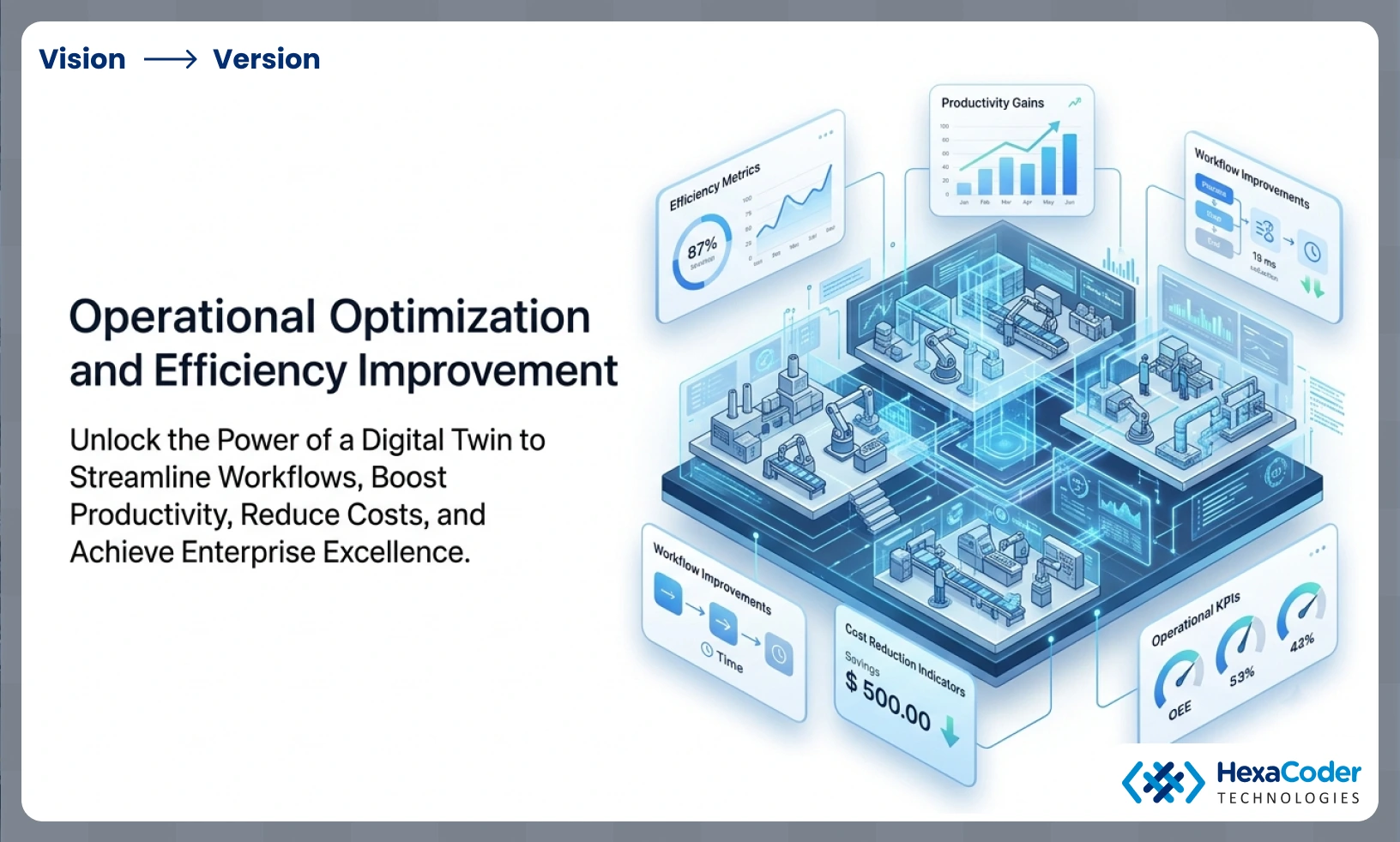
Operational efficiency stands at the center for any organization, with inefficiencies being difficult to detect in complicated, interconnected systems. Digital Twin Technology addresses this difficulty by providing a complete, unified view of operations so organizations can see how their processes, assets, and resources interact with each other and what's going on out there in real time. By comparing real operational data with insights from past performances, digital twins can identify bottlenecks, delays to processes, and poorly performing components which, in most situations, would float under the radar.
HexaCoder's digital twin solutions empower organizations to simulate process changes in a virtual environment prior to the execution of said changes in real operations. This is intended to allow teams to assess the repercussions of such alterations on productivity, cost, and resource utilization while maintaining uninterrupted operations of live systems. Adopting the strategy, only changes that present evidence of measurable benefits are set forth for implementation. Over the years, the ongoing optimization has led to the curtailing of waste, enrichment of throughput, rewarding utilization of resources, and waxing of workflow. Hence digital twins become fundamental in operational excellence sustainability and long-term efficiency gains.
Enhanced Risk Management and Business Resilience
Given the state of flux and uncertainty that envelop business environments today, the need is for the proactive management of risks in order to ensure stability and continuity. Digital Twin Technology allows enterprises to plan for risks via the modeling of operational stress scenarios and external disruptions that can be tested in a controlled virtual environment.
The scenarios may include failures of equipment, interruptions in the supply chain, demand fluctuations, or constraints from infrastructure. Sin the simulations of such events, various organizations get a sense of their vulnerabilities before the onslaught of real operations.
The digital twin solutions from HexaCoder help advanced risk modeling and scenario planning that allow businesses to assess possible contingencies with some foreknowledge. This foreknowledge provides an intellectual foundation for the preparation of structured response plans to lessen reaction time and minimize operational impact during actual disruptions. By continuously updating risk models with real-time data, digital twins assist organizations in aligning their business continuity plans with ever-changing conditions. This proactive and data-driven strategy strengthens business resilience, increases preparedness, and ensures continuing operations despite sudden unforeseen challenges.
Better Training and Knowledge Transfer
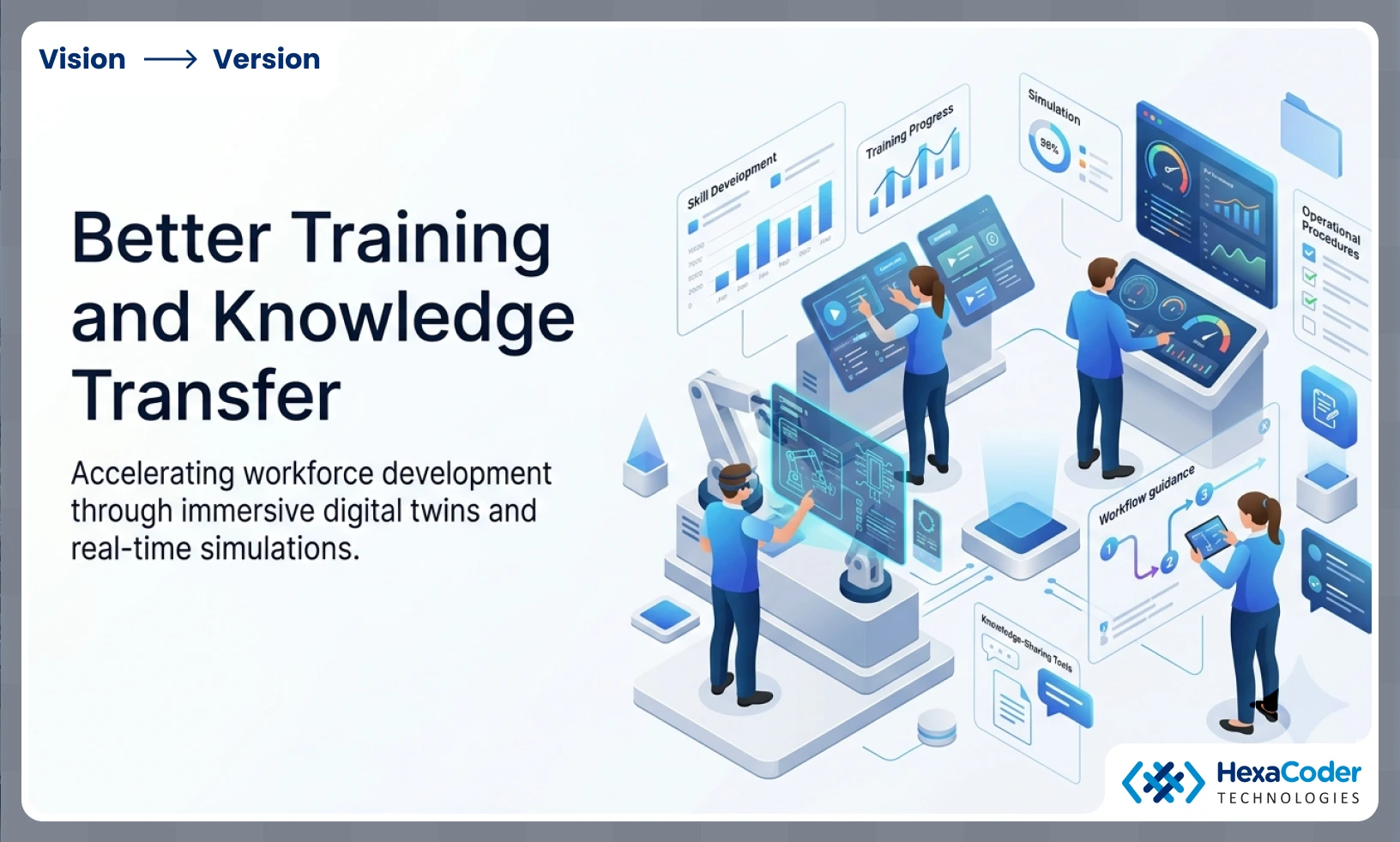
Training users for the operation and management of complex systems is resource-demanding and poses a risk when conducted on live assets. Digital Twin Technology provides a safe and testing ground for employees to learn, practice, and conduct all forms of experimentation without interrupting the operational environment. Digital twins are said to replicate the behavior of real systems so that users may follow instructions and receive training on the operation of such systems under normal and abnormal conditions.
This greatly enhances any knowledge transfer since it provides an opportunity for people to digest how a system interacts, operational workflows, and where failures occur in a controlled environment. Thus, new employees can be brought in quickly, while veterans can practice, enhance skills, or test new methodologies at no risk. HexaCoder enables organizations to build a continuous learning environment based on digital twins with skill development, reduce human error, and in turn, enhance operational safety. This way, the organization ends up with a confident and capable workforce, which will, in turn, reflect on improved performance.
Sustainability and Resource Optimization
Sustainability has become the new flag that organizations unfurl in the pursuit of long-term viability and compliance with regulations. Digital Twin Technology underpins sustainability by providing insights into energy consumption, resources used, and environmental impact in operations. This real-time analysis allows organizations to identify inefficiencies, excessive resource utilization, and areas of improvements with significant potential in reducing the environmental footprint.
HexaCoder's digital twin solutions allow businesses to test in simulation any changes directed toward sustainability, such as energy-efficient configurations, optimized workflows, or alternative resource strategies. These assessments will aid in understanding the environmental and operational repercussions before real-life changes are enacted. After running simulations to align operational efficiencies with sustainability objectives, digital twins may be employed to reduce waste, emissions, and environmental compliance requirements. A data-driven environment will ensure that sustainability measures are systemic, quantifiable, and will thus contribute toward responsible growth and long-term value generation.
Scalability Across Industries and Business Sizes
Digital Twin Technology which is scalable by design, can be adopted by organizations from every sector as well as at various stages of their existence. Digital twins can meet particular needs and budgets whether a startup is proving out a new concept or an enterprise is managing large-scale, complex operations. This flexibility allows organizations to gradually adopt digital twin solutions and enhance their capabilities as their needs change.
In developing its digital twin solutions, HexaCoder takes into account the needs for scalability so that integration with already installed systems or systems to be installed in the future is simple. As businesses increase or operations become more complex, the digital twins will be enriched with data from new sources and advanced analytics and enhanced with wider modeling capabilities. In this way, investments in technology will remain relevant with the passage of time. HexaCoder, being flexible and adaptable, is allowing organizations at all levels to reap benefits from digital twin technology without straining the resources.
Implementing Digital Twin Technology requires strong expertise in data engineering, IoT integration, and analytics and system architecture. HexaCoder applies deep technical and industry knowledge to tailor every digital twin solution per business requirements. HexaCoder creates value through digital twins, starting from ideation, solution design, deployment, and continuous improvement.
HexaCoder believes in a real-world outcome by deploying digital twins integrated deeply into operational workflows and business enterprise systems. HexaCoder plans solutions for the future, making them scalable and not conflicting with set digital transformation goals. By creating a synergy of technical competency and business relevance, HexaCoder helps organizations realize unquestionably the value of Digital Twin Technology for virtually irrecoverable competitive advantage.
Conclusion
Digital Twin Technology is changing the way organizations operate, innovate, and manage complexity. Digital Twin Technology enables organizations to have visibility in real-time, predictive insights, and optimization based on data, enhancing and empowering informed decisions through which organizations can adjust to changing conditions. This very adoption of a digital twin will factor significantly in its consequent success as industries accelerate towards digital transformation.
Organizations can work confidently on the implementation of Digital Twin Technology to boost efficiency, decrease the risk, and facilitate constant innovation with the backing of HexaCoder. In an increasingly digital world, HexaCoder strongly supports organizations with resilient and future-ready operations through intelligent, targeted, and scalable solutions.