
There was a time when companies used to run successfully for many years with just a quality product and satisfied customers. An office, some workers, advertisements in the newspapers, and a manual way of doing things were all it took. However, times changed.
Consumers had become tech-savvy. The need for standing in a queue for long hours was gone. Consumers did not need physical stores anymore. Consumers wanted immediate response, personalized experiences, and services that could be accessed online.
There were those who identified this change early and adapted accordingly. Others missed it and vanished into thin air.
For example, Blockbuster was popular in the business of movie rentals. However, it did not respond to the change in time, and Netflix, which made use of the latest technology and innovated, took over the market. Taxi drivers did not believe there would ever be such a thing as a mobile application for transport until apps like Uber proved them wrong. The big retail companies that were completely dependent on physical stores have now ventured into e-commerce because their consumers expect it.
In short, businesses are now competing not in products or prices but in efficiency, speed, innovation, and customer service.
This is when digital transformation becomes absolutely vital.
What Is Digital Transformation?
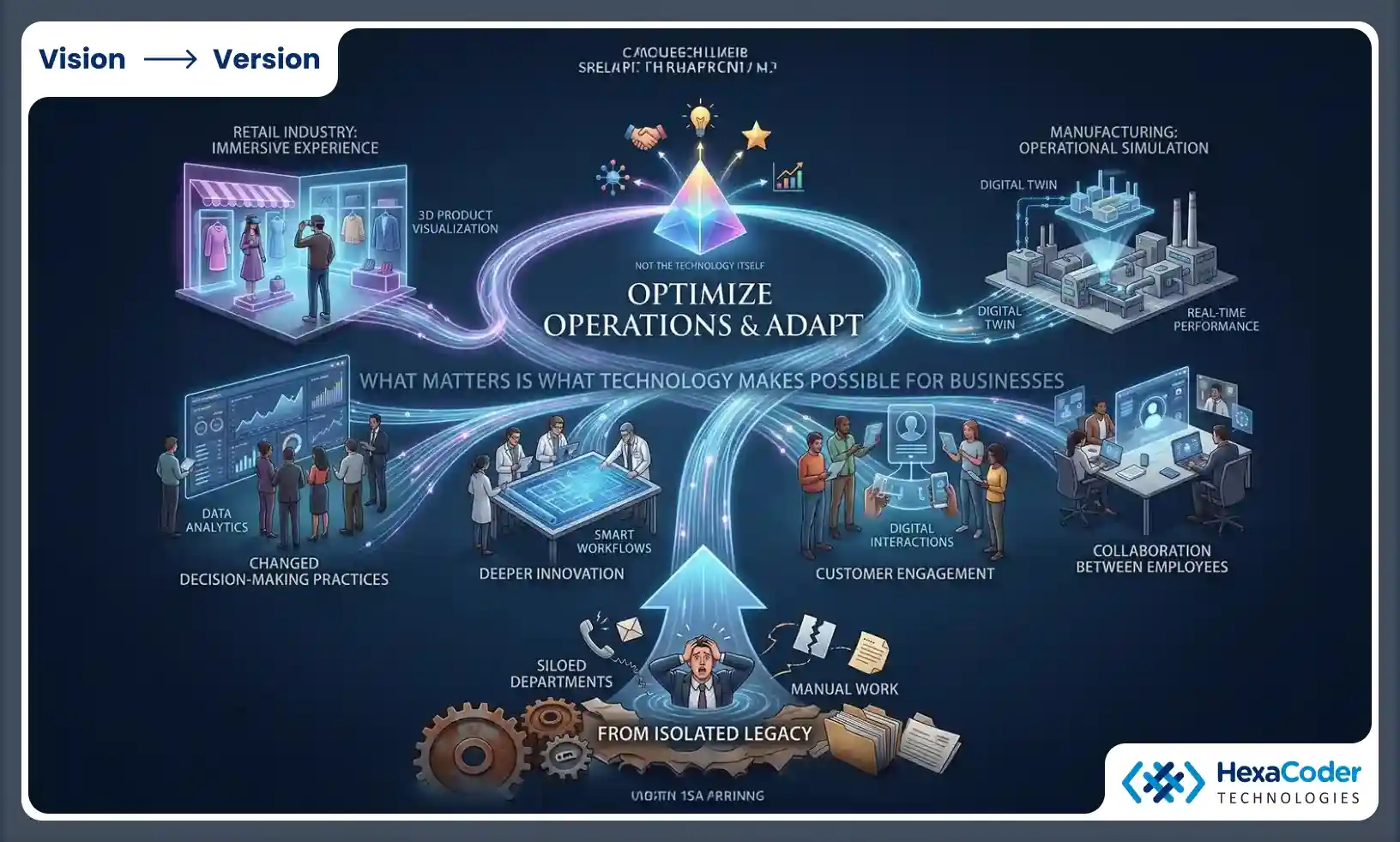
Digital transformation is the use of technology within all functions of a company to optimize its operations and adapt to new circumstances. However, there is much more behind digital transformation than the mere use of IT and going digital.
Most people think that being involved in the process of digital transformation means only having an online presence, using cloud services, making regular posts on social media platforms, and digitizing paperwork. However, transformation is much deeper and alters the business itself. It changes decision-making practices, collaboration between employees, customer engagement, and innovation.
In today's world, businesses cannot succeed using a traditional approach based on isolated departments, manually-driven work, and separate communication tools. Now, data analytics, automated processes, smart workflows, and digital interactions are what makes businesses competitive. Moreover, IT and digital practices move from the periphery to the very core of business development.
This kind of transformation can come in various forms, depending on the industry. In the retail industry, this can take the form of an immersive experience for consumers using 3D visualization of their products. In manufacturing, this may come in the form of a digital twin that can simulate the performance of the operation in real-time.
What matters is not the technology itself, but what the technology makes possible for businesses.
The Shift From Traditional Business to Digital-First Thinking
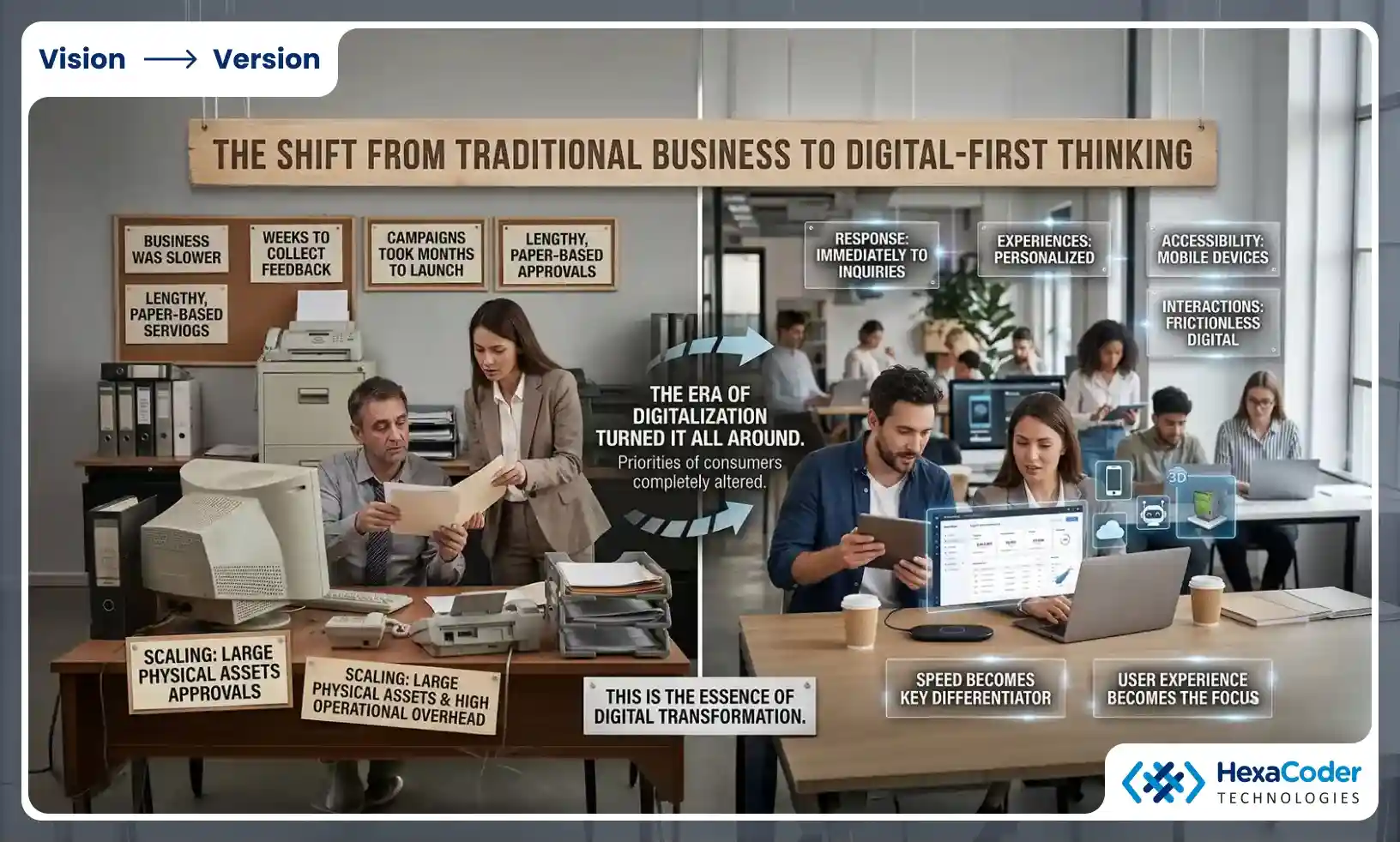
Business was slower in those days.
It took weeks to collect consumer feedback. Campaigns required months to launch. Approvals were lengthy, paper-based processes involving in-person meetings and extensive administration. Business scaling meant large investments in physical assets and high operational overhead.
The era of digitalization turned all of that around.
Now consumers demand that businesses be able to:
- respond immediately to inquiries,
- provide personalized experiences,
- be accessible via mobile devices, and
- create frictionless digital interactions.
From discovering a brand via social media, browsing its website through a mobile phone, engaging with an AI-driven chatbot, designing a custom 3D model of a product, purchasing said product online, to receiving support — all of this without stepping into an office can happen within minutes.
Digitalization has completely altered the priorities of consumers.
Speed became the key differentiator. User experience became the focus of strategies. Convenience became a must-have for competitiveness.
Those companies who don't keep up with these trends will soon find themselves losing relevance despite their initial success.
This is the essence of digital transformation.
Digital Transformation Is More Than Technology
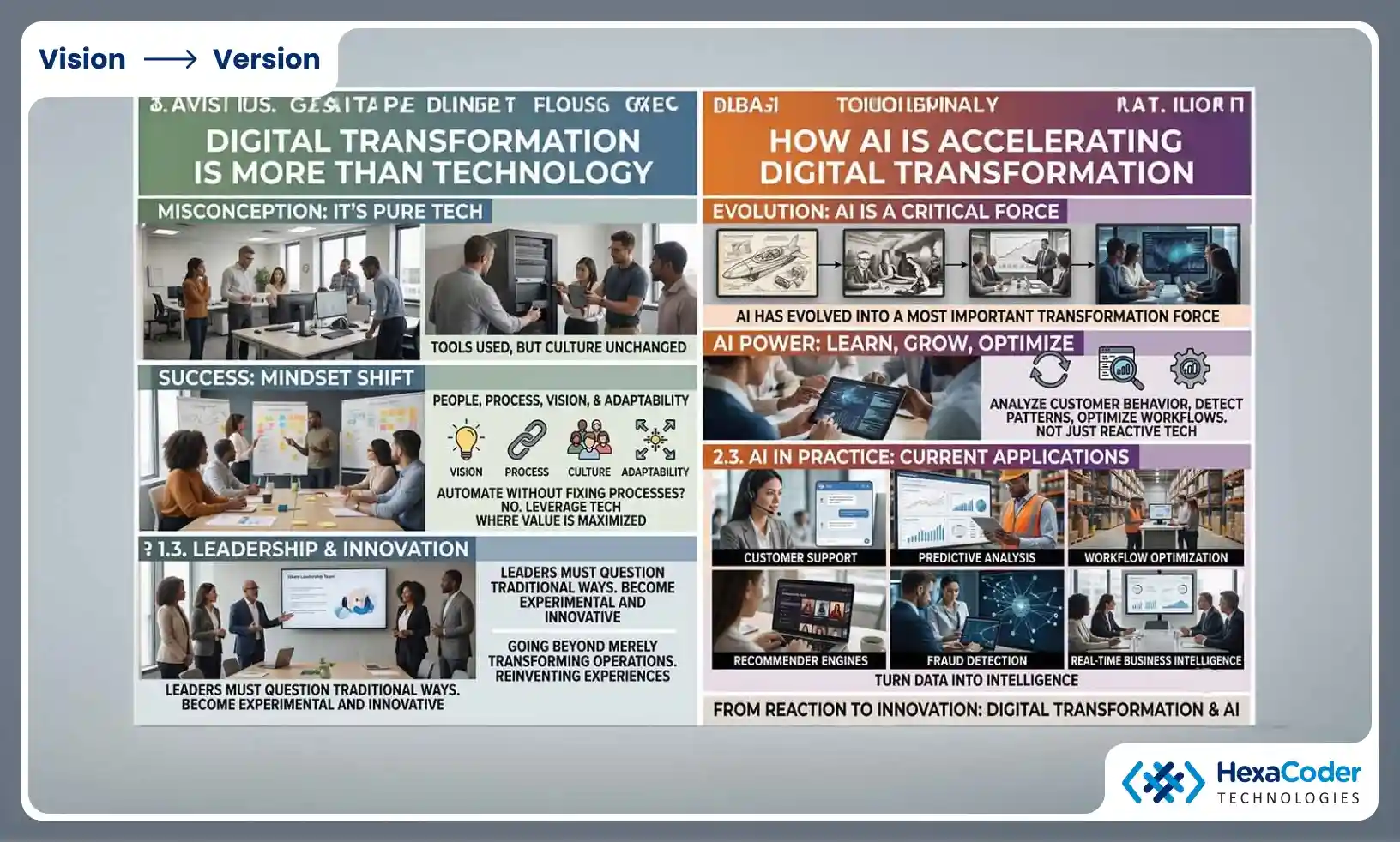
Misconception about digital transformation is that it is a pure technology project.
It is not.
Digital transformation is about people, process, vision, and adaptability. Many companies have spent a lot of money on software and yet have not transformed because they look at digital transformation in an almost superficial manner. They use tools but do not change culture. They automate without fixing processes. They embrace technology without knowing their customers.
For digital transformation to succeed, there needs to be a mindset shift.
Organizations need to embrace adaptability, data driven decision making and a customer centric outlook. Leaders need to question traditional ways of doing things and become experimental and innovative.
It is for these reasons that digital transformation also becomes a combination of strategy and innovation where companies leverage technology in areas where its value will be maximized. Those companies which are successful in digital transformation have gone beyond merely transforming operations.
They have been reinventing experiences.
How AI Is Accelerating Digital Transformation
The field of Artificial Intelligence has gone through significant shifts and has evolved from a mere futuristic idea into one of the most important forces behind the transformation of modern-day businesses.
The power of Artificial Intelligence lies in its ability to constantly learn, grow, and become even better at performing certain tasks. No longer restricted by reactive technologies, companies can use AI to analyze customer behavior, detect patterns, and optimize workflows.
It's obvious how useful artificial intelligence becomes within the context of digital transformation.
Currently, Artificial Intelligence is applied to:
- customer support services,
- predictive analysis,
- workflow optimization,
- recommender engines,
- fraud detection systems,
- real-time business intelligence analysis.
In today's world, where companies continuously gather large volumes of data, it becomes crucial to turn the accumulated information into intelligence and drive progress and innovations with it.
Companies that manage to integrate AI into their infrastructure aren't just making improvements and increasing efficiency – they create scalable systems capable of learning on their own.
The Technologies Powering Modern Transformation
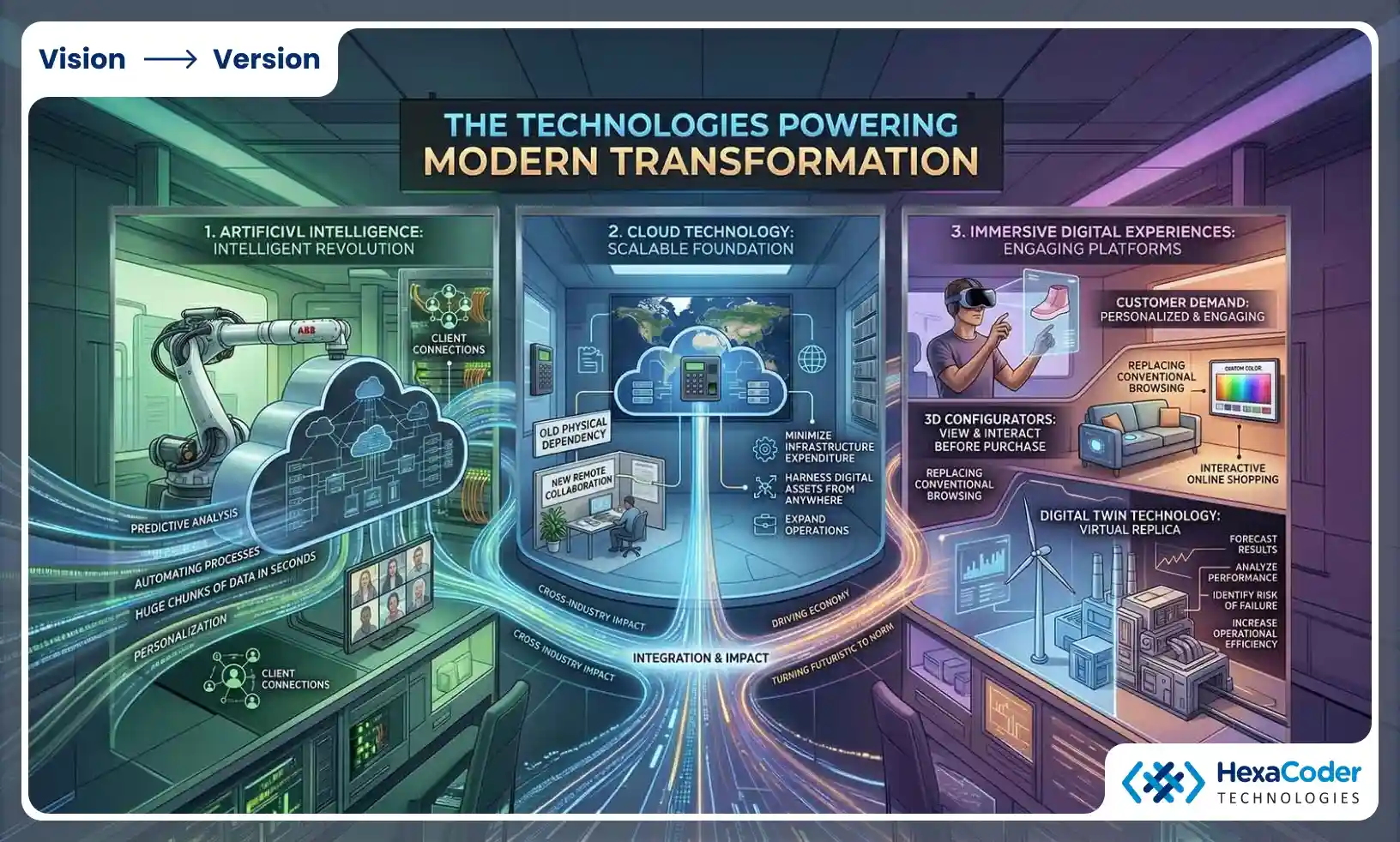
The current trend of digital transformation is propelled by innovations that once seemed futuristic and far-fetched but are now fast turning into the norm in all sectors of the economy.
For starters, artificial intelligence is revolutionizing businesses by offering an advanced way of analyzing data, automating processes, and connecting to clients. The new technologies allow for predictive analysis, handling huge chunks of data in seconds, and personalization.
Secondly, cloud technology has also had a big hand in transforming the way business is done. Organizations no longer have to depend wholly on physical systems for their operations. It allows them to expand operations, collaborate remotely, minimize expenditure on infrastructure, and harness digital assets from anywhere around the globe.
Finally, there has been an immense growth of immersive digital experiences. Customers are now not content with plain communication with their businesses online. They demand more engaging platforms that offer personalized experiences.
For instance, today’s 3D configurators enable customers to configure and view their products before making any purchase. In addition, instead of visualizing what the product could look like, the users have an opportunity to interact with the digital product. Online shopping becomes a more interactive process, thus replacing the conventional browsing process.
Another amazing development is the digital twin technology. By having a virtual replica of a physical system, companies can analyze performance, forecast the results of certain activities, identify the risks of failure, and increase operational efficiency.
Both of these developments have been making an impact at the industry level.
Why Immersive Technologies Are Shaping the Future of Customer Experience
Digital experience continues advancing rapidly.
In recent times, consumers do not expect their interaction with brands to be two-dimensional and uninteresting. Today, people demand immersive, engaging, and highly interactive experiences with brands. This trend contributes to the growing relevance of such technologies as Augmented Reality (AR), Virtual Reality (VR), and 3D visualization.
Today, immersive technologies are reshaping consumer behavior and brand interaction by offering immersive and engaging experiences through various technologies.
For instance, interactive 3D configuration tools enable consumers to tailor their purchase before making a decision. The technology allows users to browse products from any angle and modify their features to obtain personalized versions of the products.
As a result, there emerges:
- more engagement with products,
- increased confidence among customers about their purchases,
- emotional attachment to products, and
- faster conversions.
Such industries as retail, automotive, manufacturing, architecture, and real estate are increasingly using immersive technologies to provide their customers with dynamic experiences.
In light of the growing level of competition within the digital landscape, businesses should strive to create visually immersive experiences.
Why Digital Transformation Has Become Essential
The significance of digital transformation can be further seen in terms of what can happen when there isn’t any.
Companies that depend wholly on traditional methods will suffer from inefficiencies, delayed decision-making, poor communications, and inadequate customer experience, among others. These issues, over time, accumulate and make the process of innovation harder to achieve.
Digital transformation enables firms to:
- enhance efficiency,
- provide customers with better experiences,
- scale effectively,
- implement more efficient data-driven decision making, and
- keep up with competitors in a fast-paced industry.
One of the most immediate benefits of digital transformation is efficiency. This includes automation of processes, thus minimizing manual and repetitive tasks and freeing up employees' time to do more meaningful work.
Customer experience is another crucial consideration. Today’s customers have high expectations from businesses regarding their understanding of the market. Customers expect customized suggestions, easy transactions, quick responses to any queries, and fast delivery of services. Companies that don’t fulfill such expectations risk losing customers’ trust in no time.
Another benefit provided by digitalization is related to scalability. In traditional ways, companies need huge amounts of physical space along with many other resources in order to grow and expand their operations. Digital technologies help them to be scalable and flexible at the same time.
Finally, digital transformation promotes innovation. Organizations that are equipped with smart digital technology find themselves in a better position to innovate since they can try new things without much effort.
The Rise of Experience-Driven Business
One of the most impactful benefits of digital transformation is the transition towards experience-oriented business models.
People do not purchase products alone; they buy experience.
This is what drives the growing significance of immersive technologies in digital transformation. Interactive product visualization, virtual environments, personalized interfaces, and intelligent digital systems help businesses engage better with their customers.
A client engaging in interaction with a product through the use of real-time 3D configurator will feel more involved into the process of purchasing compared to a person browsing through static images. A company employing digital twins to streamline their industrial processes will be able to take decisions quicker and in an enhanced way. A company using the power of automated systems based on artificial intelligence will be able to interact with its clients much faster and in a more personalized manner.
This provides the company with enhanced customer involvement, greater satisfaction, and higher levels of long-term value.
Where Companies Like Hexacoder Technologies Fit In
With the evolution of digital transformation getting even more complex, businesses find themselves in need of technological partners that can create innovative, forward-thinking solutions instead of basic software services.
This is precisely what an innovation-based company such as Hexacoder Technologies provides.
In today’s age, modern transformations entail:
- AI integration,
- immersive digital experiences,
- workflow automation,
- digital twins,
- enterprise platforms,
- and interactive 3D environments.
These developments require strategic execution, knowledge, and insight into user experience.
Instead of treating transformation as a generalized process, businesses seek custom digital ecosystems that meet their needs and align with their objectives.
Those organizations that will succeed in the future will be those able to merge technology and experience intelligence, scalability, and innovation.
Digital Transformation Is No Longer Optional
However, there were times when companies could look at the digital transformation as an option to be thought about “somewhere later,” once the need for that arises.
These times have long passed.
In today’s reality, digital transformation is an urgent requirement for any organization striving to stay competitive, effective, and relevant. Consumer demands constantly change, the pace of the industry evolution grows, while innovations continue revolutionizing the modern corporate environment.
Companies not ready to embrace the new reality risk getting stuck in legacy systems, inefficient processes, slow decision-making, and declining consumer engagement. This eventually makes innovation, adaptability, and competition more and more challenging.
On the contrary, digitally transformed organizations are more flexible, scalable, and resilient in face of market disruptions. They meet the demands of their consumers faster, better adapting to changes and building systems that ensure sustained innovation, not just survival.
Digital transformation today means much more than embracing technology. It means preparing companies for their futures. It means developing smart systems that will adapt to changes, foster innovations, improve customer experiences, and ensure sustainable growth in the future.
It does not mean that the companies that will succeed in the next few years will have the largest office spaces or be the most established firms. Rather, they will be companies that can adapt continually in an ever-changing digital environment.
The Future Belongs to Adaptive Businesses
The pace at which the digital economy is evolving leaves companies little room for stagnation.
Artificial Intelligence is making rapid strides. Automation is getting smarter. Technologies are revolutionizing the way users interact. Consumer expectations are still rising. Industries are becoming more data and experience-driven.
The companies that will thrive in the years to come are not going to be those with the most money, the most experience, or even the greatest size. Rather, they will be the companies that have the capacity to adapt, innovate, and transform continuously.
Digital transformation should no longer be something that businesses think about “down the road.”
Those that choose digital transformation give themselves the opportunity to innovate, scale, and thrive in the long term. Those that do not are in danger of becoming case studies in the industry’s failure to adapt.
For practical examples of digital transformation in product buying, see our car configurator guide and our 3D configurator for automotive customization article.