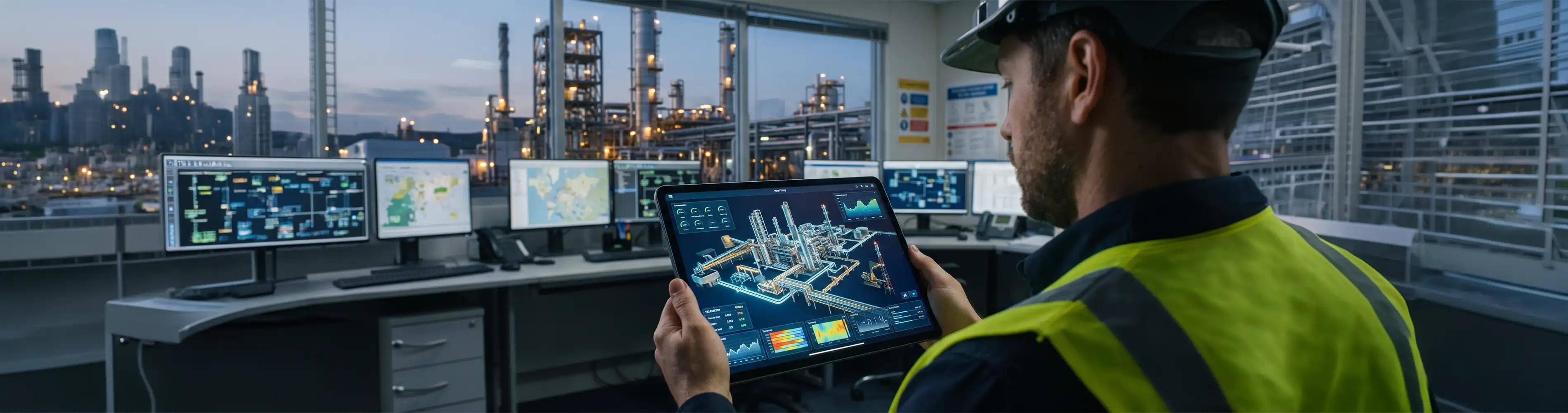
Aerospace digital twin solutions for better asset visibility and maintenance planning
Connect aircraft components, engineering models, and maintenance information through custom digital twin software. Explore complex assemblies, understand asset conditions, and access technical information in one connected environment.
An aerospace digital twin is a digital representation of an aircraft component, equipment assembly, or aerospace system connected to relevant engineering, configuration, maintenance, or operational information.Consider an aircraft assembly containing numerous interconnected components. Its engineering geometry may exist in CAD software, while inspection records, maintenance activities, and configuration changes are stored elsewhere. A digital twin can establish useful relationships between these records and the represented asset.The application may focus on visualization, information access, equipment monitoring, or supported engineering analysis. It does not automatically reproduce every physical behavior of an aircraft.
01
Digital engineering representation
Create structured representations of components, assemblies, and equipment using suitable engineering models.
02
Connected asset information
Associate relevant technical specifications, maintenance records, and configuration information with the corresponding assets.
03
Interactive analysis
Explore component relationships, inspect available operating information, and review supported analytical results.
Aerospace engineering challenges
What problems can aerospace digital twin technology solve?
Aerospace systems involve detailed engineering information, strict configuration requirements, and assets that may remain operational for many years.
Complex engineering assemblies
Large CAD assemblies contain extensive geometry and component relationships. Exploring them efficiently outside specialized engineering applications can be difficult.
Disconnected technical records
Design information, inspection results, maintenance histories, and component documentation may be distributed across multiple systems.
Configuration tracking difficulties
Aircraft equipment and components can change throughout their lifecycle. Understanding which records apply to a specific configuration requires accurate asset identification.
Limited equipment condition visibility
Operating measurements may be available without sufficient context about the equipment structure or associated maintenance history.
Expensive physical evaluation
Testing selected engineering changes physically can require substantial resources. Appropriate digital models may support preliminary evaluation.
Aerospace digital twin solutions
Aerospace digital twin solutions we develop
HexaCoder provides custom aerospace digital twin development services for defined engineering assets, equipment, and maintenance information workflows.
Aircraft digital twin
Develop digital representations of selected aircraft systems and components with relevant engineering information, asset structures, and available records.
Aircraft component digital twin
Create interactive 3D models of individual components and assemblies, including supported specifications and component relationships.
Aerospace equipment digital twin
Represent ground-support equipment, testing assets, and other aerospace machinery with associated operational and maintenance information.
Aerospace engineering digital twin
Connect supported engineering models, technical documentation, and analytical outputs through a custom visualization interface.
Aircraft maintenance digital twin
Associate equipment representations with available inspection histories, service records, and configuration information to support maintenance information access.
Software capabilities
Key features of aerospace digital twin software
Aerospace digital twin applications need careful handling of model detail, component structures, and technical information.
High-detail 3D visualization
Explore supported aircraft components and equipment assemblies through optimized interactive models.
Assembly hierarchy navigation
Move between assemblies, subassemblies, and individual parts while preserving relevant structural relationships.
Configuration-specific information
Associate selected equipment versions with applicable component and engineering records.
Technical documentation access
Display supported specifications, part identifiers, drawings, and related information alongside digital components.
Equipment condition dashboards
Present available operating measurements and asset status information through tailored interfaces.
Inspection history integration
Connect supported maintenance and inspection records to the corresponding equipment.
Historical data visualization
Review available equipment measurements and events across selected periods.
Engineering analysis interfaces
Visualize outputs from suitable simulation tools or analytical models where required.
Development process
How we develop aerospace digital twin solutions
Aerospace digital twin development begins with defining the asset, identifying authoritative information sources, and establishing the application's technical requirements.
01
Understand the asset
Identify the equipment, components, configuration requirements, and intended workflows.
02
Review engineering information
Assess available CAD assemblies, component structures, specifications, and relevant asset records.
03
Prepare digital models
Optimize suitable geometry and organize component relationships for the intended software environment.
04
Develop the application
Build interactive visualization, asset navigation, information interfaces, and agreed functionality.
05
Integrate existing systems
Connect supported engineering, maintenance, and operational information sources.
06
Validate the implementation
Test model representation, data relationships, application performance, and required access controls.
System integrations
Aerospace digital twin integration with engineering and maintenance systems
An aerospace digital twin becomes more useful when it can reference information already maintained by established engineering and asset management platforms.
01
CAD systems
Use supported engineering geometry and component structures to create interactive asset representations.
02
Product lifecycle management systems
Connect applicable product structures, configuration records, and engineering revisions.
03
Maintenance management platforms
Associate supported inspection records, service activities, and equipment histories with the represented assets.
04
Equipment monitoring systems
Access relevant operating measurements and recorded events from connected equipment.
05
Engineering simulation tools
Present outputs from suitable analytical applications through custom interfaces.
06
Enterprise databases and APIs
Develop controlled integrations for proprietary information systems and supported data repositories.
Business benefits
Benefits of digital twin technology for aerospace assets
Aerospace digital twins can make complex technical information more accessible while supporting defined engineering and asset management workflows.
01
Clearer component visibility
Interactive models help explain assembly structures and the relationships between supported components.
02
Faster technical information access
Connect relevant specifications and records to digital components instead of requiring separate searches.
03
Better configuration awareness
Present information associated with defined equipment versions and engineering configurations.
04
Improved maintenance information access
Review available inspection and service histories in the context of the represented asset.
05
Support for engineering evaluation
Use suitable analytical models to investigate selected scenarios before physical testing.
06
Stronger lifecycle information continuity
Maintain useful relationships between components, engineering revisions, and associated records over time.
07
More accessible engineering visualization
Make suitable technical models available through interfaces designed for specific tasks.



 Digital Twin