Healthcare digital twin solutions for smarter hospital operations
Connect medical equipment, hospital infrastructure, and operational data through custom healthcare digital twin software. Gain clearer asset visibility, simplify facility monitoring, and make informed maintenance decisions.
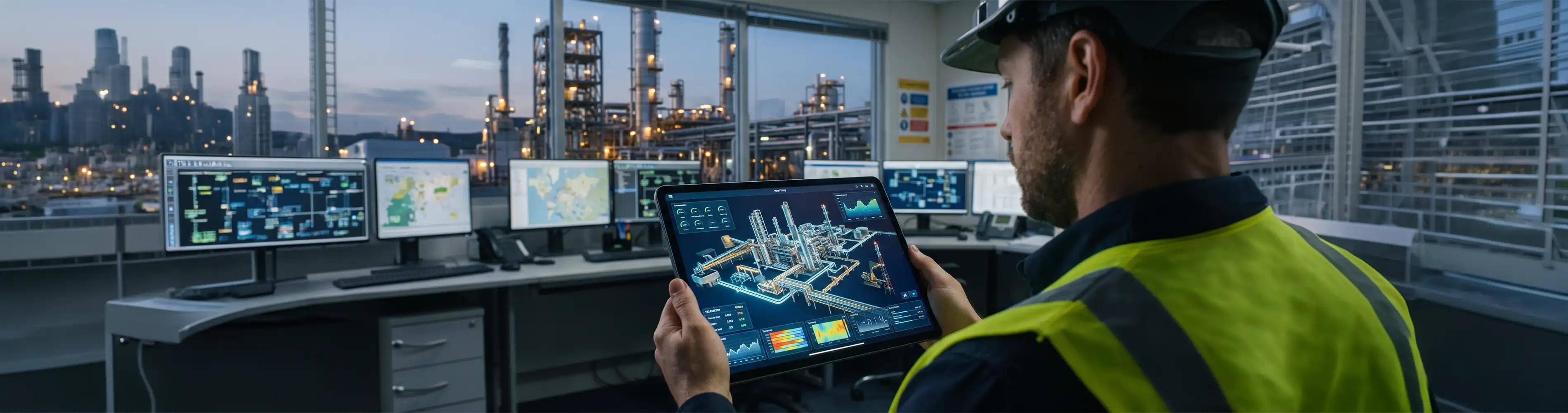
A healthcare digital twin is a digital representation of a physical asset, medical facility, or infrastructure system connected to relevant information from the real world.Consider a hospital with hundreds of equipment units spread across multiple floors. Each device has a location, technical specifications, maintenance records, and possibly operating measurements. A digital twin can organize that information around an interactive representation of the actual facility.Unlike a conventional 3D model, a connected digital twin can reflect changes in equipment conditions and associated records. The available functionality depends on the data sources, integration methods, and intended application.
01
Physical asset representation
Represent medical equipment, building infrastructure, and facility components using structured digital models.
02
Connected operational information
Associate equipment records, sensor measurements, and maintenance information with the relevant assets.
03
Interactive visualization
Explore supported assets through digital environments that make locations, relationships, and technical information easier to understand.
Healthcare operational challenges
What challenges can healthcare digital twins solve?
Healthcare facilities depend on equipment and infrastructure that must remain available, properly maintained, and easy to manage. Yet essential information is frequently distributed across unrelated systems.
Scattered equipment records
Device specifications, maintenance histories, and asset locations may exist in separate applications. Finding complete information about one piece of equipment can become unnecessarily complicated.
Limited facility visibility
Building management systems provide measurements, but they may not show how equipment conditions relate to individual rooms, floors, or connected infrastructure.
Reactive maintenance planning
Without accessible condition information and equipment histories, identifying developing issues can be difficult. Maintenance decisions may rely heavily on fixed schedules or reported failures.
Complicated infrastructure changes
Equipment relocation, renovations, and technical upgrades require an understanding of existing systems. Missing or outdated asset information can complicate planning.
Disconnected operational information
When different systems use inconsistent equipment identifiers, connecting records to the correct physical assets becomes challenging.
Healthcare digital twin solutions
Healthcare digital twin solutions we develop
HexaCoder provides custom healthcare digital twin development services for physical facilities, medical assets, and connected infrastructure. Each application is designed around the available systems and specific operational requirements.
Hospital digital twin
Create interactive digital representations of hospital buildings, floors, rooms, and associated technical infrastructure. Connect relevant facility records to their physical locations.
Medical equipment digital twin
Visualize medical equipment and supported components alongside technical specifications, maintenance information, and available operating measurements.
Healthcare infrastructure digital twin
Represent HVAC systems, electrical infrastructure, utility equipment, and connected building assets to support infrastructure monitoring and maintenance planning.
Smart hospital digital twin
Develop connected facility environments that combine supported building information, equipment locations, and operational data in a unified interface.
Healthcare facility planning digital twin
Use spatial models and available engineering information to support equipment placement, facility modifications, and infrastructure planning.
Software capabilities
Key features of healthcare digital twin software
The right functionality depends on the facility, equipment, and operational information involved. HexaCoder develops features around the intended use rather than imposing a fixed software package.
Interactive 3D visualization
Navigate digital facility models, locate supported equipment, and inspect asset details through an intuitive interface.
Equipment status monitoring
Display available operating measurements and equipment states through connected dashboards.
Asset hierarchy management
Organize infrastructure by building, floor, room, equipment group, and individual asset.
Maintenance information access
Connect relevant inspection records, service histories, and equipment documentation.
Environmental monitoring
Visualize supported temperature, humidity, and other facility measurements from connected systems.
Historical data analysis
Review recorded operating conditions and equipment events to investigate changes over time.
Alerts and notifications
Display supported equipment events and defined monitoring alerts for relevant conditions.
Controlled user access
Configure permissions and authentication according to the application's operational and security requirements.
Development process
How we develop healthcare digital twin solutions
Successful digital twin implementation starts with understanding the physical environment and determining which information will make the application useful.
01
Define the project requirements
Identify the facilities, equipment categories, operational problems, and information needed for the proposed application.
02
Prepare digital asset models
Review available CAD drawings, floor plans, equipment specifications, and 3D models. Prepare suitable assets for visualization.
03
Design the software architecture
Define asset relationships, application interfaces, data services, and the required security controls.
04
Connect existing information
Integrate supported monitoring platforms, maintenance systems, and relevant facility databases.
05
Validate and deploy
Test asset representation, data mapping, user access, and agreed functionality before deployment.
06
Extend the solution
Add supported assets or capabilities as requirements evolve and additional information becomes available.
System integrations
Healthcare digital twin integration with existing systems
A digital twin for healthcare facilities should work with established operational systems rather than require every application to be replaced.
01
Building management systems
Access relevant information about connected HVAC equipment, environmental conditions, and building infrastructure.
02
IoT sensors and devices
Connect supported equipment measurements and facility monitoring information.
03
Maintenance management systems
Associate work orders, inspection histories, and service records with their corresponding assets.
04
CAD and building information models
Use existing architectural and engineering information to support spatial visualization.
05
Enterprise asset management systems
Connect equipment registers, lifecycle records, and relevant asset documentation.
06
Custom APIs and databases
Develop integration services for supported proprietary applications and existing data platforms.
Business benefits
Benefits of digital twin technology for healthcare facilities
The value of a healthcare digital twin comes from making physical assets and their associated information easier to understand and manage.
01
Faster access to asset information
Locate equipment records, specifications, and relevant maintenance details through connected digital representations.
02
Better infrastructure visibility
Understand supported equipment conditions within the context of hospital rooms, floors, and technical systems.
03
More informed maintenance planning
Use equipment histories and available condition information to support maintenance decisions.
04
Improved facility planning
Examine spatial relationships and existing infrastructure when preparing equipment changes or renovations.
05
Clearer operational information
Bring relevant measurements and asset records into an interface designed around practical facility requirements.
06
Support for future expansion
Extend the application to additional equipment or facility areas as technical requirements develop.



 Digital Twin