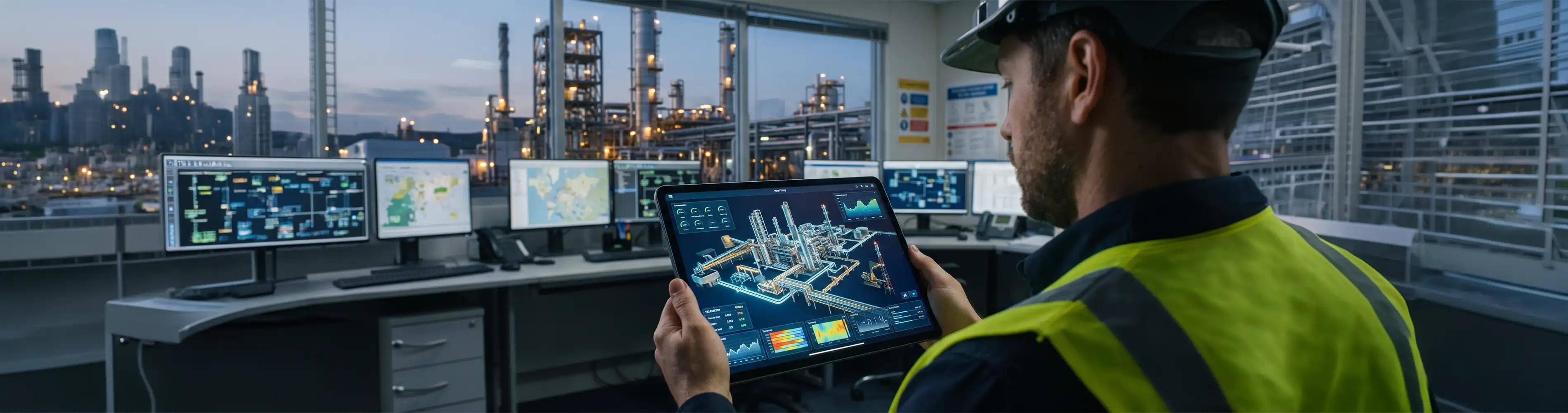
Automotive digital twin solutions that connect vehicle engineering and production
Bring vehicle components, manufacturing equipment, and operational information into one connected digital environment. Improve asset visibility, simplify technical information access, and support better production decisions.
What is a digital twin in the automotive industry?
An automotive digital twin is a digital representation of a vehicle, component, manufacturing asset, or production system connected to relevant engineering and operational information.Consider a vehicle assembly with multiple component variants. Engineering models describe its structure, while product records contain specifications and revision information. A digital twin can connect those records to an interactive representation of the assembly.In manufacturing, the same concept applies to production equipment. A digital representation of a machine can be associated with operating measurements, maintenance records, and relevant production events.The application may focus on engineering visualization, equipment monitoring, or supported analytical functions.
01
Digital asset representation
Represent vehicles, components, machinery, and assemblies through structured digital models.
02
Connected technical information
Associate engineering specifications, production records, and available equipment measurements with relevant assets.
03
Visualization and analysis
Explore supported asset structures and review operational information through interactive software interfaces.
Automotive industry challenges
What challenges can automotive digital twins solve?
Automotive engineering and production depend on accurate information moving between products, equipment, and operational systems.
Complex component configurations
Vehicle models can include numerous component variants. Keeping digital representations aligned with the correct engineering information can be challenging.
Disconnected engineering data
CAD assemblies, product specifications, and revision records may exist in separate applications, complicating technical information access.
Limited production equipment visibility
Machine monitoring systems may provide operating measurements without clearly showing equipment locations or component relationships.
Unexpected equipment interruptions
Recurring equipment issues can be difficult to investigate when operating histories and maintenance records remain disconnected.
Costly production changes
Equipment adjustments and process modifications may require physical trials. Suitable digital analysis can help evaluate selected alternatives.
Inconsistent asset information
Different equipment identifiers and record structures can make it difficult to connect information across manufacturing systems.
Automotive digital twin solutions
Automotive digital twin solutions we develop
HexaCoder provides custom automotive digital twin development services for vehicle components, engineering assets, manufacturing equipment, and connected production environments.
Vehicle digital twin
Create digital representations of selected vehicle systems and components with associated engineering specifications and configuration information.
Automotive engineering digital twin
Connect supported CAD assemblies, technical records, and engineering information through interactive visualization.
Automotive manufacturing digital twin
Represent production machinery and relevant manufacturing assets within a connected digital environment.
Assembly line digital twin
Visualize supported production stations, equipment relationships, and available operating information.
Automotive equipment monitoring digital twin
Associate machinery representations with supported condition measurements, equipment events, and maintenance histories.
Software capabilities
Key features of automotive digital twin software
Automotive digital twins need functionality that reflects the differences between vehicle engineering and factory operations.
Interactive 3D automotive visualization
Explore supported vehicle components, equipment assemblies, and production assets through optimized 3D models.
Component hierarchy navigation
Inspect assemblies, subassemblies, and individual parts using structured component relationships.
Engineering configuration information
Associate relevant component variants and revisions with their corresponding digital representations.
Equipment monitoring dashboards
Display available machine measurements, operating conditions, and selected production indicators.
Historical performance tracking
Review recorded equipment measurements and events to investigate operating trends.
Maintenance information integration
Connect supported service records, inspection histories, and equipment documentation.
Event and alert visualization
Present relevant equipment notifications and recorded events within the digital asset environment.
Simulation result interfaces
Visualize outputs from suitable engineering or manufacturing simulation tools.
Development process
How we develop automotive digital twin solutions
Our development approach starts with the physical asset and the information required to support the intended engineering or production workflow.
01
Define the application scope
Identify the vehicles, components, manufacturing equipment, and operational requirements involved.



 Digital Twin